
Maidenhair fern might help with COVID-19 symptoms, but it needs more testing.
1 citations
,
May 2024 in “Animal Biotechnology” Reducing miR-361-5p boosts hair growth in cashmere goats by activating stem cells.
17 citations
,
January 2009 in “Plant cell monographs” 1 citations
,
August 2008 in “Plant cell monographs”  1 citations
,
December 2022 in “Current Issues in Molecular Biology”
1 citations
,
December 2022 in “Current Issues in Molecular Biology” Annurca apple extract improved hair growth in mice and could potentially prevent hair loss.
August 2023 in “Health Sciences and Pharmacy Journal” Herbal therapies may effectively treat alopecia with fewer side effects than synthetic drugs.
 July 2023 in “Pharmacognosy Magazine”
 Cerasus serrulata flower extracts have strong antibacterial and antioxidant effects and may help prevent hair loss.
 September 2022 in “Piretc”
 The document's conclusion cannot be provided because the document is not accessible or understandable.
 April 2024 in “JEADV clinical practice”
 Upadacitinib significantly improved both rheumatoid arthritis and alopecia areata in a patient.
 October 2025 in “INSOLOGI Jurnal Sains dan Teknologi”
 Pacing leaf extracts can promote hair growth in rabbits, but minoxidil works better.
 October 2023 in “Journal der Deutschen Dermatologischen Gesellschaft”
 Pregnancy can trigger severe rosacea, which may be treated with antibiotics and steroids, but there's no clear treatment guideline.
 January 2024 in “Journal of Pharmacognosy and Phytochemistry”
 Martynia annua is a versatile plant used for treating various health issues like hair loss, inflammation, and infections.
The nanoemulsions effectively promoted hair growth in male rats.
 May 2023 in “GSC Advanced Research and Reviews”
 Eclipta alba (Bhringaraja) has many medicinal uses, including protecting the liver, promoting hair growth, and reducing inflammation.
92 citations
,
March 2010 in “Gerontology” Deer antler regeneration offers insights for human limb regeneration and scar reduction.
 2 citations
,
March 1997 in “Hair transplant forum international”
2 citations
,
March 1997 in “Hair transplant forum international” Transplanting rat whisker follicles can lead to successful hair growth after cutting them.
 June 2021 in “International Journal of Ayurvedic Medicine”
 Phytoconstituents from Cyperus Rotundus may help treat hirsutism by interacting with the 5 α reductase enzyme.
1 citations
,
October 2023 in “Animals” A small dose of Platycladus orientalis leaf extract improves raccoon dogs' growth and health, but higher doses can be harmful.
3 citations
,
June 2001 in “Journal of Zoo and Wildlife Medicine” The lemur's testicular tumor was removed, improving its coat and behavior, with no signs of cancer spread.
 15 citations
,
June 2018 in “Journal of Chromatographic Science”
15 citations
,
June 2018 in “Journal of Chromatographic Science” Researchers developed a method to measure plant compounds in rat blood and found they are quickly absorbed and eliminated within 36 hours.
1 citations
,
November 2025 in “Journal of the American Academy of Dermatology”  September 2018 in “Epsilon Archive for Student Projects (University of Southampton)”
 Bacillus amyloliquefaciens can boost root hair growth in some Arabidopsis plants, potentially improving agriculture.
3 citations
,
March 2022 in “Research journal of pharmacy and technology” Parsley contains compounds that might be good for treating hair loss.
10 citations
,
January 2022 in “Traditional and Integrative Medicine” Citrus lemon and ginger essential oils show promise for cancer treatment and antioxidant benefits.
 2 citations
,
May 2022 in “JAAD case reports”
2 citations
,
May 2022 in “JAAD case reports” Using powdered umbilical remnant allograft can effectively treat chronic scalp wounds resistant to traditional treatments.
 2 citations
,
June 2022 in “Molecules”
2 citations
,
June 2022 in “Molecules” Connarus semidecandrus Jack extract promotes hair growth and thickness, reduces prostate cancer cell growth, and could potentially be used as a treatment for hair loss.
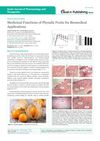 May 2021 in “Austin journal of pharmacology and therapeutics”
 Physalis fruits have medicinal properties that can help treat various diseases and have anti-inflammatory, antioxidant, antibacterial, and antitumor effects.
 2 citations
,
October 2007 in “Kafrelsheikh Veterinary Medical Journal”
2 citations
,
October 2007 in “Kafrelsheikh Veterinary Medical Journal” Buffalo lips are well-suited for eating plants.
 May 2020 in “Research, Society and Development”
 Mutamba fruits are rich in soluble solids, vitamin C, and minerals, making them good for food industry use.
2 citations
,
January 2024 in “Open Agriculture” Using young Lokananta shallot seedlings at a specific density boosts yield and profits.