 6 citations
,
January 2000 in “Dermatology”
6 citations
,
January 2000 in “Dermatology” A girl's severely tangled hair couldn't be fixed and had to be cut due to a rare condition called plica neuropathica.
3 citations
,
January 1981 Tight traditional hairstyles can cause hair loss.
 6 citations
,
March 2016 in “PLoS ONE”
6 citations
,
March 2016 in “PLoS ONE” The patient's hair was thinner and had fewer lipids due to a genetic mutation.
 45 citations
,
March 2003 in “Pediatrics”
45 citations
,
March 2003 in “Pediatrics” Baby's toe injury linked to mom's hair loss; check baby's toes and be careful with fruit gel snacks.
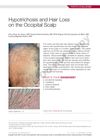 September 2023 in “Cutis”
 A baby girl has a hair disorder called monilethrix, causing fragile hair that may improve over time.
5 citations
,
September 2023 in “Pediatric Research”  3 citations
,
December 2001 in “Irish Journal of Psychological Medicine”
3 citations
,
December 2001 in “Irish Journal of Psychological Medicine” Trichotillomania is a challenging-to-treat impulse-control disorder where individuals pull out their hair, more common in females, with some treatments showing benefits.
 85 citations
,
February 1989 in “Journal of The American Academy of Dermatology”
85 citations
,
February 1989 in “Journal of The American Academy of Dermatology” Children with loose anagen hair have easily pluckable hair due to root sheath problems, and it might improve without treatment.
1 citations
,
January 2013 in “Pediatric Annals” The girl's thin hair was due to loose anagen syndrome, not other hair loss types.
22 citations
,
July 2006 in “Annals of The Royal College of Surgeons of England” Hair or fiber wrapped tightly around a toe can lead to serious injury if not treated quickly.
2 citations
,
March 2010 in “European journal of dermatology/EJD. European journal of dermatology” A young Caucasian girl had both woolly hair and alopecia areata, which is rare.
4 citations
,
April 1983 in “The Journal of Dermatology” A 15-year-old girl with hypothyroidism had excess hair and skin issues due to blocked hair follicles.
 1 citations
,
January 2020 in “Indian Dermatology Online Journal”
1 citations
,
January 2020 in “Indian Dermatology Online Journal” Pigtail hair is a sign of new hair growth and should be recognized in hair loss conditions like acute telogen effluvium.
 March 2026 in “Zenodo (CERN European Organization for Nuclear Research)”
 Ratanjot root oil helps hair grow and conditions and colors it naturally.
6 citations
,
January 2011 in “European Journal of Dermatology” It's important to consider genetic hair disorders when diagnosing hair loss.
6 citations
,
January 2008 in “Indian Journal of Dermatology” Monilethrix, a genetic hair disorder causing fragile hair, affects three generations in a family.
September 1998 in “Journal of the European Academy of Dermatology and Venereology” PUVA-turban therapy can help some people with severe alopecia areata regrow hair.
January 2015 in “The Encyclopedia of Clinical Psychology” Habit reversal training effectively treats hair-pulling disorder in both adults and children.
January 2022 in “Consultant” May 2017 in “Journal of the American Academy of Dermatology” Monilethrix is a rare, inherited condition causing fragile hair and hair loss, with no cure but some treatments may help.
August 2023 in “Portuguese journal of dermatology and venereology” Changing hairstyles can prevent hair loss caused by tension.
January 2026 in “Clinical Case Reports” A 6-year-old girl had both monilethrix and trichorrhexis nodosa, causing brittle hair, with minimal improvement from treatment.
 August 2022 in “Archives of pediatric surgery”
 Hair-Thread Tourniquet Syndrome is a rare condition where hair or thread tightly wraps around a child's body part, requiring quick treatment to prevent damage.
 July 2018 in “Elsevier eBooks”
 Stopping tight hairstyles can prevent and reduce traction alopecia.
 January 2026 in “Indian Journal of Dermatopathology and Diagnostic Dermatology”
 Corkscrew hairs can help diagnose trichotillomania.
 May 2016 in “American Academy of Pediatrics eBooks”
 Telogen effluvium is a condition that causes temporary hair loss.
June 2023 in “The Journal of Family Practice” The hair loss is likely due to a fade haircut.
6 citations
,
December 2017 in “International Journal of Dermatology” Traction alopecia is hair loss from pulling on hair too much.
 March 2026 in “Zenodo (CERN European Organization for Nuclear Research)”
 Ratanjot root oil helps hair grow and conditions and colors it naturally.