114 citations
,
July 2003 in “PubMed” Lack of KSR1 stops certain skin tumors in mice.
82 citations
,
March 2013 in “PLoS ONE” Vemurafenib causes skin side effects similar to RASopathies, requiring regular skin checks and UVA protection.
 51 citations
,
December 2003 in “The FASEB Journal”
51 citations
,
December 2003 in “The FASEB Journal” The substance AS101 can help hair grow by slowing down hair cell aging and boosting a hair growth protein.
 39 citations
,
March 2008 in “Growth hormone & IGF research”
39 citations
,
March 2008 in “Growth hormone & IGF research” Raspberry ketone may help grow hair and improve skin elasticity.
 21 citations
,
March 2015 in “Journal of The American Academy of Dermatology”
21 citations
,
March 2015 in “Journal of The American Academy of Dermatology” Vemurafenib therapy can cause hair loss, but clobetasol propionate foam can help regrow hair.
 18 citations
,
July 2008 in “Current Oncology Reports”
18 citations
,
July 2008 in “Current Oncology Reports” EGFR cancer drugs often cause a rash, which can lead to distress and isolation, but may also improve outcomes for some cancer patients. Current treatments for the rash are limited, but a compound called menadione shows promise.
 17 citations
,
September 2019 in “Journal of Cell Biology”
17 citations
,
September 2019 in “Journal of Cell Biology” Hair follicle regeneration may slow tumor growth.
 12 citations
,
March 2013 in “Gynecological Endocrinology”
12 citations
,
March 2013 in “Gynecological Endocrinology” The study found a significant link between the renin-angiotensin system and insulin resistance in women with polycystic ovary syndrome.
 12 citations
,
March 2011 in “Journal of pathology”
12 citations
,
March 2011 in “Journal of pathology” Oncogenic K-ras causes rapid cancerous changes in the mouth's lining.
11 citations
,
October 2021 in “Orphanet journal of rare diseases” Patients with RASopathies are at risk for autoimmune disorders and should be routinely screened.
10 citations
,
November 2019 in “Journal of the European Academy of Dermatology and Venereology” The RAS pathway affects hair growth differently in CFCS and CS.
 7 citations
,
May 2022 in “Skin health and disease”
7 citations
,
May 2022 in “Skin health and disease” Certain types of rashes in COVID-19 patients may indicate more severe illness and higher risk of death.
 6 citations
,
April 2013 in “Alternative and Complementary Therapies”
6 citations
,
April 2013 in “Alternative and Complementary Therapies” Raspberry ketone lacks sufficient human research to support health benefit claims and requires more rigorous studies to confirm its safety and effectiveness.
 4 citations
,
January 2001 in “Archives of Biochemistry and Biophysics”
4 citations
,
January 2001 in “Archives of Biochemistry and Biophysics” Activated ras can protect kidney cells from a certain substance that causes cell death.
3 citations
,
November 2011 in “Small GTPases” Researchers found that hair follicle stem cells can become squamous cell carcinoma due to Ras activation, which could lead to new treatments.
1 citations
,
January 2022 in “bioRxiv (Cold Spring Harbor Laboratory)” Injury boosts normal skin cell growth, reducing cancer cell advantage.
 1 citations
,
May 2024 in “AYUSHDHARA”
1 citations
,
May 2024 in “AYUSHDHARA” Wet cupping and Rasayana Chikitsa may help regrow hair in alopecia areata.
 1 citations
,
January 2024 in “NPJ breast cancer”
1 citations
,
January 2024 in “NPJ breast cancer” Experts agree on how to manage sugar levels and skin reactions in patients taking the cancer drug alpelisib.
 1 citations
,
October 2023 in “International Journal of Ayurvedic Medicine”
1 citations
,
October 2023 in “International Journal of Ayurvedic Medicine” Rasayana therapy can enhance female reproductive health at different life stages.
June 2025 in “Korean Journal of Pharmacognosy” Isoalantolactone promotes hair growth by activating specific cell pathways.
 November 2024 in “Journal of Translational Internal Medicine”
 Exosomes from stem cells help hair regrowth by activating a specific signaling pathway.
 December 2022 in “Research Square (Research Square)”
 The QuantAnts machines can find cancer markers and create CRISPR targets for them.
 June 2026 in “Indian Journal of Postgraduate Dermatology”
 Rash from EGFRI treatment can indicate both side effects and treatment effectiveness.
 May 2026 in “Zenodo (CERN European Organization for Nuclear Research)”
 Amalaki Churna effectively reduces hair fall and improves hair strength.
 May 2026 in “Zenodo (CERN European Organization for Nuclear Research)”
 Amalaki Churna effectively reduces hair fall and improves hair health.
July 2025 in “Kottakkal Journal of Ayurvedic Medicine And Research” Bakuchi therapy significantly improved psoriasis symptoms.
 June 2024 in “Research Square (Research Square)”
 Absence of skin rash and low complement C3 levels increase the risk of lupus nephritis.
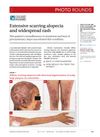 March 2022 in “The Journal of Family Practice”
 Following treatment plans is crucial to prevent worsening skin and hair conditions.
February 2018 in “Chin J Clinicians(Electronic Edition)” Rash in SLE patients indicates more severe disease.
153 citations
,
April 1998 in “Current Biology” The risk of skin tumors becoming malignant depends on the specific skin cell type affected.