5 citations
,
January 2000 Pododermatitis in farmed mink is likely caused by an unknown infectious agent with secondary bacterial infection.
 3 citations
,
October 1979 in “Laboratory animals”
3 citations
,
October 1979 in “Laboratory animals” Hairless rats are good for testing anti-inflammatory drugs, similar to haired rats, without needing to remove fur.
Genetic analysis of rabbits identified key genes for traits like coat color, body size, and fertility.
21 citations
,
June 2009 in “Mammalian genome” A new mutation in the Hr gene causes hair loss in mice, similar to a human hair disorder.
27 citations
,
July 1997 in “PubMed” The harlequin ichthyosis mouse mutation causes thick skin and early death, resembling a human skin disorder.
98 citations
,
November 2017 in “Elsevier eBooks” Male accessory sex glands in rats rarely develop tumors and respond to hormones.
23 citations
,
January 2019 in “Journal of wildlife diseases” Boreal caribou in northeastern British Columbia have significant health issues, including infections, tick infestations, and mineral deficiencies.
March 2011 in “Pigment Cell & Melanoma Research” The Agouti gene influences pigmentation and may have a developmental role in deer mice.
10 citations
,
November 2009 in “Pigment cell & melanoma research” The document concludes that MGRN1 affects mouse fur color by interfering with a receptor's signaling, but its full role in the body is still unknown.
3 citations
,
December 2014 in “Annals of Laboratory Medicine” A Korean baby with nevus sebaceus syndrome was found to have a KRAS gene mutation.
 119 citations
,
October 2011 in “Journal of Veterinary Internal Medicine”
119 citations
,
October 2011 in “Journal of Veterinary Internal Medicine” Rhodococcus equi causes severe pneumonia in young foals, and effective vaccines are needed due to foals' weak immune responses.
 15 citations
,
December 2014 in “PLoS ONE”
15 citations
,
December 2014 in “PLoS ONE” A mutation in the iRhom2 gene causes hairless mice due to abnormal hair follicle development.
166 citations
,
February 2005 in “Behavioural brain research” Vitamin D receptor knockout mice have significant motor impairments but no cognitive deficits.
5 citations
,
July 1999 in “Journal of Anatomy” Methylene blue staining effectively highlights detailed nerve structures in rat fur.
114 citations
,
July 2003 in “PubMed” Lack of KSR1 stops certain skin tumors in mice.
 11 citations
,
September 2016 in “Journal of virological methods”
11 citations
,
September 2016 in “Journal of virological methods” Rabies virus was found in specific skin cells of rabid dogs' muzzles, suggesting these cells could help diagnose rabies.
 37 citations
,
February 2019 in “Experimental Dermatology”
37 citations
,
February 2019 in “Experimental Dermatology” Spiny mice are better at regenerating hair after injury than laboratory mice and could help us understand how to improve human skin repair.
May 2025 in “VETERINARY SCIENCE TECHNOLOGIES OF ANIMAL HUSBANDRY AND NATURE MANAGEMENT” Poor-quality feed and low vitamin A cause reproductive issues in nutrias.
 April 1974 in “Pediatric Research”
 The Naked (N) trait in mice is linked to lower glycine and tyrosine in hair proteins.
1 citations
,
January 2007 in “Griffith Research Online (Griffith University, Queensland, Australia)” Adult rat olfactory mucosa has stem cells that can self-renew and become different cell types.
19 citations
,
November 1937 in “Experimental biology and medicine” Nutritional deficiencies in rats cause skin problems that can be treated with the right vitamins.
 28 citations
,
March 1942 in “Journal of Endocrinology”
28 citations
,
March 1942 in “Journal of Endocrinology” Male rats grow hair faster than females, and certain hormones can slow or slightly increase hair growth, but not significantly beyond natural rates.
2 citations
,
July 2013 in “Journal of Animal Physiology and Animal Nutrition” Shorthaired and hairless cat breeds excrete more felinine than longhaired breeds.
December 2010 in “OhioLink ETD Center (Ohio Library and Information Network)” Sry may regulate fatty acid metabolism and shows different expression levels in rat tissues.
 January 2023 in “Revista Brasileira de Parasitologia Veterinária/Brazilian Journal of Veterinary Parasitology”
 A single dose of fluralaner effectively treats mite infestations in cats without side effects.
 4 citations
,
July 2022 in “Veterinary medicine international”
4 citations
,
July 2022 in “Veterinary medicine international” Mange in rabbits is a serious disease that can spread to humans and is treated with medications and supportive care.
3 citations
,
July 2022 in “Brain and Behavior” The HtrA1L364P mutation causes brain dysfunction and blood vessel damage.
55 citations
,
February 2013 in “The Anatomical Record” Mouse nails are similar to human nails, making them useful for studying nail diseases.
3 citations
,
October 1994 in “Medical Molecular Morphology” The lower part of rat vibrissa hair gets more blood and is well-protected for growth.
 1 citations
,
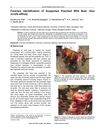
August 2016 in “Journal of Buffalo Science”
1 citations
,
August 2016 in “Journal of Buffalo Science” The animal was likely a wild boar.