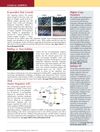
 July 2016 in “Experimental Dermatology”
 New treatments for hair growth and psoriasis may be possible, and gene differences could affect baldness and the severity of skin conditions.
The microenvironment affects the behavior and survival of melanocytes with the GNAQ oncogene in melanoma.
79 citations
,
February 2009 in “Human Genetics” 32 citations
,
August 2016 in “Science Signaling” Alopecia areata patients show unique protein activity patterns, suggesting imbalanced signaling pathways.
 8 citations
,
April 2022 in “The journal of investigative dermatology/Journal of investigative dermatology”
8 citations
,
April 2022 in “The journal of investigative dermatology/Journal of investigative dermatology” Certain genetic changes in the LSS gene cause a rare skin and hair condition.
12 citations
,
January 2013 in “Indian dermatology online journal” Dermatopathia pigmentosa reticularis causes skin discoloration, hair loss, and nail problems.
3 citations
,
May 2016 in “Dermatopathology” Lrig1 could be a marker for advanced sebaceous carcinoma.
 July 2024 in “bioRxiv (Cold Spring Harbor Laboratory)”
 Hair loss in certain mice is linked to changes in keratin-related genes.
March 2009 in “Encyclopedia of Life Sciences” Mutations in keratin genes cause skin disorders, but new treatments show promise.
25 citations
,
March 2007 in “The journal of investigative dermatology/Journal of investigative dermatology” A specific gene mutation causes varying hair loss severity in a Pakistani family.
22 citations
,
September 2014 in “JAMA dermatology” Ichthyosis with confetti is a genetic skin disorder with consistent ectodermal malformations and various KRT10 gene mutations.
 March 2024 in “EMBO molecular medicine”
 Antiviral drugs, especially daclatasvir, may be a new treatment for a rare skin disease, improving survival and reducing symptoms in mice.
 17 citations
,
August 2012 in “Journal of Medical Genetics”
17 citations
,
August 2012 in “Journal of Medical Genetics” A new mutation in the XEDAR gene might cause a rare skin condition called hypohidrotic ectodermal dysplasia.
33 citations
,
February 2012 in “British Journal of Dermatology” Mutations in the p63 gene affect skin adhesion, barrier integrity, and hair growth.
September 2025 in “Indian Journal of Dermatology” A Turkish woman has a hair condition caused by a LIPH gene mutation.
January 2007 in “Bristol Research (University of Bristol)” Epidermolysis bullosa in UK calves is not caused by mutations in keratin genes.
 8 citations
,
February 2015 in “Cellular immunology”
8 citations
,
February 2015 in “Cellular immunology” Deleting Snai2 and Snai3 causes fatal autoimmunity.
 10 citations
,
July 2021 in “Archiv für Pathologische Anatomie und Physiologie und für Klinische Medicin”
10 citations
,
July 2021 in “Archiv für Pathologische Anatomie und Physiologie und für Klinische Medicin” LRIG1 is linked to better survival in Merkel cell carcinoma.
32 citations
,
September 2013 in “Breast cancer research” A specific gene variant is linked to a higher risk of hair loss from chemotherapy in breast cancer patients.
 February 2024 in “Future science OA”
 Loss of the Y chromosome and UTY gene activity increases cancer risk in men.
 74 citations
,
January 2006 in “The journal of investigative dermatology/Journal of investigative dermatology”
74 citations
,
January 2006 in “The journal of investigative dermatology/Journal of investigative dermatology” Mutations in the DSG4 gene can cause a rare hair disorder similar to monilethrix.
41 citations
,
December 2011 in “The journal of investigative dermatology/Journal of investigative dermatology” Deleting MED1 in skin cells causes hair loss and skin changes.
January 2022 in “Menoufia Medical Journal /Menoufia Medical Journal” Higher levels of retinol-binding protein 4 are found in people with alopecia areata, but these levels don't relate to how severe the condition is.
October 2025 in “Clinical and Experimental Pediatrics” A novel CLDN1 mutation in a 2-month-old with NISCH showed improvement with symptom management.
 April 2016 in “Journal of Investigative Dermatology”
 SOX4 is crucial for the development of melanoma.
 32 citations
,
May 2012 in “PloS one”
32 citations
,
May 2012 in “PloS one” Thymic transplantation normalized some T-cells but not others, maintaining immune function.
 November 2023 in “The journal of investigative dermatology/Journal of investigative dermatology”
 Removing MCPIP1 from myeloid cells in mice leads to hair loss and prevents skin tumors but causes pigmented spots.
 47 citations
,
June 2011 in “Movement Disorders”
47 citations
,
June 2011 in “Movement Disorders” The LRRK2-G2019S mutation in Parkinson's disease has a lifetime penetrance of 25-35%, and finasteride may help reduce symptoms in adult male Tourette syndrome patients.
 March 2026 in “Folia Histochemica et Cytobiologica”
 LTBP1 is a key regulator in diseases and a potential target for new treatments.
1 citations
,
September 2021 in “Frontiers in genetics” A genetic mutation in the DCAF17 gene caused Woodhouse-Sakati syndrome in a Chinese patient from a related family.