 1 citations
,
March 2023 in “Applied sciences”
1 citations
,
March 2023 in “Applied sciences” Lavender, lemongrass, rosemary, and chamomile essential oils may help protect cells important for hair growth from damage and could promote hair growth.
February 2026 in “World Academy of Sciences Journal” Lymphoma should be considered in unusual scalp hair loss cases, as treatment can work but may lead to severe complications.
January 2026 in “Regenerative Biomaterials” Advanced hydrogels can autonomously deliver drugs to treat radiation skin injuries, but challenges remain for clinical use.
November 2025 in “BMC Genomics” Wrinkled skin in Xiang pigs is linked to gene changes related to oxidative stress and the extracellular matrix.

Arginine deficiency hinders hair growth in androgenetic alopecia, but restoring it can promote hair regeneration.
 December 2024 in “Pharmaceutics”
 Extracellular vesicles show promise for treating psoriasis by reducing inflammation and skin lesions.
 January 2024 in “Journal of lipid research”
 Finasteride may lower cholesterol and slow heart disease progression.
 October 2023 in “International Journal of Pharmaceutics”
 Using minoxidil with tocopherol acetate in ethosomes improves hair regrowth in hair loss treatment.
 March 2026 in “Molecules”
 Camellia sinensis seed flavonoids can reduce skin inflammation and damage from UV rays.
 June 2025 in “Academic Medical Journal”
 High homocysteine levels in lupus may increase inflammation and cardiovascular risk.
 February 2025 in “Cosmetics”
 Blue light therapy is promising for skin and hair conditions but needs more research for widespread use.
 July 2023 in “International Journal of Molecular Sciences”
 N,N-Dimethylglycine Sodium Salt helps reduce skin inflammation and improves skin cell growth and healing.
 October 2022 in “Journal of ophthalmology”
 Light therapy may improve eye conditions by stimulating cell activity and increasing oxygen availability.
May 2000 in “Journal of Investigative Dermatology” Hedgehog signaling is crucial for hair development, cadherins affect cell adhesion, neutrophils play a role in skin lesions, and BP230 autoantibodies impact skin stability.
95 citations
,
August 2013 in “Journal of Investigative Dermatology” HPT axis hormones boost mitochondrial function and growth in hair follicles, potentially aiding hair health.
Ganoderma lucidum extract may help treat stress-related hair loss.
 November 2023 in “The journal of investigative dermatology/Journal of investigative dermatology”
 Skin cells and certain hair follicle areas produce hemoglobin, which may help protect against oxidative stress like UV damage.
 114 citations
,
January 2021 in “medRxiv (Cold Spring Harbor Laboratory)”
114 citations
,
January 2021 in “medRxiv (Cold Spring Harbor Laboratory)” COVID-19 can cause over 50 long-term symptoms, with fatigue and headache being the most common.
29 citations
,
July 2013 in “Journal of Investigative Dermatology” UV radiation causes skin cancer, but sunscreens and certain drugs can help prevent it.
14 citations
,
August 2017 in “International Journal of Immunopathology and Pharmacology” Photodynamic therapy improved skin issues from sorafenib when other treatments failed.
9 citations
,
August 2021 in “International journal of molecular sciences” PPARγ is essential for maintaining healthy skin, controlling inflammation, and ensuring proper skin barrier function.
 5 citations
,
September 1989 in “Journal of The American Academy of Dermatology”
5 citations
,
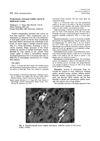
September 1989 in “Journal of The American Academy of Dermatology” Talc in street cocaine can cause immune-reactive skin nodules where injected.
January 2025 in “Indian Dermatology Online Journal” Mycosis fungoides can have unusual symptoms and may be misdiagnosed, but specific cell markers might suggest a lower risk of worsening.
 September 2023 in “Journal of Cosmetic Dermatology”
 Lower vitamin D levels are linked to higher CRP levels in people with a type of hair loss called alopecia areata.
 October 2025 in “BMC Pediatrics”
 Timely zinc treatment is crucial for preventing severe complications in Acrodermatitis enteropathica.
 September 2025 in “Journal of International Medical Research”
 Chlorine gas exposure can cause long-term skin issues.
 9 citations
,
July 2017 in “Dermatologic Therapy”
9 citations
,
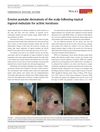
July 2017 in “Dermatologic Therapy” Two elderly men developed scalp inflammation after using a gel for skin lesions, which healed with treatment except for some permanent hair loss.
 5 citations
,
January 2021 in “Veterinary dermatology”
5 citations
,
January 2021 in “Veterinary dermatology” Low-level laser therapy did not reduce licking or improve lesions in dogs with ALD but did increase hair growth.
 4 citations
,
January 2009 in “Indian Journal of Dermatology, Venereology and Leprology”
4 citations
,
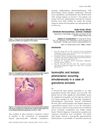
January 2009 in “Indian Journal of Dermatology, Venereology and Leprology” A patient with granuloma annulare experienced both isotopic and isomorphic responses, with skin lesions responding to steroids but relapsing after stopping treatment.
 1 citations
,
August 2012
1 citations
,
August 2012 The document discusses various diseases of the outer ear, categorized by symptoms like redness, crusts, bumps, pus-filled lesions, lumps, ulcers, and hair loss.