1 citations
,
June 2024 in “Frontiers in Physiology” Endoplasmic reticulum stress plays a key role in developing atherosclerosis.
 3 citations
,
August 2021 in “Research Square (Research Square)”
3 citations
,
August 2021 in “Research Square (Research Square)” The most common sign of aging at the gene level is more Ectodysplasin A2 Receptor (EDA2R) being made.
March 2026 in “Microchemical Journal” 9 citations
,
October 2025 in “MedComm” PROTACs offer new ways to treat hard-to-target diseases, with promising drugs for cancer in advanced trials.
September 2023 in “Journal of the American Academy of Dermatology” Certain factors like being female, having high cholesterol, using Medicaid, and previous non-biologic treatments increase the risk of multiple biologic failures in psoriasis patients.
44 citations
,
January 1999 in “Advances in pharmacology” The document concludes that the androgen receptor's structure and function are complex, affecting how it regulates genes and is involved in diseases like prostate cancer.
16 citations
,
November 1994 in “Developmental Biology” Retinoic acid causes gland formation instead of hair in mouse skin by altering epidermal and dermal interactions.

Regulatory T cells enhance bone formation by influencing cell mechanics.
47 citations
,
April 2012 in “Analytical and Bioanalytical Chemistry” 8 citations
,
August 2012 in “Archives of dermatology” Psoriasis can cause hair growth in areas affected by alopecia areata.
 36 citations
,
January 2018 in “Clinical and Medical Reports”
36 citations
,
January 2018 in “Clinical and Medical Reports” Rare earth elements are crucial in medical imaging and cancer treatment.
3 citations
,
July 2024 in “Skin Research and Technology”  7 citations
,
October 2018 in “BMC genomics”
7 citations
,
October 2018 in “BMC genomics” Key genes can rewire networks, changing skin appendage types.
April 2022 in “Microbiology and Immunology” A specific DNA pattern in Malassezia restricta may be linked to hair loss in men.
 February 2024 in “Scientific reports”
 Four genes are potential markers for hair loss condition alopecia areata, linked to a specific type of cell death.
7 citations
,
October 2015 in “Experimental dermatology” Blocking the mineralocorticoid receptor can help treat skin thinning caused by steroids.
23 citations
,
October 2015 in “Plastic and reconstructive surgery/PSEF CD journals” Radiesse is a versatile facial injectable used for cosmetic improvements and long-term collagen production, with careful dosing needed to prevent complications.
 March 2010 in “Ejc Supplements”
 ROR-alpha may increase the growth of certain breast cancer cells by boosting aromatase, which could affect breast cancer prognosis.
 November 2012 in “Endocrine Practice”
 Enzymes called 5α-reductases have many body functions and need more research to safely use inhibitors.
 59 citations
,
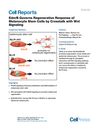
April 2016 in “Cell Reports”
59 citations
,
April 2016 in “Cell Reports” EdnrB signaling helps melanocyte stem cells regenerate and could be targeted to treat pigmentation issues.
 April 2023 in “Journal of Investigative Dermatology”
 The study created special nanoparticles that effectively deliver an anti-inflammatory drug to treat skin inflammation in psoriasis.
1 citations
,
September 2010 in “UEF eRepo (University of Eastern Finland)” Androgen receptors help prostate cancer cells grow and resist drugs.
 6 citations
,
June 2024 in “Scientific Reports”
6 citations
,
June 2024 in “Scientific Reports” RoPod helps study plant root cell changes and autophagy with minimal stress.
 38 citations
,
February 2006 in “British Journal of Clinical Pharmacology”
38 citations
,
February 2006 in “British Journal of Clinical Pharmacology” The study found that combining different databases gives a better estimate of drug side effects in hospitals.
 60 citations
,
August 2008 in “Human molecular genetics online/Human molecular genetics”
60 citations
,
August 2008 in “Human molecular genetics online/Human molecular genetics” A position effect on the TRPS1 gene causes excessive hair growth in humans and mice.
IL-18 signaling helps mature Tregs move into the thymus.
Retinoic acid can change skin development, like turning scales into feathers or forming glands.
February 2016 in “Journal of Allergy and Clinical Immunology” Consider DRIF and perform skin biopsies for persistent papular rashes.
28 citations
,
March 2020 in “Journal of ethnopharmacology” Ginsenoside Rb1 slows down aging in mice by affecting cell growth, cell death, and metabolism.
 6 citations
,
September 2019 in “Skin pharmacology and physiology”
6 citations
,
September 2019 in “Skin pharmacology and physiology” RCS-01 therapy is safe and may improve skin structure by affecting gene expression.