 September 2016 in “Gynecology Obstetrics and Reproductive Medicine”
 Effective treatment for skin issues in women with PCOS includes oral contraceptives, antiandrogens, and other medications and procedures.
April 2016 in “Journal of the American Academy of Dermatology” Treatment improved some symptoms but not all.
 May 2015 in “Journal of Dermatological Science”
 Researchers found a new area on chromosome 2 linked to a genetic hair loss condition.
January 2014 in “Theriogenology” Neurosteroids help control stress hormone levels in pregnant sheep.
 June 2013 in “Expert Review of Dermatology”
 The article concludes that hormonal therapy is an effective long-term acne treatment, even for those without hormonal imbalances.
 March 2013 in “Journal für Kardiologie (Krause & Pachernegg GmbH)”
 Hormones significantly affect hair growth and loss, with potential for new treatments.
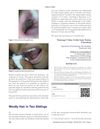 January 2012 in “International Journal of Trichology”
 Two siblings have a rare genetic condition causing curly, coarse hair.
 November 2010 in “Clin-Alert”
 Monitoring for adverse effects in clinical treatments is crucial.
The curly mutation in SELH/Bc mice affects hair and may help study human genetic disorders.
July 2008 in “International journal of psychophysiology” Cyproterone acetate is a safe treatment that causes mild feminizing effects in adolescent trans-girls.
Mutations in specific genes cause different types of ectodermal dysplasias.
The skin plays a key role in immune responses and reflects emotional and stress reactions.
 November 2007 in “Neuro-chirurgie/Neurochirurgie”
 Cyproterone acetate is a safe treatment that causes mild feminizing effects and is more effective with added estrogens.
 January 2007 in “Revista del Centro Dermatológico Pascua”
 A 2-year-old boy was diagnosed with a rare genetic condition causing fragile hair, intellectual issues, and short stature.
September 2006 in “대한피부과학회지” Using finasteride and minoxidil together improves the frontal hairline best in male hair loss.
August 2006 in “Experimental dermatology” Human scalp hair follicles can produce and respond to several hormones, affecting hair growth and pigmentation.
January 2006 in “대한피부과학회지” Using finasteride and minoxidil together improves the frontal hairline best in male hair loss.
September 2004 in “Experimental Dermatology” Stress and certain chemicals affect hair growth by interacting with the immune and nervous systems.
 December 2002 in “International Journal of Cosmetic Surgery and Aesthetic Dermatology”
 Scalp reduction surgery is safe and effective for certain patients with hair loss, leading to dense hair coverage and high satisfaction.
January 2000 in “The Mouseion at the JAXlibrary (Jackson Laboratory)” The lanceolate hair-J mutation in mice helps understand human hair disorders like Netherton's syndrome.
 January 1987 in “Journal of steroid biochemistry/Journal of Steroid Biochemistry”
 Norethisterone (jenapharm) therapy is effective for endometrial cancer.
January 1976 in “Revista de Estudios Agrosociales” Frontal fibrosing alopecia and vitiligo might be linked by similar immune issues.
January 2004 in “Medicine Today” Topical minoxidil helps hair regrowth in over 50% of men and women.
 339 citations
,
February 2014 in “Journal of The American Academy of Dermatology”
339 citations
,
February 2014 in “Journal of The American Academy of Dermatology” Most patients with frontal fibrosing alopecia are postmenopausal women, and treatments like finasteride and dutasteride can improve or stabilize the condition.
 130 citations
,
May 1988 in “Journal of The American Academy of Dermatology”
130 citations
,
May 1988 in “Journal of The American Academy of Dermatology” "Male-pattern" hair loss is common in women, especially after menopause, and doesn't always mean there's a problem with hormone balance.
 74 citations
,
January 2006 in “The journal of investigative dermatology/Journal of investigative dermatology”
74 citations
,
January 2006 in “The journal of investigative dermatology/Journal of investigative dermatology” Mutations in the DSG4 gene can cause a rare hair disorder similar to monilethrix.
67 citations
,
January 1987 in “The Journal of urology/The journal of urology” New hormonal therapies can help treat advanced prostate cancer but may cause testicular issues.
 57 citations
,
January 2003 in “Clinical and experimental dermatology”
57 citations
,
January 2003 in “Clinical and experimental dermatology” Postmenopausal frontal fibrosing alopecia is a type of hair loss in postmenopausal women that may stop on its own but has no effective treatment.
50 citations
,
February 2004 in “Genomics” A gene mutation causes lanceolate hair in rats by disrupting hair shaft integrity.
35 citations
,
May 2006 in “Journal of Investigative Dermatology” Monilethrix involves multiple genes affecting hair structure, including DSG4 mutations.