3 citations
,
January 2018 in “BIO-PROTOCOL” Hair follicle stem cells can be transplanted onto the eye using a fibrin carrier to help repair eye damage.
 155 citations
,
May 2016 in “Nature communications”
155 citations
,
May 2016 in “Nature communications” Memory T cells in the skin balance staying put and moving into the blood, clustering around hair follicles, and increasing in number after infection.
 November 2015 in “Hair transplant forum international”
 Early attempts at using cloned cells for hair transplants failed, but 3D cell growth showed some promise.
 5 citations
,
January 2021 in “iScience”
5 citations
,
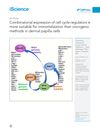
January 2021 in “iScience” Using a combination of specific cell cycle regulators is better for safely keeping hair root cells alive indefinitely compared to cancer-related methods.
 November 2023 in “npj regenerative medicine”
 Skin spheroids with both outer and inner layers are key for regrowing skin patterns and hair.
 51 citations
,
August 2013 in “Journal of Investigative Dermatology”
51 citations
,
August 2013 in “Journal of Investigative Dermatology” Human skin cells can create new hair follicles when transplanted into mice.
 April 2017 in “The journal of investigative dermatology/Journal of investigative dermatology”
 Both induced and spontaneous AA lymphocytes can cause alopecia areata in mice.
11 citations
,
January 2010 in “European Journal of Dermatology” Contact immunotherapy helped hair regrow in a patient with both alopecia and psoriasis.
2 citations
,
June 2022 in “International Journal of Molecular Sciences” Lower levels of certain genes in hair cells improve hair loss treatment outcomes.
December 2025 in “FEBS Open Bio” Long-term skin biopsy cultures can produce many fibroblasts that remain functional and can be reprogrammed.
April 2018 in “Plastic & Reconstructive Surgery Global Open” LGR6+ stem cells may improve bone healing.
14 citations
,
February 2008 in “Stem Cells and Development” Seven genes are highly expressed in both germ-line and hematopoietic stem cells.
6 citations
,
March 2018 in “The American journal of dermatopathology/American journal of dermatopathology” BerEP4 and CD34 staining can help tell apart tricholemmoma from basal cell carcinoma.
 23 citations
,
December 2015 in “Anais Brasileiros de Dermatologia”
23 citations
,
December 2015 in “Anais Brasileiros de Dermatologia” Permanent hair loss after bone marrow transplant can be caused by chemotherapy or chronic graft-versus-host disease.
5 citations
,
September 2017 in “PubMed” A new type of amniotic tissue graft improves wound healing better than other grafts.
15 citations
,
February 2021 in “Cells” Transfected cells with VEGF and FGF2 genes improve skin wound healing by enhancing blood flow and regeneration.
 July 2010 in “British Journal of Dermatology”
 New hair regrowth model proposed, imiquimod found to kill skin cancer cells, T-cadherin loss linked to invasive skin cancer, no clear gene link to skin cancer after transplant, and study on children's hair loss shows male dominance and genetic ties.
 February 2017 in “International Journal on Advanced Science, Engineering and Information Technology”
 Human hair follicle stem cells can grow and turn into skin cells on chitosan templates, which may help in regenerative medicine.
7 citations
,
October 2008 in “Arthritis Care & Research” Aggressive immunosuppressive treatment improved a woman's severe heart condition linked to autoimmune disease.
 1 citations
,
February 2018 in “Orthopedics and rheumatology”
1 citations
,
February 2018 in “Orthopedics and rheumatology” Combining Western chemotherapy with Traditional Chinese Medicine can reduce side effects and improve immune response in treating bone and soft tissue tumors.
 10 citations
,
May 2019 in “Seminars in Cell & Developmental Biology”
10 citations
,
May 2019 in “Seminars in Cell & Developmental Biology” Understanding and manipulating epigenetic changes can potentially lead to human organ regeneration therapies, but more research is needed to improve these methods and minimize risks.
November 2022 in “Journal of Investigative Dermatology” Cell-based therapy using specific immune cells may help treat alopecia areata by promoting hair regrowth.
 15 citations
,
March 2012 in “International journal of nanomedicine”
15 citations
,
March 2012 in “International journal of nanomedicine” Local injections of nanosized rhEPO can speed up skin healing and improve quality after deep second-degree burns.
 October 2018 in “Current Opinion in Genetics & Development”
 The document emphasizes the importance of ongoing research and ethical considerations in genome editing and cellular reprogramming.
Alopecia areata involves immune system changes, especially in severe cases, with potential new treatment targets identified.
May 2023 in “The Journal of Immunology” Alopecia areata involves unique activation of certain immune cells.
 49 citations
,
March 2014 in “Journal of Investigative Dermatology”
49 citations
,
March 2014 in “Journal of Investigative Dermatology” Using the drugs AMD3100 and Tacrolimus together greatly improves skin healing and hair growth after a deep skin cut by increasing stem cells in the wound.
September 2014 in “Archives of disease in childhood” A 12-year-old boy had severe shingles and skin damage after a stem-cell transplant.
1 citations
,
November 2024 in “Blood” PI3Kδ inhibition may effectively treat cutaneous chronic graft-versus-host disease.
 November 2023 in “Computational and Structural Biotechnology Journal”
 A single robotic system can accurately harvest and implant hair grafts, showing promise for real-world use.