2 citations
,
January 2012 in “STARS (University of Central Florida)” Analyzing isotopes from different tissues can effectively reveal detailed life histories of individuals.
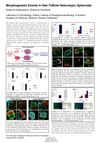
Researchers developed a method to create artificial hair follicles that may help with hair loss treatment and research.
 14 citations
,
March 2019 in “Plant methods”
14 citations
,
March 2019 in “Plant methods” The new microrhizotron tool effectively observes and measures pepper plant roots non-destructively.
 12 citations
,
June 2021 in “Scientific Reports”
12 citations
,
June 2021 in “Scientific Reports” Curcumin may help reverse aging by targeting specific genes.
1 citations
,
July 2012 in “ACM transactions on graphics” The new algorithm accurately captures both facial hair and skin in 3D using a camera-based system.
8 citations
,
December 2017 in “Current Opinion in Cell Biology” 3D bioengineering can potentially regenerate complex oral organs for future therapies.
Cialis and Finasteride could be repurposed to treat aggressive melanoma.
 34 citations
,
March 2011 in “Plastic and Reconstructive Surgery”
34 citations
,
March 2011 in “Plastic and Reconstructive Surgery” Custom-designed implants effectively repaired skull damage in most soldiers injured in combat.
10 citations
,
December 2020 in “Palaeogeography, palaeoclimatology, palaeoecology” Elephant tusks and hair reveal seasonal diet and climate changes.
 9 citations
,
June 2014 in “Journal of Craniofacial Surgery”
9 citations
,
June 2014 in “Journal of Craniofacial Surgery” The method for sideburn reconstruction was safe and effective, giving natural-looking hair with minimal scarring.
November 2024 in “Journal of Investigative Dermatology” Blocking the JAK/STAT pathway may help reduce skin sensitivity in Xeroderma pigmentosum.
135 citations
,
October 2010 in “Stem Cells” Hair follicle stem cells can help treat eye surface issues by becoming corneal cells.
72 citations
,
March 2013 in “Primates” More research is needed to understand how diet affects isotope signatures in Japanese macaque tissues.
27 citations
,
December 2006 in “Environmental Science & Technology” LA-ICP-MS can effectively track mercury exposure over time in hair.
3 citations
,
March 2023 in “bioRxiv (Cold Spring Harbor Laboratory)” Neurospectrum effectively analyzes neural signals to predict and identify brain activity patterns better than traditional methods.
 3 citations
,
May 2011 in “International Journal of Dermatology”
3 citations
,
May 2011 in “International Journal of Dermatology” Using an epidural needle in hair restoration surgery can reduce grafts popping out, make the procedure easier, and result in natural-looking hairlines without obvious scarring.
2 citations
,
November 2020 in “Chirurgia” Scalp reconstruction is complex and aims to restore function and appearance after damage.
 1 citations
,
December 2019 in “Formuly farmacii”
1 citations
,
December 2019 in “Formuly farmacii” Many people suffer from hair loss, which is caused by a disruption in hair growth, and there is a need for personalized treatments and new drugs.
 January 2017 in “Journal of Plastic Reconstructive and Aesthetic Surgery”
 The authors suggest using scalp hair follicles for beard reconstruction to improve results and reduce surgery time and patient discomfort.
42 citations
,
September 1990 in “Journal of Investigative Dermatology” 14 citations
,
April 1995 in “Transplantation” Human hair follicle cells can be used to help heal and replace skin.
March 2007 in “Journal of Plastic Reconstructive & Aesthetic Surgery” A new method was developed to create better skin models for healing and reconstruction.
A skin model using hair and skin cells can mimic human skin for research.
April 2021 in “Journal of Investigative Dermatology” Early-stage skin substitutes improve wound healing and skin structure.
48 citations
,
August 2001 in “Experimental dermatology” Researchers created a quick, cost-effective way to make skin-like tissue from hair follicles and fibroblasts.
 13 citations
,
March 1998 in “Journal of Biomedical Materials Research”
13 citations
,
March 1998 in “Journal of Biomedical Materials Research” Island grafts can help study skin regeneration separately from other healing processes.
January 2007 in “Jiepouxue yanjiu” ES cell-derived stem cells can help regenerate skin and form gland-like structures.
August 1994 in “Toxicology in Vitro” A lab model of human skin was created to study skin tumor promoters without using actual human skin.
January 2003 in “Jiepouxue zazhi” HHK can help restore skin structure.
12 citations
,
June 2012 in “Wound Repair and Regeneration” Regulating keratinocyte growth in engineered skin can improve wound healing.