November 2025 in “animal” Certain genes in European Merino sheep help them adapt to different climates.
 100 citations
,
May 2003 in “Journal of Neuroscience”
100 citations
,
May 2003 in “Journal of Neuroscience” Neuroactive steroids affect cocaine's rewarding effects through the ς1 receptor.
 31 citations
,
January 2010 in “GenomeBiology.com (London. Print)”
31 citations
,
January 2010 in “GenomeBiology.com (London. Print)” The research concluded that selection significantly shaped the genetic variation of the X chromosome, with certain regions affected by past selective events.
 June 2020 in “Journal of Investigative Dermatology”
 FDA-cleared devices often fail to produce high-quality platelet-rich plasma consistently.
 2 citations
,
July 2011 in “AFRICAN JOURNAL OF BIOTECHNOLOGY”
2 citations
,
July 2011 in “AFRICAN JOURNAL OF BIOTECHNOLOGY” Seven genetic variations in sheep's DSG4 gene are linked and affect wool traits.
 June 2026 in “Journal of health economics and outcomes research”
 Ritlecitinib is more effective and cost-efficient than baricitinib for severe alopecia areata.
 1 citations
,
November 2025 in “International Journal of Clinical Pharmacy”
1 citations
,
November 2025 in “International Journal of Clinical Pharmacy” Cladribine has known risks and potential new safety concerns, requiring careful monitoring.
November 2024 in “SKIN The Journal of Cutaneous Medicine” Disease-specific tools better assess quality of life in alopecia areata patients.
 43 citations
,
December 2020 in “PLOS Genetics”
43 citations
,
December 2020 in “PLOS Genetics” New method finds genetic links between Type 2 Diabetes and Prostate Cancer not seen before.
 45 citations
,
July 2009 in “Journal of human genetics”
45 citations
,
July 2009 in “Journal of human genetics” A gene variation is linked to hair thickness in Asians.
May 2026 in “Journal of Medicinal Chemistry” dAR-6–1 is a promising new treatment for hair loss that works better than minoxidil.
10 citations
,
September 2020 in “Journal of the American Geriatrics Society” Natural language processing is the most accurate method for identifying falls in older adults in emergency departments.
13 citations
,
February 2025 in “Nature Communications” A new neural network helps identify key regulators in cell changes, aiding in understanding diseases and finding new treatments.
January 2022 in “Mammalian Genome” The wavy coat in NCT mice is caused by multiple genes, including a mutation in the Prss53 gene.
 April 2025 in “International Journal of General Medicine”
 The G allele of IFITM3 rs12252 is linked to more severe COVID-19.
August 2024 in “Postgraduate Medical Journal” A rare skin reaction from cancer treatment was successfully managed with topical treatments and antihistamines.
 81 citations
,
July 2008 in “The Journal of Clinical Endocrinology and Metabolism”
81 citations
,
July 2008 in “The Journal of Clinical Endocrinology and Metabolism” Certain mutations in the H6PD gene cause Cortisone Reductase Deficiency by affecting hormone production.
66 citations
,
October 2002 in “Human molecular genetics online/Human molecular genetics” A gene mutation in mice causes skin defects and early death.
18 citations
,
September 2024 in “Journal of the European Academy of Dermatology and Venereology” The DLQI is a key tool for measuring quality of life in dermatology.
 March 2025 in “International Journal For Multidisciplinary Research”
 Computational techniques can improve drug development for treating certain conditions.
 4 citations
,
November 2023 in “ArXiv.org”
4 citations
,
November 2023 in “ArXiv.org” A new method improves the accuracy and reliability of language models by up to 42%.
 8 citations
,
March 2023 in “Journal of Clinical Epidemiology”
8 citations
,
March 2023 in “Journal of Clinical Epidemiology” The updated GRADE guidance advises considering context when interpreting variability in research results and introduces tools for assessing subgroup effects.
 July 2025 in “SKIN The Journal of Cutaneous Medicine”
 Ritlecitinib is generally safe for alopecia areata patients over 72 months.
 April 2019 in “Biometrics”
 The new clinical trial design is promising but needs real-world trials to test its effectiveness and possible enhancements.
 6 citations
,
November 2023 in “Clinical Pharmacokinetics”
6 citations
,
November 2023 in “Clinical Pharmacokinetics” Ritlecitinib shows promise as a versatile treatment for various autoimmune and inflammatory diseases.
 18 citations
,
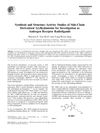
April 2001 in “Bioorganic & Medicinal Chemistry Letters”
18 citations
,
April 2001 in “Bioorganic & Medicinal Chemistry Letters” The nature of the side chain in RU 58841 derivatives greatly affects its AR affinity, with the N-(iodopropenyl) derivative 13 showing the highest AR binding affinity, suggesting its potential for developing high-affinity radioiodinated AR radioligands.
February 2018 in “bioRxiv (Cold Spring Harbor Laboratory)” Rodent spiny hair traits are due to genetic factors other than the Edar gene.
5 citations
,
December 2014 in “Molecular cytogenetics” A specific genetic change is linked to mental disorders, intellectual disability, and possibly autoimmune disease in a family.
 41 citations
,
October 2011 in “Clinical and Experimental Dermatology”
41 citations
,
October 2011 in “Clinical and Experimental Dermatology” G allele of AR Stul polymorphism linked to higher hair loss risk, especially in white people.