51 citations
,
August 2012 in “Differentiation” Mouse genital development depends on male or female hormones for specific features.
 58 citations
,
June 2000 in “The Journal of Steroid Biochemistry and Molecular Biology”
58 citations
,
June 2000 in “The Journal of Steroid Biochemistry and Molecular Biology” Different types of androgens bind differently to two receptors, AR1 and AR2, in Atlantic croaker's brain and ovarian tissues, suggesting these receptors may control different androgen actions in fish.
 7 citations
,
January 1994 in “Annual Reports in Medicinal Chemistry”
7 citations
,
January 1994 in “Annual Reports in Medicinal Chemistry” Understanding how androgens work is key for creating new treatments for prostate issues and hair/skin conditions.
January 2003 in “Zhonghua shiyan waike zazhi” Androgen, especially DHT, is crucial for erectile function in rats by affecting specific brain neurons.
25 citations
,
November 2005 in “PubMed” Finasteride changes androgen receptor location in rat epididymis without altering tissue structure.
June 2025 in “Skin Research and Technology”  11 citations
,
August 2000 in “Journal of Endocrinology”
11 citations
,
August 2000 in “Journal of Endocrinology” DHEA acts like a male hormone on rat skin glands and doesn't turn into female hormones there.
 402 citations
,
August 2011 in “Cancer research”
402 citations
,
August 2011 in “Cancer research” Prostate cancer cells can make their own androgens to activate the androgen receptor, and treatments like abiraterone may increase this ability, suggesting new therapies should target the entire steroid-making pathway.
 5 citations
,
January 2001 in “Advances in protein chemistry”
5 citations
,
January 2001 in “Advances in protein chemistry” 5α-reductase inhibitors help treat disorders caused by DHT and have potential for future therapies.
 1 citations
,
January 2013 in “MedChemComm”
1 citations
,
January 2013 in “MedChemComm” PF-05314882 selectively activates androgen receptors without much effect on prostate and may help in prostate cancer treatment and hair loss prevention.
32 citations
,
November 2020 in “UNC Libraries” A point mutation in the androgen receptor gene causes complete androgen insensitivity.
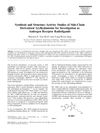 18 citations
,
April 2001 in “Bioorganic & Medicinal Chemistry Letters”
18 citations
,
April 2001 in “Bioorganic & Medicinal Chemistry Letters” The nature of the side chain in RU 58841 derivatives greatly affects its AR affinity, with the N-(iodopropenyl) derivative 13 showing the highest AR binding affinity, suggesting its potential for developing high-affinity radioiodinated AR radioligands.
51 citations
,
June 1970 in “British journal of dermatology/British journal of dermatology, Supplement” Antiandrogens may help treat conditions like excessive hair growth, prostate tumors, male baldness, and acne by blocking male hormone effects.
 8 citations
,
May 1982 in “Journal of Endocrinology/Journal of endocrinology”
8 citations
,
May 1982 in “Journal of Endocrinology/Journal of endocrinology” Rat skin takes up and processes testosterone differently than other organs, with testosterone being more important for the skin than its metabolite 5α-DHT.
35 citations
,
November 1989 in “Journal of steroid biochemistry/Journal of Steroid Biochemistry” Epitestosterone may act as a weak antiandrogen and can inhibit an enzyme involved in testosterone metabolism.
 24 citations
,
December 1988 in “British Journal of Dermatology”
24 citations
,
December 1988 in “British Journal of Dermatology” Acne severity in women may not be linked to increased male hormone indicators like excess body hair, menstrual irregularities, or hair loss.
 63 citations
,
November 1999 in “British journal of dermatology/British journal of dermatology, Supplement”
63 citations
,
November 1999 in “British journal of dermatology/British journal of dermatology, Supplement” Hair sensitivity to androgens is partly controlled by specific enzyme expressions in different hair areas.
 35 citations
,
May 2022 in “Baillière's best practice and research in clinical endocrinology and metabolism/Baillière's best practice & research. Clinical endocrinology & metabolism”
35 citations
,
May 2022 in “Baillière's best practice and research in clinical endocrinology and metabolism/Baillière's best practice & research. Clinical endocrinology & metabolism” Androgens like testosterone are important hormones for both men and women, made differently in each sex and affecting the body by regulating genes and quick interactions with cell components.
 1 citations
,
January 2022 in “Journal of Biosciences and Medicines”
1 citations
,
January 2022 in “Journal of Biosciences and Medicines” Understanding how androgens and their receptors work can lead to improved treatments for skin diseases.
14 citations
,
June 1995 in “The Journal of Clinical Endocrinology and Metabolism” The document concludes that antiandrogenic drugs like cyproterone acetate and spironolactone are effective but not permanent treatments for skin-related androgenization in women.
 123 citations
,
May 2020 in “Drug Development Research”
123 citations
,
May 2020 in “Drug Development Research” Men's sensitivity to male hormones might affect how severe COVID-19 gets for them.
 4 citations
,
October 1988 in “Clinics in Dermatology”
4 citations
,
October 1988 in “Clinics in Dermatology” Dihydrotestosterone (DHT) is crucial for conditions like male-pattern baldness and acne, and measuring a byproduct, androstanediol glucuronide, is a better way to assess DHT's effects than DHT blood levels.
1 citations
,
October 2024 in “JCEM Case Reports” 5α-reductase deficiency can cause ambiguous genitalia and gender dysphoria, treatable with testosterone.
174 citations
,
July 2003 in “The Journal of Clinical Endocrinology & Metabolism” Five new mutations in the androgen receptor gene were found, helping to understand androgen insensitivity syndrome better.
 37 citations
,
June 2011 in “Journal of Cellular Biochemistry”
37 citations
,
June 2011 in “Journal of Cellular Biochemistry” Androgen is important in controlling stem cell differentiation, reducing fat development, and increasing lean mass.
 January 2016 in “Archivio italiano di urologia, andrologia”
 The document concludes that the risk of sexual side effects from 5-alpha-reductase inhibitors is low and often temporary, but more research is needed on potential permanent effects.
 44 citations
,
July 2012 in “Endocrine Practice”
44 citations
,
July 2012 in “Endocrine Practice” We need to learn more about 5α-reductases and neuroactive steroids to safely make drugs targeting these enzymes.
 26 citations
,
November 1993 in “Progress in Neuro-psychopharmacology & Biological Psychiatry”
26 citations
,
November 1993 in “Progress in Neuro-psychopharmacology & Biological Psychiatry” Treatment during development affects hormone balance and sexual behavior in male rats.