 6 citations
,
May 2012 in “Archives of Dermatological Research”
6 citations
,
May 2012 in “Archives of Dermatological Research” A new mutation in the HR gene is linked to a rare form of hair loss with limb deformities.
 April 2019 in “Journal of Investigative Dermatology”
 Non-coding RNA boosts retinoic acid production and signaling, aiding regeneration.
February 2025 in “Journal of Paediatrics and Child Health” Genetic analysis is crucial for diagnosing ectodermal dysplasia syndromes, and new therapies may help improve skin issues.
 41 citations
,
August 1988 in “Journal of The American Academy of Dermatology”
41 citations
,
August 1988 in “Journal of The American Academy of Dermatology” A woman with subacute cutaneous lupus erythematosus had widespread skin symptoms triggered by medication and sunlight, which improved with specific treatments.
 5 citations
,
June 2014 in “Gastroenterology report”
5 citations
,
June 2014 in “Gastroenterology report” Cronkhite-Canada syndrome can sometimes show unusual colonic adenomatous polyps.
 6 citations
,
January 2018 in “Annals of dermatology/Annals of Dermatology”
6 citations
,
January 2018 in “Annals of dermatology/Annals of Dermatology” Hyaluronic acid filler can safely and effectively improve facial contour in Parry-Romberg Syndrome.
7 citations
,
August 1971 in “JAMA” Tinea faciale can be mistaken for lupus due to similar symptoms.
 March 2025 in “American Journal of Medical Genetics Part A”
 A rare genetic variant linked to skin cysts was found in blood DNA, suggesting its role in cyst formation.
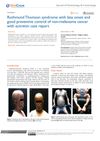 August 2024 in “Journal of Dermatology & Cosmetology”
 Acitretin effectively prevented skin cancer in a patient with late-onset Rothmund-Thomson syndrome.
5 citations
,
January 2015 in “Case reports in medicine” A baby was diagnosed with IFAP syndrome due to a new genetic mutation, showing severe skin and developmental issues.
 6 citations
,
March 2016 in “PLoS ONE”
6 citations
,
March 2016 in “PLoS ONE” The patient's hair was thinner and had fewer lipids due to a genetic mutation.
5 citations
,
January 2024 in “Therapeutic Advances in Hematology” Mogamulizumab treatment in Sézary syndrome may cause skin issues and hair loss but can lead to a complete response.
 72 citations
,
November 2012 in “PloS one”
72 citations
,
November 2012 in “PloS one” The protein folliculin, involved in a rare disease, works with another protein to control how cells stick together and their organization, and changes in this interaction can lead to disease symptoms.
 74 citations
,
January 2006 in “The journal of investigative dermatology/Journal of investigative dermatology”
74 citations
,
January 2006 in “The journal of investigative dermatology/Journal of investigative dermatology” Mutations in the DSG4 gene can cause a rare hair disorder similar to monilethrix.
November 2025 in “Figshare” SQSTM1 is linked to increased risk of alopecia areata.
January 2005 in “Experimental Dermatology” Genetic factors play a major role in acne.
 August 2025 in “International Journal of Contemporary Pediatrics”
 HLD10 can include increased body hair and Mongolian spots.
 December 2025 in “Zenodo (CERN European Organization for Nuclear Research)”
 Post-drug syndromes are often overlooked, and better systems and education are needed to improve drug safety.
5 citations
,
January 2011 in “Archives de Pédiatrie” A severe form of Netherton syndrome caused by a specific gene mutation led to neonatal deaths in a family.
26 citations
,
August 2009 in “Journal of Pediatric Gastroenterology and Nutrition” Hoyeraal-Hreidarsson syndrome in infants causes severe gastrointestinal issues.
11 citations
,
January 2014 in “Dermatology” Certain SPINK5 gene mutations are common in Israeli families with Comèl-Netherton syndrome.
 December 2023 in “Clinical Cosmetic and Investigational Dermatology”
 An 8-year-old Saudi boy was diagnosed with a rare genetic disorder causing hair loss, skin issues, and light sensitivity.
 August 2016 in “Journal of Investigative Dermatology”
 Researchers found a new genetic mutation linked to a hair condition in a Japanese boy.
4 citations
,
October 2023 in “Children” Early diagnosis and comprehensive care are crucial for managing Focal Dermal Hypoplasia's complex symptoms.
4 citations
,
December 2021 in “Journal of clinical laboratory analysis” A new mutation in the DCAF17 gene was found to cause Woodhouse-Sakati syndrome in a large family.
36 citations
,
September 2015 in “Orphanet Journal of Rare Diseases” Revertant cell therapy could be a future treatment for Ichthyosis with confetti.
28 citations
,
June 1995 in “The Journal of Dermatology” The flaky skin mouse mutation is a natural model for studying human psoriasis.
35 citations
,
March 2013 in “American Journal of Medical Genetics Part B Neuropsychiatric Genetics” SRD5A2 gene variations affect PTSD symptoms differently in males and females.
12 citations
,
July 2004 in “Molecular genetics and genomics” A new mouse mutation causes skin and hair defects due to a gene change.
 40 citations
,
June 2013 in “Scientific Reports”
40 citations
,
June 2013 in “Scientific Reports” A gene variant in KRT71 causes the curly fur in Selkirk Rex cats.