 February 2021 in “Dermatological reviews”
 Nonablative radiofrequency therapy improves hair density, thickness, and growth rate.
23 citations
,
June 1992 in “PubMed” RAR-gamma 1 is important for normal skin maintenance and differentiation.
2 citations
,
May 2021 in “bioRxiv (Cold Spring Harbor Laboratory)” Fibronectin is crucial for hair stem cell function and regeneration.
3 citations
,
December 2024 in “Journal of Animal Physiology and Animal Nutrition” FGF20 is essential for hair follicle stem cell growth and development in fine-wool sheep.
January 2020 in “Asian Journal of Chemistry” Raman spectroscopy can identify finasteride polymorphs in tablets.
September 2025 in “Development” Nelfb is crucial for forming skin fat tissue by regulating genes needed for fat cell development.
June 2020 in “Zenodo (CERN European Organization for Nuclear Research)” Robertsonian translocation can cause recurrent miscarriages.
 35 citations
,
October 2017 in “Signal Transduction and Targeted Therapy”
35 citations
,
October 2017 in “Signal Transduction and Targeted Therapy” Fibromodulin treatment helps reduce scarring and improves wound healing by making it more like fetal healing.
6 citations
,
March 1996 in “Journal of Investigative Dermatology”  17 citations
,
December 2010 in “Journal of Investigative Dermatology”
17 citations
,
December 2010 in “Journal of Investigative Dermatology” Flightless I protein affects hair growth, with low levels delaying it and high levels increasing hair length in rodents.
44 citations
,
January 2023 in “New Phytologist” FER and TOR signaling help root hair growth in low temperature and low nitrate conditions.
22 citations
,
October 2018 in “Molecular Medicine Reports” Classic PDRN improves wound healing quality by enhancing cell migration.
 39 citations
,
July 2015 in “British Journal of Dermatology”
39 citations
,
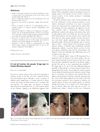
July 2015 in “British Journal of Dermatology” The pseudo 'fringe sign' can also appear in frontal fibrosing alopecia, not just in traction alopecia, showing that this condition may be more common than thought.
Nod factor can trigger changes in legume root hairs with just one molecule.
May 2018 in “The journal of immunology/The Journal of immunology” Mutations in the FOXN1 gene cause severe immune issues but don't affect hair and nails.
 April 2024 in “International Journal of Women’s Dermatology”
 Laser hair reduction can sometimes cause a rare skin condition called Fox-Fordyce disease.
13 citations
,
June 2024 in “BMC Genomics” The research helps understand hair development in sheep, aiding in better wool breeding.
2 citations
,
November 2004 in “Blood” RXRa is crucial for Th2 immune cell development and may link nutrition to immune health.
19 citations
,
June 2010 in “Journal of acupuncture and meridian studies” A plant extract was found to effectively block an enzyme related to male hormone-related diseases.
 January 2021 in “Research Square (Research Square)”
 Rabbits with high wool production have more hair follicles, influenced by specific long noncoding RNAs.
 May 2022 in “Indian Journal of Animal Research”
 Melatonin receptor genes likely play an important role in the development of goose feather follicles.
 December 2024 in “Animals”
 RORA may help regulate hair growth by affecting hair follicle stem cells.
January 2025 in “Repository of Digital Objects for Teaching Research and Culture (University of Valencia)” Non-coding RNAs may be key in diagnosing and treating rare skin disorders.
 17 citations
,
June 2020 in “Animals”
17 citations
,
June 2020 in “Animals” lncRNAs may regulate hair follicle development in Hu sheep.
 45 citations
,
January 2010 in “Journal of Veterinary Medical Science”
45 citations
,
January 2010 in “Journal of Veterinary Medical Science” A gene mutation causes curly hair and hair loss in rats.
9 citations
,
June 2019 in “Cell cycle/Cell cycle (Georgetown, Tex. Online)” A specific RNA increases hair stem cell growth and skin healing by affecting a protein through interaction with a microRNA.
 7 citations
,
March 2007 in “International Journal of Dermatology”
7 citations
,
March 2007 in “International Journal of Dermatology” Targeting FGFR-1 with antisense oligonucleotides may help treat baldness by increasing hair follicle activity.
16 citations
,
January 2021 in “BMC Genomics” Higher hair follicle density leads to more wool in rabbits, influenced by specific genes and lncRNAs.
9 citations
,
April 2019 in “Bioscience, biotechnology, and biochemistry” Ten miRNAs may play key roles in starting secondary hair follicle development in sheep foetuses.
July 2025 in “Journal of Investigative Dermatology”