 39 citations
,
January 2019 in “Cells”
39 citations
,
January 2019 in “Cells” Gene therapy has potential as a future treatment for Hutchinson-Gilford progeria syndrome.
 July 2025 in “SKIN The Journal of Cutaneous Medicine”
 Ritlecitinib is generally safe for alopecia areata patients over 72 months.
 24 citations
,
August 2017 in “Prostaglandins & Other Lipid Mediators”
24 citations
,
August 2017 in “Prostaglandins & Other Lipid Mediators” CRTH2 antagonists might be useful for treating many conditions because they play a role in immune and inflammation responses.
 April 2016 in “Journal of Investigative Dermatology”
 Blocking Prostaglandin D₂ (PGD₂) could help treat hair loss.
 1 citations
,
January 2023 in “Cutis”
1 citations
,
January 2023 in “Cutis” You might not need to stop cancer treatment if you get a rare skin reaction from EGFR inhibitors, as skin treatments can help manage it.
July 2026 in “Journal of the American Academy of Dermatology”  March 2026 in “Preprints.org”
 DRDE-07 shows promise for treating skin diseases due to its favorable properties.
 March 2026 in “Mendeley Data”
 rwSALT provides precise hair regrowth measurement from scalp photos.
 35 citations
,
January 2013 in “The Journal of experimental medicine/The journal of experimental medicine”
35 citations
,
January 2013 in “The Journal of experimental medicine/The journal of experimental medicine” CD98hc's role in skin health decreases with age.
54 citations
,
December 2011 in “American Journal Of Pathology” A Gsdma3 mutation causes hair loss due to stem cell damage from skin inflammation.
 August 2019 in “International journal of contemporary pediatrics”
 A child with a rare type of rickets showed some improvement with high doses of vitamin D, but such conditions often respond poorly to treatment.
During late pregnancy in rats, hormonal changes increased certain GABAA receptors in specific brain cells.
4 citations
,
April 2022 in “Evidence-based Complementary and Alternative Medicine” Dracorhodin perchlorate helps heal wounds in diabetic rats by reducing inflammation.
 6 citations
,
May 2009 in “Cell transplantation”
6 citations
,
May 2009 in “Cell transplantation” Green tea component EGCG helps keep rat skin grafts viable longer.
47 citations
,
February 1998 in “Journal of bone and mineral research” A specific gene mutation causes vitamin D-resistant rickets and hair loss.
2 citations
,
January 1997 in “Mapping” Gambogic Amide may prevent hair greying and promote hair growth by maintaining hair pigmentation.
2 citations
,
October 2023 in “PubMed” Scientists created a cell model to study and find treatments for a skin disease called RDEB.
 73 citations
,
April 2013 in “Stem cells”
73 citations
,
April 2013 in “Stem cells” LGR5 helps maintain corneal cell characteristics and prevents unwanted changes by controlling specific cell signaling pathways.
January 2026 in “Biochemical Pharmacology”  January 2019 in “Springer eBooks”
 Micrografts are useful for healing wounds, regenerating bone and periodontal tissues, and improving hair transplantation outcomes.
 November 2022 in “Journal of the Endocrine Society”
 A boy with a new NR5A1 gene mutation has a sex development disorder without affecting his adrenal glands.
 4 citations
,
April 2020 in “Dermatology practical & conceptual”
4 citations
,
April 2020 in “Dermatology practical & conceptual” Reflectance confocal microscopy is useful for diagnosing and monitoring skin diseases, but it has limitations and requires expertise for correct use.
 September 2017 in “Journal of Investigative Dermatology Symposium Proceedings”
 Prostaglandin D2 increases testosterone production in skin cells through a process involving reactive oxygen species, which could be a new target for treating hair loss and other skin conditions driven by testosterone.
 June 2020 in “Annals of the Rheumatic Diseases”
 Patients with Systemic Sclerosis have much higher levels of GDF-15, which could help predict organ involvement and guide treatment.
 March 2019 in “Journal der Deutschen Dermatologischen Gesellschaft”
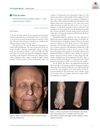
 Rothmund-Thomson syndrome type 2 can cause chronic, poorly healing wounds.
GPC1 is important for hair growth by helping blood vessels form around hair follicles.
 11 citations
,
March 2020 in “American Journal of Medical Genetics Part A”
11 citations
,
March 2020 in “American Journal of Medical Genetics Part A” A mutation in the EDNRA gene causes Oro-Oto-Cardiac syndrome, affecting face and heart development.
51 citations
,
December 2006 in “Mammalian Genome” 1 citations
,
January 2018 in “bioRxiv (Cold Spring Harbor Laboratory)” Increased PHGDH expression causes early melanin buildup in hair follicles.