1 citations
,
March 2024 in “Life” Dermoscopy can help assess the severity of chronic radiation-induced skin damage in head and neck cancer patients.
 March 2026 in “International Journal of Science Strategic Management and Technology”
 WomenCare helps predict PCOD risk in women to encourage early medical consultation.
143 citations
,
May 2002 in “PubMed” LGD1069 effectively prevents breast tumors in mice without toxicity.
229 citations
,
May 2006 in “Journal of Experimental Botany” Reactive oxygen species are essential for plant root hair growth.
64 citations
,
March 2004 in “The journal of investigative dermatology/Journal of investigative dermatology” GPRC5D is linked to the formation of hair, nails, and certain tongue areas.
 March 2021 in “Journal of The European Academy of Dermatology and Venereology”
 Low quality of life and high HSS-29 scores increase risk of losing patients during treatment.
 1 citations
,
September 2016 in “Hair transplant forum international”
1 citations
,
September 2016 in “Hair transplant forum international” Dr. Muhammad Ahmad created a simpler system to better describe male pattern hair loss.
12 citations
,
March 2013 in “The American journal of dermatopathology/American journal of dermatopathology” Birt–Hogg–Dubé Syndrome requires genetic testing for accurate diagnosis due to its similarities with tuberous sclerosis.
 September 2023 in “Acta dermato-venereologica”
 Pilonidal sinus disease is linked to more severe hidradenitis suppurativa.
53 citations
,
March 2006 in “Biopolymers” TTD hair is brittle due to fewer sulfur amino acids and unstable disulfide bonds.
114 citations
,
July 2003 in “PubMed” Lack of KSR1 stops certain skin tumors in mice.
 16 citations
,
September 2008 in “Dermatologic Therapy”
16 citations
,
September 2008 in “Dermatologic Therapy” CAH is a genetic disorder affecting cortisol production and causing hormonal imbalances, with treatment and diagnosis varying by form and symptoms.
 April 2020 in “Journal of the Endocrine Society”
 Non-classic congenital adrenal hyperplasia (NCCAH) can mimic PCOS and requires genetic testing for proper diagnosis and treatment.
 February 2021 in “International Journal of Science and Research (IJSR)”
 A higher testosterone/dihydrotestosterone ratio in PCOS patients may indicate worse metabolic health.
147 citations
,
October 2021 in “Cancer Communications” RC48 shows promise for treating certain advanced cancers, but more research is needed.
13 citations
,
June 2017 in “Biochimie open” All five human steroid 5α-reductase enzymes are found in the endoplasmic reticulum.
 April 2017 in “Journal of Investigative Dermatology”
 HPH-15, a new compound, effectively reduces skin fibrosis in experiments without causing harm.
Mutations in the hairless protein gene cause hair loss.
 May 2022 in “Experimental dermatology”
 Trichothiodystrophy hair is structurally abnormal with protein and organization issues.
2 citations
,
January 2016 Rat hair follicle stem cells can be successfully cultured and may be useful for creating tissue-engineered hair, vessels, and skin.
 March 2010 in “Ejc Supplements”
 ROR-alpha may increase the growth of certain breast cancer cells by boosting aromatase, which could affect breast cancer prognosis.
November 2025 in “Informatica” The method greatly improves low-light sports images' quality and reduces artifacts.
2 citations
,
June 2018 in “International Journal of Pharmacological Research” Hutchinson-Gilford Progeria Syndrome caused rapid aging due to a genetic mutation, with treatments to manage symptoms.
 9 citations
,
March 2018 in “European journal of dermatology/EJD. European journal of dermatology”
9 citations
,
March 2018 in “European journal of dermatology/EJD. European journal of dermatology” A new mutation in the ST14 gene causes a rare skin and hair disorder in a specific family.
 March 2023 in “JAAD case reports”
 A new genetic change in the keratin 10 gene caused a skin condition called ichthyosis hystrix in a father and his daughter.
109 citations
,
June 2011 in “Molecular and Cellular Endocrinology” Vitamin D receptor mutations can cause alopecia by affecting hair growth genes.
 October 2023 in “The Journal of Dermatology”
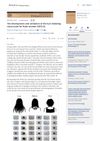
 The HSVS-A is an effective tool for quickly screening hair shedding in Asian women.
Skin cells can naturally limit the growth of cancerous changes by balancing cell renewal and differentiation.
 December 2025 in “Frontiers in Medicine”
 ARWH is a rare hair disorder with no cure, but potential treatments include minoxidil and other therapies.

RCVS should be considered in thunderclap headaches, and MRA and DSA are better for diagnosis than CT angiogram.