Search
for
Sort by
Research
540-570 / 1000+ results
research 1406 DETECTION OF MEMBRANE ANDROGEN-BINDING SITE IN LIVING RAT PROSTATE AND EVALUATION OF ITS ROLE IN PROSTATE BLOOD FLOW REGULATION
The research found that androgens help control blood flow in the rat prostate through a specific binding site.

research Recovery of resistant alopecia areata treated with tofacitinib: An 8-year-old child's case report
Tofacitinib helped an 8-year-old child recover from a type of hair loss that is hard to treat.
research Rational Design and Synthesis of 4-((1R,2R)-2-Hydroxycyclohexyl)-2(trifluoromethyl)benzonitrile (PF-998425), a Novel, Nonsteroidal Androgen Receptor Antagonist Devoid of Phototoxicity for Dermatological Indications
PF-998425 is a new, effective, and non-phototoxic treatment for skin conditions related to androgens.

research REV7: a small but mighty regulator of genome maintenance and cancer development
REV7 is crucial for genome stability and cancer treatment, making it a potential target for therapy.
research The RpoS Gatekeeper in Borrelia burgdorferi: An Invariant Regulatory Scheme That Promotes Spirochete Persistence in Reservoir Hosts and Niche Diversity
RpoS helps Borrelia burgdorferi survive in hosts and adapt to different environments.
research Nonsteroidal Selective Androgen Receptors Modulators (SARMs): Designer Androgens with Flexible Structures Provide Clinical Promise
SARMs may offer benefits by boosting muscle effects without unwanted side effects.
research Cell surface receptor kinase FERONIA linked to nutrient sensor TORC signaling controls root hair growth at low temperature linked to low nitrate inArabidopsis thaliana
A protein called FERONIA helps control root hair growth in response to cold and low nitrogen by activating nutrient-sensing pathways in a plant called Arabidopsis.

research Pharmacokinetic parameters and mechanisms of inhibition of rat type 1 and 2 steroid 5α-reductases: determinants for different in vivo activities of GI198745 and finasteride in the rat 3 3Abbreviations: r5AR1, rat 5α-reductase 1; r5AR2, rat 5α-reductase 2; and DHT, dihydrotestosterone.
GI198745 is more potent and longer-lasting than finasteride, potentially better for treating hair loss.

research 441 RPGRIP1L facilitates desmosomal adhesion through suppressing PKCβII-mediated desmoglein endocytosis: Implication in pemphigus
RPGRIP1L helps skin cells stick together by blocking PKCβII, which can prevent skin blistering like in pemphigus.

research Cirmcumscribed juvenile pityriasis rubra pilaris in a 5-year-old-girl treated with topical keratolytic and steroid
A 5-year-old girl with a rare skin disorder was effectively treated with skin creams instead of oral medication.

research A rare case of Vitamin D dependent rickets type II: a case report
A child with a rare type of rickets showed some improvement with high doses of vitamin D, but such conditions often respond poorly to treatment.

research Vitamin D-dependent rickets type II: extreme end organ resistance to 1,25-dihydroxy vitamin D3 in a patient without alopecia
A boy with severe Vitamin D-resistant rickets did not respond to treatment and lacked a common symptom, suggesting a need for alternative treatments.

research Non-nutritional rickets: Approach, precision medicine, and outcomes
Early diagnosis and tailored treatment improve outcomes for non-nutritional rickets.

research QuantAnts machines discover biomarkers for RAS signaling activation and design sgRNAs for CRISPR to target complex CD9, CD34, and CD74.
The QuantAnts machines can find cancer markers and create CRISPR targets for them.

research Treatment of alopecia universalis with topical Janus kinase inhibitors – a double blind, placebo, and active controlled pilot study
Topical JAK inhibitors may help treat alopecia universalis by promoting hair regrowth.

research Rps14 upregulation promotes inner ear progenitor proliferation and hair cell regeneration in the neonatal mouse cochlea
Increasing Rps14 helps grow more inner ear cells and repair hearing cells in baby mice.
research Hereditary 1,25-Dihydroxyvitamin D Resistant Rickets due to a Mutation Causing Multiple Defects in Vitamin D Receptor Function
A specific gene mutation causes vitamin D resistance, but certain vitamin D analogs might help.
research CLINICAL AND HISTOLOGICAL EVALUATION OF THE REGENERA® METHOD FOR THE TREATMENT OF ANDROGENETIC ALOPECIA
The Rigenera method improved hair thickness and reduced hair loss in patients.
research 290 Brepocitinib improves cicatricial alopecia and downregulates key T-helper biomarkers
Brepocitinib improves cicatricial alopecia and reduces key immune markers.
research Effect of adenosine triphosphate on ribociclib-induced skin toxicity in rats

research Cyclical Changes in Rat Vibrissa Follicles Maintained In Vitro
Rat vibrissa follicles are useful for studying hair growth cycles, especially the transition from pro-anagen to anagen.
research Severe pityriasis rubra pilaris complicated with Kaposi's varicelliform eruption and cutaneous MRSA infection case report
Isotretinoin effectively improved severe pityriasis rubra pilaris with complications.
research Advances in the treatment of autosomal recessive congenital ichthyosis, a look towards the repositioning of drugs
Drug repositioning offers hope for new, affordable treatments for a genetic skin disorder called ARCI.
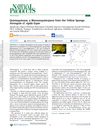
research Quintaquinone, a Merosesquiterpene from the Yellow Sponge Verongula cf. rigida Esper
A new compound from a sponge strongly inhibits an enzyme linked to male-pattern hair loss without being toxic at low levels.
research NDA Submission of Vepdegestrant (ARV-471) to U.S. FDA: The Beginning of a New Era of PROTAC Degraders
Vepdegestrant may become the first FDA-approved PROTAC degrader, marking a new era in drug development.
research Retinoic acid exerts sexually dimorphic effects on muscle energy metabolism and function
Retinoic acid affects male and female muscle energy use and function differently.
research CRISPR/Cas9-Mediated Generation of COL7A1-Deficient Keratinocyte Model of Recessive Dystrophic Epidermolysis Bullosa.
Scientists created a cell model to study and find treatments for a skin disease called RDEB.

research Predominant expression of 5 alpha-reductase type 1 in pubic skin from normal subjects and hirsute patients.
The main enzyme found in pubic skin that could be targeted to treat excessive hair growth is 5 alpha-R2.
research Cancer vaccine strategies and studies of human thioredoxin reductase splice variants
Vaccines and targeting TrxR variants can help prevent cancer and reduce metastasis.