December 2014 in “Journal of Biomedical Research” Recombinant thymosin β4 promotes blood vessel growth and reduces muscle damage.
 July 1995 in “Hair transplant forum international”
 Italian hair restoration surgeons had their first meeting in Rome.

Canadian lawsuits involving 5-alpha-reductase inhibitors are related to persistent erectile dysfunction side effects, with no judgments against companies yet.
 5 citations
,
October 2014 in “Gynecological Endocrinology”
5 citations
,
October 2014 in “Gynecological Endocrinology” Triptorelin helps evaluate hormone production in Sertoli-Leydig cell tumors.
151 citations
,
June 2010 in “Endocrinology and metabolism clinics of North America” Two rare genetic diseases cause severe rickets in children due to defects in vitamin D metabolism.
11 citations
,
December 2017 in “Orphanet Journal of Rare Diseases” A new mutation in the ST14 gene broadens the understanding of ichthyosis-hypotrichosis syndrome.
12 citations
,
May 2012 in “Journal of Biomedical Optics” Trichoscan® is best for measuring hair growth, RCM for analyzing hair follicles, and OCT is useful for both.
May 1961 in “Tumori Journal” Vitamin A treatment reduced abnormal cell growth and improved skin conditions in rats with tumors.
January 2026 in “Journal of Dermatological Science” DcR3 helps heal wounds and regrow hair by changing macrophages to a repair-focused type.
 March 2010 in “Ejc Supplements”
 ROR-alpha may increase the growth of certain breast cancer cells by boosting aromatase, which could affect breast cancer prognosis.
December 2012 in “http://isrctn.org/>”  January 2023 in “Pesquisa Veterinária Brasileira”
 A KRT71 mutation in Hereford cattle in Uruguay causes thin, curly hair and scaly skin.
 November 2022 in “Journal of Investigative Dermatology”
 Blocking mTORC1 activity could increase hair pigmentation and potentially reverse greying.
 127 citations
,
July 2002 in “EMBO journal”
127 citations
,
July 2002 in “EMBO journal” Normal skin cell renewal doesn't need RAR signaling, but vitamin A-related skin thickening does.
97 citations
,
January 1999 in “International Journal of Dermatology” Pityriasis rubra pilaris is a rare skin disorder with reddish-orange patches and thickened skin, needing better treatment understanding.
13 citations
,
January 2015 in “Steroids” The study created a model to help design new inhibitors for steroidal 5α-reductase enzymes.
 17 citations
,
October 2006 in “Molecular and Cellular Endocrinology”
17 citations
,
October 2006 in “Molecular and Cellular Endocrinology” The L457(3.43)R mutation in the human lutropin receptor causes increased activity and hormone insensitivity, leading to precocious puberty.
January 2010 in “China Animal Husbandry & Veterinary Medicine” RORs may influence cashmere growth cycles.
31 citations
,
March 2010 in “Molecular Endocrinology” Androgens like testosterone increase colon muscle contractions by affecting calcium pathways.
 7 citations
,
July 2020 in “Pigment cell & melanoma research”
7 citations
,
July 2020 in “Pigment cell & melanoma research” RT1640 treatment reverses gray hair and promotes hair growth in mice.
 2 citations
,
November 2017 in “PloS one”
2 citations
,
November 2017 in “PloS one” Some vitamin D analogs can thicken skin and reduce pore size like a common acne treatment, with one analog also affecting skin growth factors.
 October 2023 in “Scientific Reports”
 Gene therapy helped rats with a specific type of rickets grow hair without severe inflammation.
 2 citations
,
January 2020 in “Einstein (São Paulo)”
2 citations
,
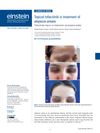
January 2020 in “Einstein (São Paulo)” Topical tofacitinib shows promise as a future treatment for alopecia areata.
20 citations
,
April 2000 in “Experimental dermatology” ODC transgenic mice can model human hair loss with skin lesions.
 May 2026 in “Frontiers in Pharmacology”
 Long-term use of 5α-reductase inhibitors may improve survival in men with kidney cancer.
11 citations
,
February 2023 in “British Journal of Pharmacology” Isoxazole 9 (ISX9) may help regrow hair by activating certain cell signals.
 July 2025 in “Journal of Cosmetic Dermatology”
 Alternative treatments are needed when Tofacitinib alone fails for alopecia areata.
 49 citations
,
January 2004 in “Journal of steroid biochemistry and molecular biology/The Journal of steroid biochemistry and molecular biology”
49 citations
,
January 2004 in “Journal of steroid biochemistry and molecular biology/The Journal of steroid biochemistry and molecular biology” Selective non-steroidal inhibitors of 5α-reductase type 1 can help treat DHT-related disorders.
October 2014 in “Archivio Istituzionale della Ricerca (Universita Degli Studi Di Milano)” A new type of nerve cell involved in itch perception was discovered.
 19 citations
,
December 2016 in “The journal of pharmacology and experimental therapeutics/The Journal of pharmacology and experimental therapeutics”
19 citations
,
December 2016 in “The journal of pharmacology and experimental therapeutics/The Journal of pharmacology and experimental therapeutics” Certain drugs increase calcium levels in cancer cells by triggering internal calcium release.