 4 citations
,
January 2022 in “Life”
4 citations
,
January 2022 in “Life” Tissue engineering could be a future solution for hair loss, but it's currently expensive, complex, and hard to apply in real-world treatments.
1 citations
,
January 2018 in “International Journal of Clinical and Developmental Anatomy” Dermoscopy improves accuracy in predicting treatment success for androgenetic alopecia with the Regenera® protocol.
 October 2024 in “Skin Appendage Disorders”
 Autologous micrografting via the Rigenera® system shows promise in improving hair loss treatment.
 408 citations
,
January 2017 in “Science”
408 citations
,
January 2017 in “Science” Some wound-healing cells can turn into fat cells around new hair growth in mice.
 252 citations
,
April 2009 in “Seminars in Cell & Developmental Biology”
252 citations
,
April 2009 in “Seminars in Cell & Developmental Biology” The immune system plays a key role in tissue repair, affecting both healing quality and regenerative ability.
236 citations
,
April 2015 in “Cell” Plucking some hairs can trigger nearby unplucked hairs to grow back more due to a collective response.
 202 citations
,
August 2007 in “Biomaterials”
202 citations
,
August 2007 in “Biomaterials” Artificial skin development has challenges, but new materials and understanding cell behavior could improve tissue repair. Also, certain growth factors and hydrogel technology show promise for advanced skin replacement therapies.
201 citations
,
April 2017 in “Regeneration” Macrophages and fibroblasts help repair organs after injury, affecting whether they regenerate or scar.
 188 citations
,
March 2018 in “Frontiers in Immunology”
188 citations
,
March 2018 in “Frontiers in Immunology” Regulatory T-cells are important for healing and regenerating tissues in various organs by controlling immune responses and aiding stem cells.
 179 citations
,
April 2012 in “Nature Communications”
179 citations
,
April 2012 in “Nature Communications” Regenerated fully functional hair follicles using stem cells, with potential for hair regrowth therapy.
176 citations
,
June 2019 in “Cells” Different fibroblasts play key roles in skin healing and scarring.
 162 citations
,
July 2011 in “Biomacromolecules”
162 citations
,
July 2011 in “Biomacromolecules” Chitosan nanofiber scaffolds improve skin healing and are promising for wound treatment.
 133 citations
,
September 2013 in “Nature Reviews Molecular Cell Biology”
133 citations
,
September 2013 in “Nature Reviews Molecular Cell Biology” Different types of stem cells and their environments are key to skin repair and maintenance.
123 citations
,
January 2020 in “International Journal of Molecular Sciences” Understanding fibroblasts can help create treatments to reduce scars and improve healing.
 71 citations
,
February 2020 in “Journal of Translational Medicine”
71 citations
,
February 2020 in “Journal of Translational Medicine” Progress has been made in skin and nerve regeneration, but more research is needed to improve methods and ensure safety.
71 citations
,
January 2020 in “Stem Cells International” Epidermal stem cells help heal skin, but how they work is still unclear.
 46 citations
,
March 2015 in “Regeneration”
46 citations
,
March 2015 in “Regeneration” Mice can grow new hair follicles after skin wounds through a process not involving existing hair stem cells, but requiring more research to understand fully.
39 citations
,
August 2017 in “Annual Review of Genetics” Understanding tissue regeneration in animals can improve regenerative medicine.
 39 citations
,
April 2015 in “Regeneration”
39 citations
,
April 2015 in “Regeneration” Lizards can regrow their tails, and studying this process helps understand scar-free healing and limb regeneration.
 31 citations
,
June 2017 in “Regeneration”
31 citations
,
June 2017 in “Regeneration” BMP2 needs periosteal tissue to help regenerate mouse middle finger bones within a specific time.
28 citations
,
October 2024 in “Advanced Materials” Artificial skin can heal wounds without scars and regenerate hair, oil, and sweat glands.
 26 citations
,
August 1971 in “Journal of Morphology”
26 citations
,
August 1971 in “Journal of Morphology” Lizards can regrow their tail scales with the same structure, distribution, and gender-specific features as the original ones, and this unique ability is not seen in adult mammals.
 25 citations
,
January 2018 in “Acta Clinica Croatica”
25 citations
,
January 2018 in “Acta Clinica Croatica” Allogeneic platelet gel heals chronic wounds better than hydrogel.
21 citations
,
June 2016 in “PloS one” Zebrafish need MYC and FGF to regenerate inner ear hair cells.
 17 citations
,
December 2010 in “Journal of Investigative Dermatology”
17 citations
,
December 2010 in “Journal of Investigative Dermatology” Flightless I protein affects hair growth, with low levels delaying it and high levels increasing hair length in rodents.
 16 citations
,
July 2016 in “Journal of Dermatological Science”
16 citations
,
July 2016 in “Journal of Dermatological Science” Regenerated hairs can regain their color if the wound occurs during a certain stage of hair growth, and this process is helped by specific skin cells and proteins.
 15 citations
,
January 2019 in “Experimental Dermatology”
15 citations
,
January 2019 in “Experimental Dermatology” Lanyu pigs show that partial-thickness wounds can partially regenerate important skin structures, which may help improve human skin healing.
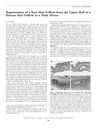 13 citations
,
October 2002 in “Journal of Investigative Dermatology”
13 citations
,
October 2002 in “Journal of Investigative Dermatology” The upper half of a human hair follicle can grow a new hair in a mouse, but success is rare.
12 citations
,
April 2019 in “Nature protocols” Scientists created a functional 3D skin system from stem cells that can be transplanted into wounds.
 11 citations
,
June 2016 in “npj Regenerative Medicine”
11 citations
,
June 2016 in “npj Regenerative Medicine” The symposium concluded that understanding how different species repair tissue and how this changes with age can help advance regenerative medicine.