 October 2023 in “Facial Plastic Surgery”
 Local anesthesia with a "ring block" is preferred for pain control during FUE hair transplant procedures.
 March 2026 in “Frontiers in Pharmacology”
 Exprecell™ is as effective as traditional methods but produces more f-PRF and is simpler to use.
 December 2023 in “ACS Sustainable Chemistry & Engineering”
 Keratin can be successfully taken from human hair using a mix of choline chloride and ethanolamine.
6 citations
,
August 2025 in “Frontiers in Bioengineering and Biotechnology” Platelet-derived exosomes offer better regenerative therapy but face challenges in isolation and regulation.
 2 citations
,
January 2022 in “Hair transplant forum international”
2 citations
,
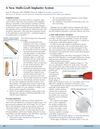
January 2022 in “Hair transplant forum international” The FUE-LE technique combines two hair transplant methods to harvest more hair with minimal visible scarring, especially for patients with advanced hair loss.
 2 citations
,
May 2018 in “International Society of Hair Restoration Surgery”
2 citations
,
May 2018 in “International Society of Hair Restoration Surgery” The new system makes hair transplants faster and more precise.
 November 2024 in “BMC Surgery”
 Follicular unit extraction is an effective and minimally invasive treatment for male hair loss.
11 citations
,
January 2022 in “Brazilian Oral Research” XP-endo Finisher R removes more root filling material than PUI in curved canals.
 May 2017 in “InTech eBooks”
 Follicular Unit Extraction (FUE) is a popular hair transplant method with minimal scarring that can transplant many grafts quickly and improve appearance and psychological well-being.
 June 1997 in “The American Journal of Cosmetic Surgery”
 Reharvesting hair from donor sites using punch and strip methods can provide more hair for transplants and improve scar appearance.
 7 citations
,
January 2019 in “Archives of Aesthetic Plastic Surgery”
7 citations
,
January 2019 in “Archives of Aesthetic Plastic Surgery” A forehead-supporting chair improves comfort and results in hair transplant surgery.
 13 citations
,
November 2018 in “Annals of Plastic Surgery”
13 citations
,
November 2018 in “Annals of Plastic Surgery” Nonshaven follicular unit extraction is a good hair transplant option that doesn't require shaving and can transplant up to 3000 grafts daily.
 2 citations
,
July 1996 in “Hair transplant forum international”
2 citations
,
July 1996 in “Hair transplant forum international” The document's conclusion cannot be provided because the document is not accessible or understandable.
 April 2019 in “Journal of Investigative Dermatology”
 The search scheme SMRI is faster and more secure for retrieving encrypted data from the cloud.
 October 2022 in “Hair Transplantation”
 Ergonomics can make hair restoration surgery using the FUE technique more efficient and comfortable for surgeons.
 3 citations
,
September 2016 in “Hair transplant forum international”
3 citations
,
September 2016 in “Hair transplant forum international” To avoid damaging hair follicles during strip harvesting, use a specific technique.
13 citations
,
April 2016 in “Journal of Visualized Experiments” The method successfully isolates hair follicle stem cells and skin cells from mice for research.
 142 citations
,
September 2020 in “Journal of neurophysiology”
142 citations
,
September 2020 in “Journal of neurophysiology” Young adults have about 230,000 tactile nerve fibers, decreasing 5-8% per decade with age.
 15 citations
,
October 2017 in “Dermatologic Clinics”
15 citations
,
October 2017 in “Dermatologic Clinics” New treatments for male hair loss show promise but need more research for safety and effectiveness.
 4 citations
,
May 2021 in “Dermatologic Clinics”
4 citations
,
May 2021 in “Dermatologic Clinics” The conclusion is that hair loss in women is caused by a mix of hormonal, environmental, and genetic factors, and treatments should target these various causes.
 September 2011 in “Cancer”
 Men who start losing hair at 20 may have a higher chance of getting prostate cancer later.
 4 citations
,
May 2013 in “Dermatologic Surgery”
4 citations
,
May 2013 in “Dermatologic Surgery” Three new techniques simplify and improve the preparation of tissue samples for skin cancer surgery.
 December 2023 in “Facial Plastic Surgery”
 Follicular unit excision (FUE) is a popular hair transplant method that avoids a linear scar but has potential challenges and side effects if not done properly.
 October 2023 in “Facial Plastic Surgery”
 The document concludes that hair transplant practices, especially Follicular Unit Excision, are continually improving with refined techniques and tools for better results.
January 2012 in “International Society of Hair Restoration Surgery”  3 citations
,
May 2021 in “Indian Dermatology Online Journal”
3 citations
,
May 2021 in “Indian Dermatology Online Journal” FUE is a versatile hair transplant technique with many uses and good outcomes when performed with skill.
 September 2017 in “Indian Journal of Plastic Surgery”
 Garg and Garg created an affordable, easy-to-use training program for hair restoration surgery using everyday items, which can teach a technician the basics in 3-4 weeks with two hours of daily practice.
5 citations
,
January 1999 in “Journal of dermatological treatment” Bioré Pore Perfect strips effectively and safely clean pores on the nose.
 June 2017 in “Advances in intelligent systems and computing”
 The new device can implant cell mixtures more effectively for hair loss treatment and is easier for operators to use.