October 2023 in “Journal of Mind and Medical Sciences” Early detection and a multidisciplinary approach are crucial for improving gastric cancer survival rates.
Robotic FUE hair transplants are better for men because they are precise, safe, and look natural.
 8 citations
,
March 2016 in “Hair transplant forum international”
8 citations
,
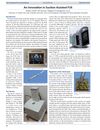
March 2016 in “Hair transplant forum international” The new FUE device improves hair transplant safety and efficiency.
The robotic system for hair restoration surgery works well, giving similar results to manual techniques after 9 months.
 December 2024 in “Journal of Cutaneous and Aesthetic Surgery”
 Advanced FUE systems have evolved to improve precision and efficiency in hair transplantation.
 31 citations
,
November 2013 in “Dermatologic Clinics”
31 citations
,
November 2013 in “Dermatologic Clinics” The ARTAS robotic system for hair restoration is efficient with fewer cuts than manual methods, but it's limited to certain hair types and can still leave scars.
September 2023 in “Journal of the American Academy of Dermatology” Combining robotic and specialized tools improves hair transplant results.
 September 2024 in “Journal of Cosmetic Dermatology”
 Robotic hair transplants are easier and quicker to learn than traditional methods.

The document concludes that the FOLLYSIS© system improves hair transplant processes and patient monitoring with high accuracy and less skin trauma.
 November 2014 in “PubMed”
 A robotic device could improve surgical hair restoration, but it needs more testing to confirm its effectiveness compared to current methods.
 2 citations
,
November 2016 in “PubMed”
2 citations
,
November 2016 in “PubMed” Robotic hair restoration is efficient, minimally invasive, reduces scarring, and leads to quick healing with high patient satisfaction.
Autonomous robotic surgery is advancing but still requires human supervision for complex procedures.
 August 2023 in “Clinical, Cosmetic and Investigational Dermatology”
 The new hair transplant device reduces damage to hair follicles and makes surgery more comfortable for the surgeon.
 October 2022 in “Hair Transplantation”
 Ergonomics can make hair restoration surgery using the FUE technique more efficient and comfortable for surgeons.
17 citations
,
January 2014 in “Dermatology Online Journal” The Artas robotic system is effective and reliable for hair transplants.
 2 citations
,
January 2011 in “Lecture Notes in Computer Science”
2 citations
,
January 2011 in “Lecture Notes in Computer Science” A proposed robotic system could make hair harvesting for baldness treatment faster and more precise.
 November 2025 in “Indian Journal of Plastic Surgery”
 The FUET method improves hair transplant precision and outcomes by combining FUT and FUE techniques under a surgeon's control.
 9 citations
,
January 2020 in “IEEE Access”
9 citations
,
January 2020 in “IEEE Access” The KEBOT system is a highly accurate AI tool for analyzing hair transplants.
October 2022 in “Hair Transplantation” Motorized FUE with blunt punches improved hair restoration by reducing damage during graft harvesting.
 41 citations
,
August 2013 in “Facial Plastic Surgery Clinics of North America”
41 citations
,
August 2013 in “Facial Plastic Surgery Clinics of North America” FUE provides minimal scarring and quick recovery in hair transplantation, and surgeons not using it may lag in technology.
 30 citations
,
June 2008 in “Dermatologic Surgery”
30 citations
,
June 2008 in “Dermatologic Surgery” The SAFE System may improve hair transplant results but isn't suitable for everyone.
 27 citations
,
January 2006 in “Dermatologic Surgery”
27 citations
,
January 2006 in “Dermatologic Surgery” The SAFE System for hair transplants results in low damage to follicles and could make the procedure suitable for more patients.
 January 2024 in “Advances in Cosmetic Surgery”
 Robotic hair restoration is a safe, efficient alternative to manual hair transplant, best for men with dark, thick hair and skin, requiring sufficient donor hair and postoperative care.
October 2022 in “Hair Transplantation” New FUE systems have greatly improved hair restoration surgery.
 1 citations
,
November 2009 in “Cambridge University Press eBooks”
1 citations
,
November 2009 in “Cambridge University Press eBooks” FUE is a less invasive hair restoration method with potential to become standard, offering benefits like reduced scarring and pain, but requires experience to minimize risks.
January 2024 in “Srpski arhiv za celokupno lekarstvo” The new device improves hair transplant results by enhancing follicle viability and allowing more grafts in one day.
 March 2024 in “Revista Argentina de de Cirugía Plástica Estética y Reparadora”
 FUE hair transplants now give more natural results and faster recovery with less damage.
 16 citations
,
October 2008 in “Dermatologic Surgery”
16 citations
,
October 2008 in “Dermatologic Surgery” The new powered hair transplant method is faster and damages fewer hairs than the manual method.
 September 2023 in “Chinese Medical Journal”
 Robotic surgical systems are being used more in plastic and reconstructive surgery due to their precision and control, improving patient outcomes and satisfaction, despite challenges like high costs.
January 2024 in “Wiadomości Lekarskie” Robotic surgery improves precision and outcomes but still relies on surgeon expertise.