8 citations
,
July 2004 in “Journal of morphology” Marsupial hair structure and keratin distribution are similar to placental mammals.
1 citations
,
January 2025 in “International Journal of Cosmetic Science” Age-related hair curvature increases due to internal structural changes from grooming.
4 citations
,
July 2010 in “International Journal of Cosmetic Science” Curved human hair has different structures on its convex and concave sides.
65 citations
,
May 2006 in “Journal of Structural Biology” Hair curliness is due to uneven distribution of different cortices within the hair fiber.
35 citations
,
September 2003 in “Archives of dermatology” Tiger tail bands in hair are caused by wavy hair fibers with melanin, unlike straight fibers in normal hair.
3 citations
,
October 1994 in “Medical Molecular Morphology” The lower part of rat vibrissa hair gets more blood and is well-protected for growth.
2 citations
,
January 2017 Hair movement can indicate hair quality and health.
 6 citations
,
February 2016 in “American Journal of Dermatopathology”
6 citations
,
February 2016 in “American Journal of Dermatopathology” The boy with woolly hair nevus had thinner hair and abnormal hair follicles, which improved with treatment but worsened when treatment stopped.
50 citations
,
March 2001 in “Clinics in dermatology” Human hair is complex and grows in cycles starting from embryonic life.
January 2000 in “The Mouseion at the JAXlibrary (Jackson Laboratory)” The lanceolate hair-J mutation in mice helps understand human hair disorders like Netherton's syndrome.
22 citations
,
January 1985 Water makes hair more flexible, especially the outer layer.
56 citations
,
June 2010 in “Clinical and experimental dermatology” Coudability hairs are useful markers for alopecia areata activity.
July 2009 in “International Journal of Cosmetic Science” Japanese women's curved hair has an uneven internal structure and varied amino acid composition.
2 citations
,
January 1987 in “PubMed” Woolly hair syndrome is a genetic condition causing frizzy, fragile hair.
2 citations
,
July 2019 in “Indian dermatology online journal” A 17-year-old girl and her brothers have a rare hair condition with long eyelashes, thick eyebrows, and easily pluckable hair.
 21 citations
,
July 2010 in “International Journal of Cosmetic Science”
21 citations
,
July 2010 in “International Journal of Cosmetic Science” Older people's hair becomes less shiny because it gets more uneven and curved.
12 citations
,
January 1934 in “Proceedings of the Royal Society of London Series B Containing Papers of a Biological Character” Stretched hair has a similar structure to natural silk, showing hair's elasticity involves reversible changes within its molecules.
2 citations
,
January 1990  7 citations
,
January 2012 in “International Journal of Trichology”
7 citations
,
January 2012 in “International Journal of Trichology” A man with Woolly Hair Syndrome had very curly, fragile hair, and doctors used a special scalp examination to diagnose him without invasive tests.
Hair dysplasias involve various hair disorders causing fragility, breakage, and poor hair adhesion.
1 citations
,
July 1935 in “Nature” Animal hair can curl tightly on its own, especially in foxes, due to changes in keratin.
 85 citations
,
February 1989 in “Journal of The American Academy of Dermatology”
85 citations
,
February 1989 in “Journal of The American Academy of Dermatology” Children with loose anagen hair have easily pluckable hair due to root sheath problems, and it might improve without treatment.

Researchers developed a new model for more realistic computer graphics of hair by considering how light scatters on hair fibers.
March 2018 in “Journal of Experimental Biology” Hair curliness is caused by the arrangement and length of two different cell types.
16 citations
,
January 1977 33 citations
,
September 1987 in “American Journal of Medical Genetics” Uncombable hair is inherited dominantly with complete penetrance.
1 citations
,
May 1983 in “Acta dermato-venereologica” The hairpiece matted due to weathered hair after shampooing.
 January 2013 in “Sen'i Gakkaishi”
 Microfibrils are key for permanent waves, and hydrolyzed keratin improves wave formation and hair condition.
May 2026 in “Applied Spectroscopy” Humidity affects hair structure changes during stretching.
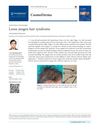 February 2023 in “Cosmoderma”
 Loose anagen hair syndrome causes easily shed hair but usually improves with time.