 April 2018 in “Journal of Investigative Dermatology”
 Glycogen metabolism is important for energy and processes in human hair follicles, and hair follicles may produce glucose from lactate.
 January 2018 in “Stem cell biology and regenerative medicine”
 ATP-dependent chromatin remodeling is crucial for skin development and stem cell function.
 May 2017 in “bioRxiv (Cold Spring Harbor Laboratory)”
 The peach gene pCTG134 helps control the interaction between auxin and ethylene hormones during fruit ripening.
 April 2017 in “Journal of Investigative Dermatology”
 Triptolide effectively and safely reduces actinic keratosis lesions in mice.
 August 2016 in “Journal of Investigative Dermatology”
 Zinc deficiency disrupts hair growth and cycle, but zinc supplements can fix this.
 January 2016 in “Research Explorer (The University of Manchester)”
 Activating the Eda/Edar pathway improves wound healing by enhancing hair follicle growth.
 January 2014 in “Journal of Investigative Dermatology”
 Proteins like aPKC and PDGF-AA, substances like adenosine and ATP, and adipose-derived stem cells all play important roles in hair growth and health, and could potentially be used to treat hair loss and skin conditions.
 November 2013 in “Elsevier eBooks”
 Skin and hair renewal is maintained by both fast and slow cycling stem cells, with hair regrowth primarily driven by specific stem cells in the hair follicle bulge. These cells can also help heal wounds and potentially treat hair loss.
 September 2013 in “Experimental Dermatology”
 The document concluded that stem cells are crucial for skin repair, regeneration, and may help in developing advanced skin substitutes.
 September 2011 in “Clinical Biochemistry”
 Sodium metasilicate improved spinal motoneuron recovery after sciatic nerve injury in rats.

K15 and Id3 are important in hair follicle regeneration, with K15 increasing in early stages and Id3 responding later.
October 2022 in “Experimental Dermatology” New technologies show promise for better hair regeneration and treatments.
 2 citations
,
February 2019 in “Journal of Investigative Dermatology”
2 citations
,
February 2019 in “Journal of Investigative Dermatology” Higher levels of the DP2 receptor may lead to hair loss.
 158 citations
,
February 2000 in “Archives of dermatology”
158 citations
,
February 2000 in “Archives of dermatology” Some people with pattern hair loss may also have scalp inflammation and scarring similar to lichen planopilaris.
 28 citations
,
May 2020 in “BMC plant biology”
28 citations
,
May 2020 in “BMC plant biology” The study concluded that three enzymes are important for plant development by affecting sugar composition and calcium binding in plants.
 25 citations
,
October 1996 in “Dermatologic Clinics”
25 citations
,
October 1996 in “Dermatologic Clinics” Loose Anagen Syndrome causes easy-to-pull, thin hair, mainly in young girls, and improves with age.
 17 citations
,
May 1987 in “Clinical and Experimental Dermatology”
17 citations
,
May 1987 in “Clinical and Experimental Dermatology” A patient with Sézary syndrome showed improvement after treatment and the study suggested follicular mucinosis might indicate future lymphoma risk.
 16 citations
,
February 2010 in “Journal of the European Academy of Dermatology and Venereology”
16 citations
,
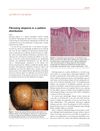
February 2010 in “Journal of the European Academy of Dermatology and Venereology” Fibrosing alopecia in a pattern distribution is a unique hair loss condition that may respond to antiandrogen therapy.
 11 citations
,
March 2001 in “Clinics in Dermatology”
11 citations
,
March 2001 in “Clinics in Dermatology” Hair microscopy is useful for diagnosing hair disorders, but clear definitions are needed for accurate genetic analysis.
 7 citations
,
February 2019 in “International Journal of Dermatology”
7 citations
,
February 2019 in “International Journal of Dermatology” Gray hair is caused by reduced melanin production or transfer issues, linked to aging and possibly health conditions, with treatments focusing on color camouflage.
 788 citations
,
February 2007 in “Nature”
788 citations
,
February 2007 in “Nature” The document concludes that skin stem cells are important for hair growth and wound healing, and could be used in regenerative medicine.
 300 citations
,
August 2012 in “Seminars in Cell & Developmental Biology”
300 citations
,
August 2012 in “Seminars in Cell & Developmental Biology” The conclusion is that certain cell interactions and signals are crucial for hair growth and regeneration.
 291 citations
,
April 2010 in “Gastroenterology”
291 citations
,
April 2010 in “Gastroenterology” Certain proteins, Lgr5 and Lgr6, are important markers of adult stem cells and are involved in tissue repair and cancer development.
236 citations
,
April 2015 in “Cell” Plucking some hairs can trigger nearby unplucked hairs to grow back more due to a collective response.
176 citations
,
June 2019 in “Cells” Different fibroblasts play key roles in skin healing and scarring.
 165 citations
,
September 2001 in “Genes & development”
165 citations
,
September 2001 in “Genes & development” CDP is crucial for lung and hair follicle cell development.
 146 citations
,
May 2002 in “The American journal of pathology”
146 citations
,
May 2002 in “The American journal of pathology” Cathepsin L is essential for normal hair growth and development.
 135 citations
,
December 2013 in “Seminars in Cell & Developmental Biology”
135 citations
,
December 2013 in “Seminars in Cell & Developmental Biology” Stem cells in the hair follicle are regulated by their surrounding environment, which is important for hair growth.
 131 citations
,
July 2009 in “Experimental Dermatology”
131 citations
,
July 2009 in “Experimental Dermatology” The document concludes that specific cells are essential for hair growth and more research is needed to understand how to maintain their hair-inducing properties.
 120 citations
,
November 2014 in “Biological Reviews”
120 citations
,
November 2014 in “Biological Reviews” The telogen phase of hair growth is active and important for preparing hair follicles for regeneration, not just a resting stage.