3 citations
,
June 2018 in “Internal Medicine” Recombinant thrombomodulin can effectively treat severe complications in Cronkhite-Canada syndrome.
 April 2023 in “Cancer research”
 KRTAP2-3 could help predict cancer recurrence by identifying specific cancer cells.
3 citations
,
December 1991 in “PubMed” The infant was diagnosed with Rothmund-Thomson syndrome, a rare genetic disorder causing various physical and developmental issues.
 1 citations
,
December 2018 in “Journal of genetic medicine”
1 citations
,
December 2018 in “Journal of genetic medicine” A small change in the TRPS1 gene leads to a less severe form of a syndrome affecting hair, nose, and finger development.
 33 citations
,
February 2016 in “Journal of Experimental Botany”
33 citations
,
February 2016 in “Journal of Experimental Botany” ROOT HAIR SPECIFIC 10 (RHS10) reduces the length of root hairs in Arabidopsis plants.
16 citations
,
April 2021 in “Plant Signaling & Behavior” MYB30 and EIN3 work against each other to control root hair growth and phosphorus uptake in plants when phosphate is low.
 November 2025 in “Frontiers of Agricultural Science and Engineering”
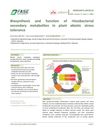
 Rhizobacterial strain RT3 helps lettuce survive drought by producing protective substances like proline.
36 citations
,
July 2005 in “Journal of Neuroendocrinology” Blocking certain brain processes reduces mating behavior in female rats.
12 citations
,
September 2014 in “Bone” A vitamin D receptor mutation causes rickets and affects immune responses.
A new mutation in the TRPS1 gene caused Trichorhinophalangeal syndrome in a 17-year-old, highlighting the need for genetic testing.
 December 2022 in “KSBB Journal”
 Activating TLR3 boosts autophagy gene expression in skin cells.
 April 2015 in “Plastic and Reconstructive Surgery”
 Activating TLR3 helps improve skin and hair follicle regeneration after wounds.
January 2026 in “Journal of Dermatological Science” DcR3 helps heal wounds and regrow hair by changing macrophages to a repair-focused type.
 7 citations
,
July 1975 in “Acta dermato-venereologica”
7 citations
,
July 1975 in “Acta dermato-venereologica” A patient with Rothmund-Thomson syndrome showed skin changes, hair loss, and dental defects but no cataracts or skeletal issues.
 61 citations
,
April 2014 in “Radiation Research”
61 citations
,
April 2014 in “Radiation Research” RTA 408 cream protects mice from radiation skin damage.
January 2014 in “eScholarship (California Digital Library)” Toll-like receptor 3 helps repair the skin barrier after UV damage.
 June 2026 in “Research Square”
 THBS4 helps hair grow by activating hair follicle stem cells.
 1 citations
,
November 2023 in “Rice”
1 citations
,
November 2023 in “Rice” PRX102 is essential for rice root hair growth by helping transport substances to the tips.
July 2025 in “Clinical Case Reports” A new genetic mutation in the TRPS1 gene causes Trichorhinophalangeal Syndrome, leading to specific hair, dental, and bone issues.
 4 citations
,
April 2018 in “Journal of Investigative Dermatology”
4 citations
,
April 2018 in “Journal of Investigative Dermatology” Hydroxypinacolone retinoate is a potent anti-aging ingredient for skin that is more effective and less irritating than other forms of retinoids.
 6 citations
,
September 2024 in “Frontiers in Physiology”
6 citations
,
September 2024 in “Frontiers in Physiology” Overexpression of R-spondin 3 leads to sparse hair and impaired hair regeneration.
188 citations
,
June 1998 in “Molecular cell” Researchers created a mouse with the same mutation as humans with trichothiodystrophy, showing similar symptoms and confirming the condition is due to defects in DNA repair and gene activity.
13 citations
,
April 1994 in “Baillière's clinical endocrinology and metabolism” Some people have genetic mutations that make them resistant to vitamin D, leading to rickets even with enough vitamin D intake.
 10 citations
,
September 2019 in “Experimental Eye Research”
10 citations
,
September 2019 in “Experimental Eye Research” The enzyme RDH12 plays a role in vision and retinal disease, with mutations leading to early onset visual loss and blindness, but the exact disease mechanism is unclear and there are no treatments yet.
 17 citations
,
October 2006 in “Molecular and Cellular Endocrinology”
17 citations
,
October 2006 in “Molecular and Cellular Endocrinology” The L457(3.43)R mutation in the human lutropin receptor causes increased activity and hormone insensitivity, leading to precocious puberty.
 January 2001 in “Biomedical Research”
 THH and PAD type III appear together early in hair growth, but deiminated THH appears later, suggesting another factor is involved.
12 citations
,
May 2016 in “Experimental Dermatology” A new skin model from hair follicles is a safer, simpler alternative for skin tests.
 January 2024 in “Genetics in Medicine Open”
 Adults with Tatton-Brown-Rahman syndrome may have serious heart problems and need lifelong heart monitoring.
 January 2024 in “Ankara City Hospital Medical Journal”
 Rhupus is a complex syndrome that is hard to diagnose due to unclear clinical criteria.
 128 citations
,
August 2015 in “Cell Stem Cell”
128 citations
,
August 2015 in “Cell Stem Cell” Damage to skin releases dsRNA, which activates TLR3 and helps in skin and hair follicle regeneration.