Search
for
Sort by
Research
570-600 / 1000+ resultsresearch Pica for Uncooked Basmati Rice in Two Women with Iron Deficiency and a Review of Ryzophagia
Iron therapy resolved uncooked rice cravings and symptoms in women with iron deficiency.

research A Rare Type of Radiation-Induced Alopecia: Proton-Induced Alopecia
A woman's hair grew back after treatment for a rare hair loss caused by proton therapy.
research ONCO-NK-TRANSITION-GM1: The Bridge Cancer Therapy Manufacturable by Current Pharmaceutical Industry — 60-80% Cure Rate — $50 per Dose A Complete Transitional Drug from Full N‑K GM Series to Current Pharma Capability
ONCO-NK-TRANSITION-GM1 is a low-cost, effective cancer treatment with a high cure rate and no severe side effects.
research ONCO-NK-TRANSITION-GM1: The Bridge Cancer Therapy Manufacturable by Current Pharmaceutical Industry — 60-80% Cure Rate — $50 per Dose A Complete Transitional Drug from Full N‑K GM Series to Current Pharma Capability
ONCO-NK-TRANSITION-GM1 is a low-cost, effective cancer treatment with a high cure rate and no severe side effects.
research 74582 Early improvement in scalp hair regrowth with deuruxolitinib in patients with severe alopecia areata: Pooled analysis of the THRIVE-AA1 and THRIVE-AA2 Phase 3 trials
research Folliculin Deficient Renal Cancer Cells Show Higher Radiosensitivity through Autophagic Cell Death
Kidney cancer cells without folliculin are more sensitive to radiation due to increased self-eating cell death.
research Nano-CoCr2O4 Catalysts Promote the Synthesis of Diamino Pyrimidine Oxide Derivatives
CoCr2O4 catalysts effectively and sustainably produce diaminopyrimidine oxides with high yield.
research Trichothiodystrophy: Current Concepts
TTD patients don't have a higher skin cancer risk because their main issue is with transcription, not DNA repair.

research Direct access to novel chromeno-pyrimidine-N-oxides via tandem base catalyzed double nucleophilic addition/dehydration reaction
New method makes important drug ingredients more easily without needing extra purification steps.
research Irradiation by high-intensity red light-emitting diode enhances human bone marrow mesenchymal stem cells osteogenic differentiation and mineralization through Wnt/β-catenin signaling pathway
High-intensity red LED light boosts bone cell growth and mineralization.
research Mouse models with a disrupted PTHrP gene or a disrupted PTH gene (PTH−/− mice)
PTHrP is important for bone formation and may be targeted for osteoporosis treatment and longevity therapies.
research Thallium poisoning and emergency care:research advances
Thallium poisoning is serious, affecting nerves and organs, and is treated by reducing absorption and removing it from the body.
research Identification of Anabolic Selective Androgen Receptor Modulators with Reduced Activities in Reproductive Tissues and Sebaceous Glands
Two new compounds were found to build bone and muscle without affecting reproductive organs and skin oil glands.
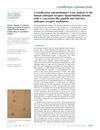
research Crystallization and preliminary X-ray analysis of the human androgen receptor ligand-binding domain with a coactivator-like peptide and selective androgen receptor modulators
Scientists successfully created and analyzed the structure of a part of the human androgen receptor with specific modulators and a peptide to understand how it binds differently in various tissues.
research PROTACs: A novel strategy for cancer drug discovery and development
PROTAC technology shows promise for cancer treatment but needs more effective E3 ligase recruiters.
research Cuprorivaite/hardystonite/alginate composite hydrogel with thermionic effect for the treatment of peri-implant lesion
The hydrogel effectively treats dental implant issues by killing bacteria, reducing inflammation, and improving implant success.
research Dermoscopy of Chronic Radiation-Induced Dermatitis in Patients with Head and Neck Cancers Treated with Radiotherapy
Dermoscopy can help assess the severity of chronic radiation-induced skin damage in head and neck cancer patients.

research MP09-17 METHYLATION OF SRD5A2 IN THE BLOOD AS A NOVEL BIOMARKER TO PREDICT SENSITIVITY TO 5-ARI TREATMENT
SRD5A2 methylation in blood can predict how well someone will respond to finasteride treatment.
research Infrared and Raman Diagnostic Modeling of Phosphate Adsorption on Ceria Nanoparticles
Phosphates strongly attach to cerium dioxide nanoparticles, showing specific spectral patterns.
research A Study on the Clinical Profile and Pharmacogenetics of Methotrexate Treatment in Patients with Rheumatoid Arthritis.
The 1298CC genotype in RA patients leads to higher methotrexate toxicity, while the 1298AA genotype results in better treatment response.
research Thallium
Thallium exposure can cause serious health issues, including nerve damage and hair loss.
research Metabolomics analysis reveals metabolite diversity of the rare cliff plant Oresitrophe rupifraga Bunge
The rare cliff plant Oresitrophe rupifraga has diverse metabolites, with leaves rich in phenolic acids and rhizomes and bulblets high in terpenoids, aiding its growth and potential use.
research Electron microscopic and autoradiographic study of S35-L-cystine incorporation in mouse hair follicles
Mice hair follicles take in the amino acid cystine.
research Study Answers Some Questions about Androgen Suppression Pre-Radiation, but Not All
Extending androgen suppression before radiotherapy offers no extra survival benefit for intermediate-risk prostate cancer.
research Role of phosphatidylinositol 3‐kinase signaling pathway in radiation‐induced liver injury
Inhibiting the PI3K/Akt pathway may help prevent radiation-induced liver injury.
research Planar Proton Minibeam Irradiation Elicits Spatially Confined DNA Damage in a Human Epidermis Model
Proton minibeam radiotherapy may reduce skin side effects by causing localized DNA damage.
research Niacin deficiency increases the sensitivity of rats to the short and long term effects of ethylnitrosourea treatment.
Niacin deficiency makes rats more sensitive to cancer-causing chemicals.
research Expression of retinoid nuclear receptor superfamily members in human hair follicles and its implication in hair growth.
RXR agonists may promote hair growth in humans.
research The role of R-spondins and their receptors in bone metabolism
R-spondins and their receptors help increase bone growth and may be used to treat bone loss diseases.