36 citations
,
January 2010 in “Journal of Pediatric Endocrinology and Metabolism” A new gene mutation causes vitamin D resistance and hair loss in two unrelated girls.
June 2026 in “British Journal of Dermatology” Regional prescribing of ritlecitinib mostly follows national guidance, but psychological assessments and consistent scoring need improvement.
13 citations
,
November 2018 in “Animal Genetics” A new gene variant causes curly coats in some dog breeds.
July 2026 in “Frontiers in Endocrinology” PRLR mutations affect cattle growth and hair weight in hot climates.
 4 citations
,
February 2022 in “International Journal of Cosmetic Science”
4 citations
,
February 2022 in “International Journal of Cosmetic Science” Watercress extract helps increase hair growth and thickness by blocking hair loss factors.
May 2025 in “Experimental Dermatology” A new genetic tool improves the study of hair growth and potential hair disorder treatments.
46 citations
,
May 2021 in “Stem Cell Research & Therapy” Strontium ranelate helps cartilage growth by blocking a specific cell pathway.
10 citations
,
September 2021 in “American Journal of Medical Genetics Part A” Woodhouse-Sakati syndrome shows varied symptoms, including hair loss and diabetes, and is common in Qatar due to a specific genetic variant.
 August 2019 in “International journal of contemporary pediatrics”
 A child with a rare type of rickets showed some improvement with high doses of vitamin D, but such conditions often respond poorly to treatment.
April 2023 in “Journal of Investigative Dermatology” RNase L suppresses regeneration in mammals.
Wnt10b promotes hair growth, while SFRP2 inhibits it in Wanxi Angora rabbits.
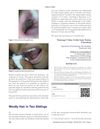 January 2012 in “International Journal of Trichology”
 Two siblings have a rare genetic condition causing curly, coarse hair.
 January 2024 in “Clinical, cosmetic and investigational dermatology”
 A child with a rare vitamin D-resistant condition improved with treatment.
June 2026 in “British Journal of Dermatology” Ritlecitinib is effective and safe for treating alopecia areata, especially in newer cases.
50 citations
,
July 1996 in “Cell” Chromosomal changes, including those in the WRN gene and rDNA, may significantly contribute to aging.
 4 citations
,
January 2017 in “Journal of pediatric endocrinology & metabolism/Journal of pediatric endocrinology and metabolism”
4 citations
,
January 2017 in “Journal of pediatric endocrinology & metabolism/Journal of pediatric endocrinology and metabolism” Two different mutations in the vitamin D receptor gene cause different symptoms and responses to treatment in Lebanese patients with hereditary rickets.
 54 citations
,
January 1983 in “Archives of Dermatology”
54 citations
,
January 1983 in “Archives of Dermatology” KFSD is a rare condition causing scarring hair loss, with no effective treatment known at the time of the report.
1 citations
,
December 2013 in “BMJ case reports” A pregnant woman with Werner's syndrome died during childbirth, but her baby survived and did not have the syndrome.
 July 2024 in “Journal of Rare Diseases”
 Woodhouse-Sakati syndrome shows varied symptoms and genetic differences within families.
June 2026 in “British Journal of Dermatology” Ritlecitinib shows promise for treating alopecia areata with significant hair regrowth and no serious side effects.
 January 2006 in “Advances in developmental biology”
 The Hairless gene is crucial for healthy skin and hair growth.
September 2025 in “Value in Health”  5 citations
,
March 2019 in “Experimental dermatology”
5 citations
,
March 2019 in “Experimental dermatology” Activating TLR3 may help produce retinoic acid, important for tissue regeneration.
January 2026 in “Clinical and Experimental Dermatology” Ruxolitinib helped a patient with alopecia areata regrow hair.
 24 citations
,
November 2008 in “Arquivos Brasileiros de Endocrinologia & Metabologia”
24 citations
,
November 2008 in “Arquivos Brasileiros de Endocrinologia & Metabologia” Four patients with a type of rickets and hair loss had different mutations in their vitamin D receptor gene, causing it to not work properly.
February 2016 in “Journal of Allergy and Clinical Immunology” Consider DRIF and perform skin biopsies for persistent papular rashes.
25 citations
,
January 1983 in “Archives of dermatology” The conclusion is that Darier-White disease was accurately described by White but he missed the key feature of dyskeratotic cells which Darier identified.
November 2025 in “Journal of Investigative Dermatology”  10 citations
,
January 2010 in “Veterinary pathology”
10 citations
,
January 2010 in “Veterinary pathology” A new mutation in the hairless gene causes hair loss and skin wrinkling in mice.
 127 citations
,
July 2002 in “EMBO journal”
127 citations
,
July 2002 in “EMBO journal” Normal skin cell renewal doesn't need RAR signaling, but vitamin A-related skin thickening does.