 12 citations
,
January 2020 in “touchREVIEWS in Endocrinology”
12 citations
,
January 2020 in “touchREVIEWS in Endocrinology” Testosterone may both worsen and protect against COVID-19 effects in men.
 12 citations
,
January 2010 in “Hair transplant forum international”
12 citations
,
January 2010 in “Hair transplant forum international” The survival rates of hair grafts are similar regardless of how they are trimmed.
 11 citations
,
May 2021 in “Journal of Medical Virology”
11 citations
,
May 2021 in “Journal of Medical Virology” Men are more likely to have severe respiratory viral infections like COVID-19 due to hormonal and genetic differences, while women generally have stronger immune responses.
 11 citations
,
November 2020 in “bioRxiv (Cold Spring Harbor Laboratory)”
11 citations
,
November 2020 in “bioRxiv (Cold Spring Harbor Laboratory)” Early treatment with azithromycin and other drugs reduced COVID-19 symptoms and complications.
 9 citations
,
November 2020 in “Medical Hypotheses”
9 citations
,
November 2020 in “Medical Hypotheses” Hair loss may link to weaker COVID-19 immunity, suggesting possible need for extra vaccine boost.
 8 citations
,
January 2022 in “Infectious diseases News Opinions Training”
8 citations
,
January 2022 in “Infectious diseases News Opinions Training” Genetic differences affect COVID-19 severity and treatment effectiveness.
 8 citations
,
December 2021 in “International Journal of Family Studies, Food Science and Nutrition Health”
8 citations
,
December 2021 in “International Journal of Family Studies, Food Science and Nutrition Health” Extra virgin olive oil may boost the immune system and help fight infections like COVID-19.
 8 citations
,
June 2021 in “Journal of Cosmetic Dermatology”
8 citations
,
June 2021 in “Journal of Cosmetic Dermatology” The review found that COVID-19 can cause skin problems, including rashes and issues from wearing PPE, and suggests more research and protective measures for healthcare workers.
 8 citations
,
May 2021 in “Journal of the European Academy of Dermatology and Venereology”
8 citations
,
May 2021 in “Journal of the European Academy of Dermatology and Venereology” A COVID-19 patient had unusual nail discoloration and nail separation possibly due to the virus's effects on small blood vessels.
 8 citations
,
February 2021 in “Cureus”
8 citations
,
February 2021 in “Cureus” Hispanic individuals in Northern Nevada were more affected by COVID-19 but had lower mortality rates than non-Hispanics.
 7 citations
,
June 2021 in “JAAD Case Reports”
7 citations
,
June 2021 in “JAAD Case Reports” A woman had hair loss, nail changes, and skin peeling after a COVID-19 infection, which got better on their own.
 7 citations
,
December 2020 in “Clinics in Dermatology”
7 citations
,
December 2020 in “Clinics in Dermatology” Some alopecia treatments might help treat COVID-19, but more research is needed.
 7 citations
,
July 2020 in “Dermatologic Therapy”
7 citations
,
July 2020 in “Dermatologic Therapy” During the COVID-19 pandemic in Turkey, the most common skin problem for both kids and adults was acne.
 6 citations
,
April 2022 in “JMIR Dermatology”
6 citations
,
April 2022 in “JMIR Dermatology” Public interest in COVID-19-related hair loss increased during COVID-19 surges, especially with the omicron variant.
 6 citations
,
December 2020 in “Dermatological reviews”
6 citations
,
December 2020 in “Dermatological reviews” COVID-19 may worsen with androgens; anti-androgen drugs could help.
 5 citations
,
July 2021 in “bioRxiv (Cold Spring Harbor Laboratory)”
5 citations
,
July 2021 in “bioRxiv (Cold Spring Harbor Laboratory)” Completing a 14-day proxalutamide treatment significantly lowers death rates in hospitalized COVID-19 patients.
 5 citations
,
May 2021 in “International Journal of Infectious Diseases”
5 citations
,
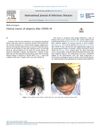
May 2021 in “International Journal of Infectious Diseases” A man experienced hair loss after getting COVID-19, which improved with treatment and might have been triggered by stress related to the illness.
 4 citations
,
October 2021 in “Russian Journal of Cardiology”
4 citations
,
October 2021 in “Russian Journal of Cardiology” After moderate COVID-19, cardiovascular patients had fewer respiratory issues but faced new physical and psychological problems.
 3 citations
,
January 2025 in “Scientific Reports”
3 citations
,
January 2025 in “Scientific Reports” Cepharanthine is safe but not effective in significantly reducing COVID-19 recovery time.
 3 citations
,
November 2022 in “Baghdad Journal of Biochemistry and Applied Biological Sciences”
3 citations
,
November 2022 in “Baghdad Journal of Biochemistry and Applied Biological Sciences” Women with PCOS have higher renin and d-dimer levels, especially if they have COVID-19.
 3 citations
,
December 2021 in “Physiological Research”
3 citations
,
December 2021 in “Physiological Research” Low testosterone may increase COVID-19 severity in men.
 3 citations
,
March 2021 in “Journal of the European Academy of Dermatology and Venereology”
3 citations
,
March 2021 in “Journal of the European Academy of Dermatology and Venereology” The letter is skeptical about the effectiveness of anti-androgen therapy for COVID-19 and calls for strong evidence from clinical trials.
 3 citations
,
November 2020 in “Ciencia Tecnología y Salud”
3 citations
,
November 2020 in “Ciencia Tecnología y Salud” COVID-19 symptoms range from mild to severe, with older adults at higher risk.
 2 citations
,
January 2025 in “Dermatology Practical & Conceptual”
2 citations
,
January 2025 in “Dermatology Practical & Conceptual” Nailfold dermoscopy is a simple, cheap way to check blood vessel changes in COVID-19 patients.
 2 citations
,
January 2021 in “Signa Vitae”
2 citations
,
January 2021 in “Signa Vitae” Certain symptoms and patient profiles, like thoracic pain and general malaise, increase the risk of COVID-19 patients being readmitted to the emergency department.
 2 citations
,
August 2020 in “Journal of The American Academy of Dermatology”
2 citations
,
August 2020 in “Journal of The American Academy of Dermatology” High incidence of hair loss found in COVID-19 patients, but no severity correlation established.
 1 citations
,
January 2024 in “Journal of Community Medicine & Public Health”
1 citations
,
January 2024 in “Journal of Community Medicine & Public Health” Non-hospitalized COVID-19 patients often have lingering symptoms for at least 30 days.
 1 citations
,
January 2024 in “Annals of Dermatology”
1 citations
,
January 2024 in “Annals of Dermatology” COVID-19 may trigger alopecia areata, but more research is needed.
 1 citations
,
August 2023 in “Frontiers in immunology”
1 citations
,
August 2023 in “Frontiers in immunology” Traditional Chinese medicinal foods may help manage long-term post-COVID symptoms.
 1 citations
,
January 2023 in “Revista da Associação Médica Brasileira”
1 citations
,
January 2023 in “Revista da Associação Médica Brasileira” Experts agree on the need for standardized definitions and education for post-COVID-19 conditions.