 26 citations
,
March 1986 in “Clinical and Experimental Dermatology”
26 citations
,
March 1986 in “Clinical and Experimental Dermatology” Scalp hair grows at 0.37 mm/day, forearm hair at 0.18 mm/day, and thigh hair at 0.30 mm/day, with no significant differences found in people with certain hair conditions.
 22 citations
,
June 1980 in “International Journal of Dermatology”
22 citations
,
June 1980 in “International Journal of Dermatology” The document concludes that correct diagnosis of alopecia types is crucial, scalp biopsies are important, and more research is needed.
 21 citations
,
December 2011 in “Chungara”
21 citations
,
December 2011 in “Chungara” Mummy hair's chemical composition may not accurately show ancient people's health due to environmental contamination.
 19 citations
,
January 2011 in “Clinics”
19 citations
,
January 2011 in “Clinics” A young woman with a rare hair loss condition improved with steroid and biotin treatment.
 17 citations
,
June 2014 in “Journal of Ultrasound in Medicine”
17 citations
,
June 2014 in “Journal of Ultrasound in Medicine” Abnormal cuticle and hair shaft medulla cause hair loss in androgenetic alopecia; sonography helps diagnose and manage it.
 11 citations
,
March 2001 in “Clinics in Dermatology”
11 citations
,
March 2001 in “Clinics in Dermatology” Hair microscopy is useful for diagnosing hair disorders, but clear definitions are needed for accurate genetic analysis.
 10 citations
,
February 2019 in “BMC pediatrics”
10 citations
,
February 2019 in “BMC pediatrics” An infant with scalp fungus was cured after extended treatment with antifungal medication.
 7 citations
,
August 2018 in “Journal of cosmetic dermatology”
7 citations
,
August 2018 in “Journal of cosmetic dermatology” Chemical hair straightening improves smoothness and shine but may cause side effects, suggesting a need for safer methods.
 6 citations
,
October 2020 in “Journal of the European Academy of Dermatology and Venereology”
6 citations
,
October 2020 in “Journal of the European Academy of Dermatology and Venereology” Teletrichoscopy is a promising method for diagnosing hair disorders remotely during the COVID-19 pandemic.
 5 citations
,
June 2019 in “British Journal of Dermatology”
5 citations
,
June 2019 in “British Journal of Dermatology” Tofacitinib was more effective than apremilast in treating hair loss in a mouse model of alopecia areata.
 4 citations
,
July 2012 in “Dermatologic Clinics”
4 citations
,
July 2012 in “Dermatologic Clinics” New biopsy techniques and tools improve alopecia diagnosis, and both too much and too little selenium can cause hair loss.
 3 citations
,
July 2018 in “International Journal of Research -GRANTHAALAYAH”
3 citations
,
July 2018 in “International Journal of Research -GRANTHAALAYAH” Human hair and mouse whiskers emit similar biomagnetic fields.
 3 citations
,
July 2015 in “Dermatologica Sinica”
3 citations
,
July 2015 in “Dermatologica Sinica” About half of Taiwanese dermatologists use dermoscopy, mainly to improve diagnosis and detect cancer early, but cost and lack of training limit its wider use.
 3 citations
,
February 2009 in “Chinese Journal of Traumatology (english Edition)”
3 citations
,
February 2009 in “Chinese Journal of Traumatology (english Edition)” Human hair cells can be used to grow new hair on rat ears, suggesting a possible treatment for hair loss.
 3 citations
,
June 2007 in “Journal of Cosmetic Dermatology”
3 citations
,
June 2007 in “Journal of Cosmetic Dermatology” Using the right hair care products can improve hair health and help manage hair disorders.
1 citations
,
August 2025 in “Medicina” Non-invasive imaging techniques improve scalp condition diagnosis and patient quality of life.
1 citations
,
December 2022 in “Pharmaceutics” Finasteride-loaded microemulsions can effectively enhance skin delivery for treating hair loss.
 1 citations
,
April 2022 in “Journal of The American Academy of Dermatology”
1 citations
,
April 2022 in “Journal of The American Academy of Dermatology” Hair loss in men (androgenetic alopecia) is significantly linked to decreased scalp sensitivity, but not temperature sensitivity. More research is needed to confirm this. Comparing this hair loss to leprosy is unsupported and stigmatizing.
 1 citations
,
April 2020 in “International Journal of Research in Dermatology”
1 citations
,
April 2020 in “International Journal of Research in Dermatology” Trichoscopy is a reliable method for diagnosing different types of hair loss.
 1 citations
,
April 2015 in “Current problems in dermatology”
1 citations
,
April 2015 in “Current problems in dermatology” The document concludes that the trichogram is a useful tool for diagnosing hair loss and suggests semi-organ cultures for practical trichological research.
February 2025 in “Skin Research and Technology” New non-invasive techniques can improve diagnosis and treatment of scalp and hair diseases.

A Moroccan athlete got a rare scalp infection, stressing the need for better hygiene in sports.
 January 2024 in “ACS Biomaterials Science & Engineering”
 A new method using a microfluidic device can prepare hair follicle germs efficiently for potential use in hair loss treatments.
 March 2018 in “Surgical and Radiologic Anatomy”
 High-resolution imaging is crucial for diagnosing and planning treatments in clinical anatomy and aging.

The article concludes that understanding the causes of hair loss and using continuous treatments like minoxidil and finasteride can help manage it, despite potential side effects.
 January 2015 in “Springer eBooks”
 Understanding hair structure and growth is key for diagnosing hair diseases accurately.
 June 2012 in “Expert Review of Dermatology”
 Japanese researchers created new hair follicles from human cells that grew hair when put into mice, and other findings showed a link between eye disease severity and corneal thickness, gene mutations affecting hearing and touch, and the safety of the shingles vaccine for adults over 50.
March 2009 in “Chinese Journal of Dermatology” Melanocytes in the outer root sheath are likely stem cells that grow fast but stay immature.
 December 2007 in “CRC Press eBooks”
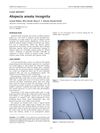
 Alopecia areata incognita causes widespread hair loss without patches and needs a scalp biopsy for diagnosis.
 November 2024 in “International Society of Hair Restoration Surgery”
 FUT is a hair restoration method that should be chosen based on individual patient needs and preferences.