 November 2023 in “International journal of Ayurveda and pharma research”
 The herbal hair oil effectively promotes hair growth, nourishes the scalp, and prevents dandruff.
 August 2023 in “Journal of the American Academy of Dermatology”
 A scalp biopsy is essential for accurately identifying different types of hair loss.
 June 2023 in “Historical records of Australian science/Historical Records of Australian Science”
 George Ernest Rogers was a notable scientist who made important discoveries about hair and wool proteins.
 January 2023 in “International Journal for Research in Applied Science and Engineering Technology”
 Herbs like Tea Tree Oil and Aloe Vera could be safer, more conditioning antidandruff alternatives to synthetic products.
January 2023 in “Springer eBooks”  January 2023 in “Pesquisa Veterinária Brasileira”
 A KRT71 mutation in Hereford cattle in Uruguay causes thin, curly hair and scaly skin.
 January 2022 in “International Journal of Research Publications”
 Griseofulvin effectively treats tinea capitis caused by Microsporum canis.
 November 2021 in “International journal of biology, pharmacy and allied sciences”
 Air pollution is a major cause of hair fall, scalp problems, and dandruff.
 June 2021 in “International journal of research in dermatology”
 A boy and his father with hereditary hypotrichosis simplex were treated for hair loss, but the treatment result is unknown.
 March 2021 in “Journal of Maxillofacial and Oral Surgery”
 Beard hair can be used for hair transplants in severe alopecia cases, with minimal complications and good results.

Encapsulating hair loss drugs in cyclodextrins improves their solubility and reduces scalp irritation.
 September 2019 in “The journal of investigative dermatology/Journal of investigative dermatology”
 Eyebrow hair transplants in patients with frontal fibrosing alopecia may look good at first but often lose the new hair after a few years.
 January 2016 in “Springer eBooks”
 The document concludes that there are various causes and treatments for hair loss, with hair transplantation being a notable option.
 May 2015 in “Journal of The American Academy of Dermatology”
 A woman was injured by a hedgehog falling on her, causing skin lesions but no disease.
 January 2015 in “Journal of evolution of medical and dental sciences”
 Topical tacrolimus is effective and safe for treating alopecia areata.
 April 2014 in “Journal of Aesthetic Nursing”
 Mesotherapy with natural extracts and vitamins can improve hair loss and promote regrowth in most women.
 March 2014 in “Journal of The American Academy of Dermatology”
 The document lists various dermatology topics, treatments, and diagnostic methods.
 January 2014 in “Journal of Investigative Dermatology”
 Proteins like aPKC and PDGF-AA, substances like adenosine and ATP, and adipose-derived stem cells all play important roles in hair growth and health, and could potentially be used to treat hair loss and skin conditions.
 April 2012 in “Informa Healthcare eBooks”
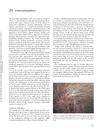
 Lichen planopilaris is a rare, chronic condition causing hair loss, mainly in middle-aged women, and early treatment is important to prevent permanent baldness.
 March 2011 in “Journal of clinical and experimental investigations”
 Thallium poisoning can cause hair loss, skin rashes, and nerve damage, and can be fatal if not correctly diagnosed and treated.

Accurate diagnosis of cicatricial alopecias requires thorough scalp examination and multiple biopsy techniques.
 May 2010 in “Journal of the Dermatology Nurses' Association”
 Cicatricial alopecia causes permanent hair loss and is treated to relieve symptoms and stop progression.
 February 2010 in “Journal of The American Academy of Dermatology”
 Social or cultural norms, not hair type, more likely influence how often people wash their hair.
 February 2010 in “Journal of The American Academy of Dermatology”
 NB-002 is a promising new topical treatment for fungal nail infections, showing better results than a non-medicated option.
 July 2008 in “Expert Review of Dermatology”
 Proper planning for hair transplants is crucial for natural results, with careful patient selection and strategic graft placement being key factors.
 January 2008 in “Journal of The American Academy of Dermatology”
 Hair loss affects 20% of people, more in men and those over 35, and is often associated with a sensitive scalp.
 March 2004 in “Journal of The American Academy of Dermatology”
 Women with lupus experienced non-scarring hair loss with fewer hair follicles, and the test for lupus in hair was not helpful.
 July 2002 in “Australasian Journal of Dermatology”
 A woman with lupus had hair loss and skin issues that were successfully treated with medications.
 July 2002 in “Hair transplant forum international”
 The document lists common and scalp-specific lesions, emphasizing the need for hair restoration surgeons to recognize these and refer patients to a dermatologist if necessary.
 July 1997 in “Journal of Cutaneous Medicine and Surgery”
 Finasteride significantly increases scalp hair and prevents hair loss in young and middle-aged men.