54 citations
,
May 2021 in “International Journal of Molecular Sciences” Advances in mechanobiology and immunology could lead to scarless wound healing.
 September 2004 in “Atlas of the Oral and Maxillofacial Surgery Clinics”
 Hair restoration surgery techniques can effectively treat scalp deformities and have evolved to provide natural-looking results.
1 citations
,
January 2018 in “International Journal of Clinical and Developmental Anatomy” Dermoscopy improves accuracy in predicting treatment success for androgenetic alopecia with the Regenera® protocol.
 November 2019 in “Quality in primary care”
 Scalp micropigmentation is a tattooing method that can mimic a full head of hair without surgery and has no healing time.
 2 citations
,
May 2005 in “Seminars in Plastic Surgery”
2 citations
,
May 2005 in “Seminars in Plastic Surgery” The Juri Temporo-Parieto-Occipital Flap is a good option for scalp reconstruction and hairline restoration with a natural look, despite some risk of necrosis and scarring.
 35 citations
,
January 1996 in “Dermatologic clinics”
35 citations
,
January 1996 in “Dermatologic clinics” Tinea capitis is a common scalp infection causing hair loss, mostly in young children.
 December 2020 in “Skin appendage disorders”
 A young man with an unusual type of scarring hair loss suggests a possible new variant of a known scalp condition.
 December 1994 in “The American Journal of Cosmetic Surgery”
 Understanding the scalp's blood flow and using delay techniques can improve the success of hair restoration surgeries.
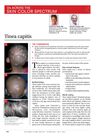 October 2022 in “The Journal of Family Practice”
 Tinea capitis is a scalp fungal infection in children that can cause hair loss, scaling, and other symptoms.
January 2020 in “Journal of Womens Health, Issues and Care” Scalp micropigmentation is a successful, non-surgical way to make hair look fuller.
35 citations
,
October 2014 in “Wound Repair and Regeneration” The model helps understand scar contraction and develop new treatments.
A skin model using hair and skin cells can mimic human skin for research.
 April 2024 in “Journal of burn care & research”
 Neck burn scar contracture recurrence is more likely with larger neck defects, and closer follow-up can help detect it sooner.
June 2020 in “The journal of investigative dermatology/Journal of investigative dermatology” Hair follicle bumps with stem cells might contribute to permanent hair loss by getting disconnected due to scarring.
 80 citations
,
March 2000 in “Journal of cutaneous pathology”
80 citations
,
March 2000 in “Journal of cutaneous pathology” The VVG stain effectively differentiates scar tissue from normal skin and helps classify types of permanent alopecia.
5 citations
,
August 2021 in “STAR Protocols” The protocol helps visualize detailed structures in mouse skin and cells using scanning electron microscopy.
 178 citations
,
August 2016 in “Advances in wound care”
178 citations
,
August 2016 in “Advances in wound care” New effective scar treatments are urgently needed due to the current options' limited success.
 April 2023 in “Authorea (Authorea)”
 Hair transplantation can improve scars after removing a rare skin cancer.
Visible lesions are not always needed to diagnose tinea capitis.
September 2021 in “CRC Press eBooks” Dissecting cellulitis of the scalp is a condition that causes inflammation and scarring on the scalp, mainly affecting African-American men, and can lead to permanent hair loss.
March 2005 in “Hair transplant forum international” Identifying scalp conditions is crucial for successful hair transplants.
 13 citations
,
March 2011 in “British Journal of Dermatology”
13 citations
,
March 2011 in “British Journal of Dermatology” A woman with scalp lymphoma and hair loss improved with radiotherapy, highlighting the need for biopsies in similar cases.
 December 2022 in “Skin Pharmacology and Physiology”
 Special scalp and hair examination techniques can identify hair problems.
Isotretinoin and other medications showed promising results for treating a rare scalp condition linked to severe acne.
1 citations
,
January 2020 in “VTechWorks (Virginia Tech)” αCT1 improves scar appearance by changing early collagen structure.
 June 2024 in “International Journal of Dermatology”
 Experienced professionals can fix bad scalp micropigmentation with good results.
1 citations
,
March 2023 in “Pharmaceutics” PBMCsec can help reduce and improve thick skin scars.
28 citations
,
July 2005 in “Journal of Investigative Dermatology” Sca-1+ cells in newborn mouse skin may become fat cells.
 January 2008 in “대한피부과학회지”
 Micropigmentation is a safe procedure that effectively improves the appearance of scars on the scalp and eyebrows, with most patients showing excellent or good results.
 13 citations
,
October 2015 in “Journal of the European Academy of Dermatology and Venereology”
13 citations
,
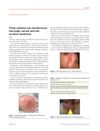
October 2015 in “Journal of the European Academy of Dermatology and Venereology” The document concludes that early recognition and appropriate treatment of red scalp, red ear, and red scrotum syndromes can lead to remission.