 14 citations
,
October 2018 in “PloS one”
14 citations
,
October 2018 in “PloS one” Deleting the Far2 gene in mice causes sebaceous gland issues and patchy hair loss.
April 2018 in “Journal of Investigative Dermatology” Mutations in Far2 mice cause hair loss due to sebaceous gland issues.
23 citations
,
February 2015 in “The American journal of pathology” Keratosis pilaris is often linked to genetic mutations and causes skin and hair abnormalities, regardless of those mutations.
22 citations
,
July 2016 in “Cellular and Molecular Life Sciences” Genetic changes in mice help understand skin and hair disorders, aiding treatment development for acne and hair loss.
 34 citations
,
January 2005 in “Journal of the American Veterinary Medical Association”
34 citations
,
January 2005 in “Journal of the American Veterinary Medical Association” Cyclosporine A can reduce inflammation in dogs with sebaceous adenitis, but ongoing treatment is needed.
 7 citations
,
January 2020 in “Journal of Dermatology”
7 citations
,
January 2020 in “Journal of Dermatology” Cantu syndrome, which causes excessive hair growth and skin issues, is due to a mutation in the ABCC9 gene, and understanding this could help develop new treatments for hair diseases.
 86 citations
,
December 2001 in “Experimental dermatology”
86 citations
,
December 2001 in “Experimental dermatology” Mutant mice help researchers understand hair growth and related genetic factors.
5 citations
,
February 2025 in “Cell Reports” Skin acetyl-CoA synthesis is crucial for overall lipid balance.

research Acne
2 citations
,
May 2011 in “Harper's Textbook of Pediatric Dermatology” Acne is a common skin condition linked to diet, hormones, and genetics, and early treatment can prevent scarring.
 July 2024 in “Journal of Investigative Dermatology”
 Losing both ERBB2 and ERBB3 receptors in mice causes significant skin problems and inflammation.
 October 2023 in “Research Review”
 Some skin tumors from hair follicles and glands can be linked to genetic syndromes and may be benign or malignant.
April 2017 in “Journal of dermatological science” Removing PLCg1 from skin cells caused thicker oil glands and less hair in mice.
 16 citations
,
April 1978 in “Genetics Research”
16 citations
,
April 1978 in “Genetics Research” Mice with the ab gene have abnormal sebaceous gland development, affecting sebum production.
 107 citations
,
August 2012 in “Seminars in Cell & Developmental Biology”
107 citations
,
August 2012 in “Seminars in Cell & Developmental Biology” The document concludes that understanding the sebaceous gland's development and function is key to addressing related skin diseases and aging effects.
 2 citations
,
January 1960 in “Australian Journal of Biological Sciences”
2 citations
,
January 1960 in “Australian Journal of Biological Sciences” The Naked gene in mice causes abnormal sebaceous glands and disrupts hair follicle organization.
81 citations
,
February 2014 in “EMBO molecular medicine” Activating Nrf2 in skin cells causes skin disease similar to chloracne in mice.
125 citations
,
February 2007 in “The EMBO Journal” Fgfr2b helps maintain healthy skin and prevent cancer.
85 citations
,
March 2008 in “Journal of Cell Science” The mutation causing Hutchinson-Gilford progeria syndrome leads to severe skin problems and early death in mice.
 76 citations
,
May 2011 in “Cell death and differentiation”
76 citations
,
May 2011 in “Cell death and differentiation” A20 protein is crucial for normal skin and hair development.
 50 citations
,
April 2014 in “Nature Communications”
50 citations
,
April 2014 in “Nature Communications” The research identified new skin traits in mice, some linked to human skin conditions.
39 citations
,
November 2005 in “The journal of investigative dermatology/Journal of investigative dermatology” Fatp4 is crucial for healthy skin development and function.
25 citations
,
October 2007 in “Developmental biology” Clim proteins are essential for maintaining healthy corneas and hair follicles.
 147 citations
,
September 2006 in “Developmental Cell”
147 citations
,
September 2006 in “Developmental Cell” Too much Smad7 changes skin and hair development by breaking down a protein called β-catenin, leading to more oil glands and fewer hair follicles.
 56 citations
,
March 2015 in “Journal of Investigative Dermatology”
56 citations
,
March 2015 in “Journal of Investigative Dermatology” Healthy mitochondria in skin cells are essential for proper hair growth and skin cell interaction in mice.
41 citations
,
September 2003 in “Journal of Investigative Dermatology” Overexpression of COX-2 causes early hair loss in mice, but can be prevented with a COX-2 inhibitor.
 December 2016 in “John Wiley & Sons, Ltd eBooks”
 The document concludes that proper recognition and treatment of skin appendage disorders are important for management.
 1 citations
,
August 2011 in “Dermatology Reports”
1 citations
,
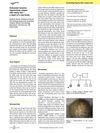
August 2011 in “Dermatology Reports” Two siblings were found to have a genetic condition causing progressive hair loss and woolly hair, which may often be misdiagnosed.
 April 2012 in “Informa Healthcare eBooks”
 The document concludes that diagnosing hair loss requires evaluating multiple histological features, as no single feature is definitive on its own.
 18 citations
,
June 2017 in “Proceedings of the National Academy of Sciences of the United States of America”
18 citations
,
June 2017 in “Proceedings of the National Academy of Sciences of the United States of America” A gene called Gk5 controls lipid production in the skin and affects hair growth.
5 citations
,
January 2016 in “International Journal of Trichology” Erlotinib can cause hair loss and texture changes.