9 citations
,
January 2015 in “Medical hypotheses” TCDD disrupts skin stem cells, causing skin issues like chloracne.
18 citations
,
April 2002 in “Journal of cutaneous pathology” Tiny infundibular cysts are the main lesions in chloracne, not comedones.
 50 citations
,
September 2011 in “Biochimica et Biophysica Acta (BBA) - Molecular and Cell Biology of Lipids”
50 citations
,
September 2011 in “Biochimica et Biophysica Acta (BBA) - Molecular and Cell Biology of Lipids” Maintaining the right amount of retinoic acid is crucial for healthy hair and skin.
 14 citations
,
October 2018 in “PloS one”
14 citations
,
October 2018 in “PloS one” Deleting the Far2 gene in mice causes sebaceous gland issues and patchy hair loss.
 7 citations
,
February 2021 in “Dermatologic Therapy”
7 citations
,
February 2021 in “Dermatologic Therapy” Sebaceous glands are involved in various skin disorders, some treatable with medications like finasteride and minoxidil.
 16 citations
,
April 1978 in “Genetics Research”
16 citations
,
April 1978 in “Genetics Research” Mice with the ab gene have abnormal sebaceous gland development, affecting sebum production.
 8 citations
,
November 2020 in “Nature Communications”
8 citations
,
November 2020 in “Nature Communications” Adult stem cells with Tp63 can form hair and skin cells when placed in new skin, showing they have hidden abilities for skin repair.

research Acne
2 citations
,
May 2011 in “Harper's Textbook of Pediatric Dermatology” Acne is a common skin condition linked to diet, hormones, and genetics, and early treatment can prevent scarring.

Inhibiting AP-1 changes skin tumor types and affects tumor cell identity.

Inhibiting AP-1 changes skin tumor types and affects tumor cell identity.
 13 citations
,
June 2018 in “Dermatopathology”
13 citations
,
June 2018 in “Dermatopathology” A new classification system for skin cysts was proposed to improve diagnosis.
70 citations
,
August 2006 in “Cancer Research” AP-1 controls tumor cell type by affecting key signaling pathways.
June 2023 in “Dermatopathology” A woman had a unique skin growth with hair follicle, oil glands, fat cells, spindle cells, and nerve fibers.
31 citations
,
January 2007 in “Journal of the American Academy of Dermatology” A rare skin growth was successfully removed without recurrence after one year.
16 citations
,
November 1994 in “Developmental Biology” Retinoic acid causes gland formation instead of hair in mouse skin by altering epidermal and dermal interactions.
 3 citations
,
January 2010 in “Elsevier eBooks”
3 citations
,
January 2010 in “Elsevier eBooks” The document describes various skin conditions, their features, and treatments but lacks detailed study size information.
 2 citations
,
August 2008 in “Journal of Liaquat University of Medical & Health Sciences”
2 citations
,
August 2008 in “Journal of Liaquat University of Medical & Health Sciences” A painless cheek lump was misdiagnosed but found to be a rare, benign skin lesion called pilomatrixoma, treatable by surgery.
 78 citations
,
October 2020 in “Experimental Dermatology”
78 citations
,
October 2020 in “Experimental Dermatology” Hidradenitis suppurativa is caused by genetic factors, inflammation, bacteria, hormones, and lifestyle factors like obesity and smoking.
 2 citations
,
September 2021 in “Journal of Pathology of Nepal”
2 citations
,
September 2021 in “Journal of Pathology of Nepal” Most skin cysts were common types found in unusual body parts, and examining tissue samples is important for accurate diagnosis.
January 1996 in “대한피부과학회지” High Demodex mite density may be linked to sebaceous hyperplasia.
1 citations
,
January 2013 in “Journal of the Scientific Society” A painless cheek lump was misdiagnosed but later identified as a rare benign skin lesion called pilomatrixoma.
15 citations
,
July 2024 in “Current Issues in Molecular Biology” Understanding molecular processes in skin development is key to creating targeted treatments for skin disorders.
11 citations
,
April 2012 in “American Journal of Dermatopathology” Adenolipomas may develop from gland entrapment by fat tissue, showing complex and varied forms.
3 citations
,
June 2023 in “Modern Pathology” GLI1 RNA CISH effectively identifies basal cell carcinoma but is less specific for benign follicular tumors.
 8 citations
,
March 2019 in “Open Biology”
8 citations
,
March 2019 in “Open Biology” The document concludes that regenerating functional ectodermal organs like teeth and hair is promising for future therapies.
949 citations
,
January 2001 in “Cell” Adult mouse skin contains stem cells that can create new hair, skin, and oil glands.
 55 citations
,
November 2004 in “Expert opinion on drug safety”
55 citations
,
November 2004 in “Expert opinion on drug safety” Chemotherapy often causes hair loss, nail changes, and mouth issues, but these are usually manageable.
 33 citations
,
December 2004 in “Differentiation”
33 citations
,
December 2004 in “Differentiation” Mouse amnion can turn into skin and hair follicles with help from certain cells and factors.
 January 2022 in “Autopsy and Case Reports”
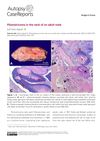
 A man had a non-cancerous neck tumor related to hair follicles removed with no return of the tumor.
 86 citations
,
August 2011 in “Toxicological sciences”
86 citations
,
August 2011 in “Toxicological sciences” TCDD speeds up skin barrier formation by increasing certain gene expressions.