June 2023 in “Dermatopathology” A woman had a unique skin growth with hair follicle, oil glands, fat cells, spindle cells, and nerve fibers.
63 citations
,
May 2009 in “Dermato-endocrinology” Increased FGFR2b signaling, influenced by androgens, plays a role in causing acne.
23 citations
,
September 2021 in “Clinical Cosmetic and Investigational Dermatology” Botulinum toxin is used in skin care for cosmetic and medical purposes.
21 citations
,
December 2007 in “Journal of Investigative Dermatology” Hair follicles evolved from oil glands, with hair aiding secretion transport.
466 citations
,
June 2009 in “Experimental dermatology” We now understand more about what causes acne and this could lead to better, more personalized treatments.
57 citations
,
August 2002 in “American Journal Of Pathology” Cathepsin L deficiency causes hair and skin issues in mice.
 July 2025 in “Annals of Human Genetics”
 Genetics play a major role in acne, but environmental factors and epigenetics also contribute.
 1 citations
,
November 2021 in “Biomedicines”
1 citations
,
November 2021 in “Biomedicines” Understanding how acne develops in different diseases could lead to new treatments.
11 citations
,
April 2012 in “American Journal of Dermatopathology” Adenolipomas may develop from gland entrapment by fat tissue, showing complex and varied forms.
 65 citations
,
February 2009 in “The journal of investigative dermatology/Journal of investigative dermatology”
65 citations
,
February 2009 in “The journal of investigative dermatology/Journal of investigative dermatology” Anti-acne medications may work by reducing the activity of a protein involved in acne development.
 3 citations
,
January 2010 in “Elsevier eBooks”
3 citations
,
January 2010 in “Elsevier eBooks” The document describes various skin conditions, their features, and treatments but lacks detailed study size information.
 24 citations
,
June 2011 in “International Journal of Dermatology”
24 citations
,
June 2011 in “International Journal of Dermatology” Most pregnant women experience skin changes like darkening and itching, while serious skin conditions are rare but need early treatment.
 10 citations
,
October 2017 in “Archivos Argentinos De Pediatria”
10 citations
,
October 2017 in “Archivos Argentinos De Pediatria” Most hospitalized children with skin issues were boys, with allergic skin diseases like atopic dermatitis being most common, and treatments were usually topical.
5 citations
,
October 2021 in “Journal of the American Academy of Dermatology” PRAME helps distinguish between benign and malignant skin cells in most cases.
5 citations
,
January 2021 in “Indian Journal of Pathology and Microbiology” A rare eyelid tumor was successfully diagnosed and removed, highlighting the need for careful examination.
8 citations
,
January 2017 in “Journal of Oral and Maxillofacial Pathology” Keratoacanthomas on lips may originate differently than those on skin.
 September 2017 in “Pediatric Dermatology”
 The document concludes that an experimental drug may help wound healing in Epidermolysis Bullosa, links Hydroa vacciniforme to EBV, discusses diagnosing hair loss disorders, finds many children with eczema have allergies, reviews the safety of a skin medication in children, notes side effects of a Duchenne's treatment, and identifies a marker for pediatric mastocytosis.
 November 2025 in “Archiv für Pathologische Anatomie und Physiologie und für Klinische Medicin”
 Sporadic trichoblastic neoplasms generally don't recur or spread, with one case showing a specific genetic fusion.
 January 2026 in “Dermatology and Therapy”
 UVFD can help doctors better identify harmful skin lesions on the face, reducing unnecessary biopsies.
 September 2016 in “Journal of Dermatological Science”
 Golden oyster mushroom extract may protect skin cells from aging by its antioxidant properties.
 January 2014 in “Pathology”
 Non-scarring hair loss can be diagnosed with two 4mm punch biopsies, one cut vertically and the other transversely.
 January 2014 in “Pathology”
 RET mutation is important in familial medullary thyroid carcinoma, and BRAF mutation in papillary thyroid carcinoma is linked to more aggressive cancer and higher death rates.
 January 2014 in “Pathology”
 Early subungual melanoma might be treated with less aggressive surgery because it invades the skin under the nail more slowly.
 6 citations
,
August 1991 in “Pediatric Clinics of North America”
6 citations
,
August 1991 in “Pediatric Clinics of North America” The document concludes that various hair and scalp disorders in children have specific treatments and proper diagnosis is essential.
 4 citations
,
September 2013 in “Journal of Plastic Surgery and Hand Surgery”
4 citations
,
September 2013 in “Journal of Plastic Surgery and Hand Surgery” A girl with a rare syndrome had successful hair loss treatment with no relapse after 4 years.
 1 citations
,
November 2014
1 citations
,
November 2014 The document explains hair and nail biology, common hair loss conditions and treatments, oral and genital skin diseases, and the risks and treatments associated with squamous cell carcinoma.
 44 citations
,
April 2012 in “American Journal of Clinical Dermatology”
44 citations
,
April 2012 in “American Journal of Clinical Dermatology” Scarring alopecias are complex hair loss disorders that require early treatment to prevent permanent hair loss.
 35 citations
,
January 2009 in “Indian Journal of Dermatology, Venereology and Leprology”
35 citations
,
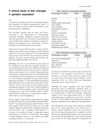
January 2009 in “Indian Journal of Dermatology, Venereology and Leprology” Older adults commonly experience wrinkles, itchy skin, psoriasis, fungal infections, skin growths, grey hair, hair loss, and nail ridging, but no skin cancer was found in this group.
 7 citations
,
March 2017 in “Journal of dermatology”
7 citations
,
March 2017 in “Journal of dermatology” The conclusion is that accurately identifying folliculosebaceous tumors requires understanding their clinical signs and microscopic features.
 1 citations
,
May 2016 in “Current Opinion in Pediatrics”
1 citations
,
May 2016 in “Current Opinion in Pediatrics” Children's hair loss can be caused by various factors and should be treated with appropriate, age-specific methods and psychological support.