 66 citations
,
December 2013 in “Nature Cell Biology”
66 citations
,
December 2013 in “Nature Cell Biology” Inactive hair follicle stem cells help prevent skin cancer.
 54 citations
,
April 2019 in “Journal of cellular physiology”
54 citations
,
April 2019 in “Journal of cellular physiology” miR-218-5p helps skin and hair growth by targeting SFRP2 and activating a specific signaling pathway.
 51 citations
,
May 2019 in “Biomaterials”
51 citations
,
May 2019 in “Biomaterials” Researchers developed a method to grow hair follicles using special beads that could help with hair loss treatment.
 50 citations
,
January 2016 in “The Journal of Clinical Endocrinology and Metabolism”
50 citations
,
January 2016 in “The Journal of Clinical Endocrinology and Metabolism” Certain microRNAs in the fluid around eggs are linked to Polycystic Ovary Syndrome and may help diagnose it.
 42 citations
,
February 2021 in “Signal Transduction and Targeted Therapy”
42 citations
,
February 2021 in “Signal Transduction and Targeted Therapy” Hair follicle regeneration possible, more research needed.
 41 citations
,
September 2011 in “Journal of Ethnopharmacology”
41 citations
,
September 2011 in “Journal of Ethnopharmacology” Panax ginseng extract helps mice grow hair.
 40 citations
,
October 2012 in “British Journal of Dermatology”
40 citations
,
October 2012 in “British Journal of Dermatology” Minoxidil helps regrow hair in female pattern hair loss, but more research needed for other treatments.
 37 citations
,
February 2019 in “Experimental Dermatology”
37 citations
,
February 2019 in “Experimental Dermatology” Spiny mice are better at regenerating hair after injury than laboratory mice and could help us understand how to improve human skin repair.
 35 citations
,
May 2019 in “Frontiers in genetics”
35 citations
,
May 2019 in “Frontiers in genetics” Non-coding RNAs play key roles in the hair growth cycle of Angora rabbits.
 24 citations
,
October 2014 in “Cold Spring Harbor Perspectives in Medicine”
24 citations
,
October 2014 in “Cold Spring Harbor Perspectives in Medicine” Genetic research has advanced our understanding of skin diseases, but complex conditions require an integrative approach for deeper insight.
 16 citations
,
August 2019 in “Cell Proliferation”
16 citations
,
August 2019 in “Cell Proliferation” Keratinocytes help keep hair follicle cells and skin cells separate in 3D cultures, which is important for hair growth research.
 16 citations
,
June 2017 in “PLoS ONE”
16 citations
,
June 2017 in “PLoS ONE” A 6-group hair classification is more reliable for drug testing than an 8-group system.
 14 citations
,
February 2021 in “International Journal of Pharmaceutics”
14 citations
,
February 2021 in “International Journal of Pharmaceutics” Deer antler velvet serum helps hair grow and is safe for skin.
 13 citations
,
June 2020 in “BMC genomics”
13 citations
,
June 2020 in “BMC genomics” A specific microRNA, chi-miR-30b-5p, slows down the growth of hair-related cells by affecting the CaMKIIδ gene in cashmere goats.
 9 citations
,
October 2011 in “Journal of proteomics”
9 citations
,
October 2011 in “Journal of proteomics” Taxol damages hair growth cells, causing hair loss.
 7 citations
,
March 2021 in “Biology”
7 citations
,
March 2021 in “Biology” Scaffold improves hair growth potential.
 5 citations
,
March 2020 in “Cell and Tissue Banking”
5 citations
,
March 2020 in “Cell and Tissue Banking” Injected cells show potential for hair growth.
 4 citations
,
January 2013 in “Advances in Experimental Medicine and Biology”
4 citations
,
January 2013 in “Advances in Experimental Medicine and Biology” Certain transcription factors are key in controlling skin stem cell behavior and could impact future treatments for skin repair and hair loss.
 1 citations
,
January 2018 in “Methods in molecular biology”
1 citations
,
January 2018 in “Methods in molecular biology” The research found ways to activate melanocyte stem cells for potential treatment of skin depigmentation conditions.
 January 2026 in “International journal of research and scientific innovation”
 Quail bone ash and sesame oil may help reduce hair fall and promote growth.
 February 2025 in “Theranostics”
 3D bioprinting with special hydrogels can create artificial skin that heals wounds and regrows hair in mice.
 January 2025 in “The Pharma Innovation”
 Millets support sustainable development by improving nutrition, aiding climate resilience, and boosting economic viability, especially for Indian farmers.
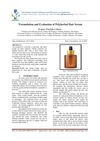 June 2024 in “International Journal of Pharmaceutical Research and Applications”
 Polyherbal hair serum can hydrate the scalp and promote hair growth safely.
 January 2023 in “Book of Abstracts”
 COVID-19 can cause different types of hair loss, with telogen effluvium being the most common.
 June 2021 in “Experimental and Therapeutic Medicine”
 MEF/KSF-conditioned medium effectively grows mouse hair follicle stem cells with bone-forming potential.
 April 2013 in “Developmental Cell”
 Brg1 is crucial for keeping hair follicle stem cells and repairing skin, working with the Sonic Hedgehog pathway to promote hair growth.
 359 citations
,
September 2017 in “European Journal of Epidemiology”
359 citations
,
September 2017 in “European Journal of Epidemiology” The Rotterdam Study updated findings on elderly health, focusing on heart disease, genetics, lifestyle effects, and disease understanding.
 336 citations
,
August 2015 in “European Journal of Epidemiology”
336 citations
,
August 2015 in “European Journal of Epidemiology” The Rotterdam Study found risk factors for elderly diseases, links between lifestyle and genetics with health conditions, and aimed to explore new areas like DNA methylation and sensory input effects on brain function.
 301 citations
,
February 2019 in “Nature Communications”
301 citations
,
February 2019 in “Nature Communications” The research found that different types of fibroblasts are involved in wound healing and that some blood cells can turn into fat cells during this process.
 202 citations
,
August 2017 in “Nature cell biology”
202 citations
,
August 2017 in “Nature cell biology” Lactate production is important for activating hair growth stem cells.