2 citations
,
April 1970 in “Archives of Dermatology” Ichthyosis serpentina may be a variant linked to bamboo hair, with a possible genetic component.
October 2024 in “Skin Research and Technology” Pili annulati causes zebra-striped hair but doesn't affect hair strength or quality of life.
A genetic mutation in the CDH3 gene causes hair loss and vision problems in a young Saudi girl.
 6 citations
,
December 2004 in “Anais Brasileiros de Dermatologia”
6 citations
,
December 2004 in “Anais Brasileiros de Dermatologia” Some family members had a condition with both loose hair and unique eye changes, possibly indicating a new type of ectodermal dysplasia.
2 citations
,
March 1997 in “Veterinary Dermatology” The Doberman had multiple skin tumors, but it's unclear if color dilution increased the risk.
28 citations
,
June 1991 in “Veterinary Dermatology” Black and white Saluki dogs have a unique hair loss condition different from Doberman pinschers.
1 citations
,
June 2025 in “Pigment Cell & Melanoma Research” SASH1 gene mutations are linked to various inherited skin pigmentation disorders.
 June 2023 in “British journal of dermatology/British journal of dermatology, Supplement”
 A 13-year-old boy had both lichen planus and vitiligo, suggesting a possible link between the two conditions.
January 2024 in “SAGE Open Medical Case Reports” The brothers have congenital ichthyosis, and the older brother's eye issues are due to different genetic mutations.
9 citations
,
November 2015 in “JAMA dermatology” A 91-year-old woman's hair turned black in one spot, with skin changes underneath.
 2 citations
,
March 2018 in “The Journal of Dermatology”
2 citations
,
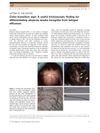
March 2018 in “The Journal of Dermatology” The "color-transition sign" helps tell apart alopecia areata incognita from telogen effluvium by looking at hair color changes.
 2 citations
,
March 1977 in “Journal of animal science/Journal of animal science ... and ASAS reference compendium”
2 citations
,
March 1977 in “Journal of animal science/Journal of animal science ... and ASAS reference compendium” Defective mink guard hairs have split tips and missing cuticle cells, causing a metallic sheen.
80 citations
,
June 1997 in “The American Journal of Human Genetics”  5 citations
,
January 2012 in “International journal of trichology”
5 citations
,
January 2012 in “International journal of trichology” A 2-year-old boy had no hair and unusual organ placement, and it's unclear if it's genetic or coincidental.
7 citations
,
July 2013 in “Acta Biochimica Polonica” Chemotherapy reduces splenic melanin in mice.
2 citations
,
January 2007 in “Actas Dermo-Sifiliográficas” Two cases of hairy elbows syndrome were described, with normal skin texture and symmetrical hair growth.
 3 citations
,
January 2019 in “Journal of Dermatology”
3 citations
,
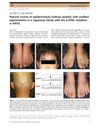
January 2019 in “Journal of Dermatology” The p.P25L mutation in the KRT5 gene causes a rare skin condition that worsens over time and may lead to hair loss starting in young adulthood.
12 citations
,
January 2013 in “Indian dermatology online journal” Dermatopathia pigmentosa reticularis causes skin discoloration, hair loss, and nail problems.
6 citations
,
October 2006 in “International Journal of Dermatology” Hair splitting and nail detachment are linked conditions.
8 citations
,
August 2018 in “Journal of Investigative Dermatology” 15 citations
,
June 1986 in “Pediatric Dermatology” Androgens increase pigmentation in young hamsters, but estrogens can reverse this effect.
 2 citations
,
March 2023 in “JAAD case reports”
2 citations
,
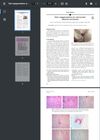
March 2023 in “JAAD case reports” Hair repigmentation can indicate malignancy and should be investigated.
12 citations
,
December 2021 in “Dermatology” Trichoscopy can help diagnose and assess disease activity in connective tissue diseases by identifying specific hair and scalp signs.
29 citations
,
February 1989 in “Journal of Cutaneous Pathology” A unique hair tumor with a rippled pattern was identified, showing incomplete differentiation and unusual cell arrangements.
1 citations
,
December 2024 in “Case Reports in Dermatology” Cyclophosphamide likely causes skin darkening by affecting hair follicles.
 21 citations
,
October 2019 in “The journal of investigative dermatology/Journal of investigative dermatology”
21 citations
,
October 2019 in “The journal of investigative dermatology/Journal of investigative dermatology” A specific gene change plus an additional mutation in the same gene cause hereditary trichilemmal cysts.
September 1973 in “Primates”  3 citations
,
March 2017 in “International journal of women’s dermatology”
3 citations
,
March 2017 in “International journal of women’s dermatology” Some domesticated animals have the same genetic skin diseases as humans, which can help doctors understand human genetic mutations.
March 2026 in “Journal of Investigative Dermatology”  74 citations
,
January 2006 in “The journal of investigative dermatology/Journal of investigative dermatology”
74 citations
,
January 2006 in “The journal of investigative dermatology/Journal of investigative dermatology” Mutations in the DSG4 gene can cause a rare hair disorder similar to monilethrix.