5 citations
,
January 2024 in “Aesthetic Surgery Journal” Using sun protection and diode laser SHR reduces unexpected hair growth after laser hair removal.
 January 2009 in “Elsevier eBooks”
 Low level laser therapy may help with hair loss.
 April 2026 in “International Journal of Clinical Case Reports and Reviews”
 A new non-invasive laser system improves chronic disease management and metabolic health.
April 2025 in “Asian Journal of Surgery”  160 citations
,
December 2016 in “Journal of biophotonics”
160 citations
,
December 2016 in “Journal of biophotonics” Low-level laser therapy, now called photobiomodulation, is recognized for its broad medical applications and scientific backing.
 1 citations
,
March 2006 in “Dermatologic Surgery”
1 citations
,
March 2006 in “Dermatologic Surgery” Using a polarized LED magnifier during hair transplants makes creating recipient sites easier and may increase hair density.
September 2025 in “Cuadernos de Educación y Desarrollo” Laser and light technologies are used in dermatology for skin treatments and improving outcomes.
 September 2024 in “Journal of Cosmetic Dermatology”
 Follow these guidelines to safely and effectively use energy-based devices in aesthetic treatments.
January 2019 in “Dermatologic Surgery” Pulsed Dye Laser effectively treats skin lesions in Rosai–Dorfman Disease.
 2 citations
,
January 2022 in “BioMed Research International”
2 citations
,
January 2022 in “BioMed Research International” LED light therapy at 863 nm wavelength can slow down skin tumor growth and reduce inflammation in mice.
 15 citations
,
January 1996 in “Lasers in Surgery and Medicine”
15 citations
,
January 1996 in “Lasers in Surgery and Medicine” Lasers in hair transplantation may have potential but require caution due to possible damage and reduced graft survival.
85 citations
,
January 2002 in “Dermatologic Clinics” Lasers and intense pulsed light can safely and effectively remove hair by targeting hair follicles.
February 2022 in “INTERNATIONAL JOURNAL OF SCIENTIFIC RESEARCH” Home-based laser devices are effective for hair removal, skin rejuvenation, and stimulating hair growth, but more research is needed on their safety and long-term effects.
6 citations
,
September 2025 in “Cosmetics” Laser-Assisted Exosome Delivery showed early skin improvement without side effects, but more research is needed.
 1 citations
,
November 2023 in “Clinical, cosmetic and investigational dermatology”
1 citations
,
November 2023 in “Clinical, cosmetic and investigational dermatology” The long-pulse alexandrite laser is good for removing hair and treating skin problems like spots and veins.
 11 citations
,
June 2005 in “Journal of Cosmetic Dermatology”
11 citations
,
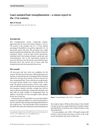
June 2005 in “Journal of Cosmetic Dermatology” Lasers in hair transplantation show promise but are not yet standard, with current methods causing some side effects and needles still being preferred for creating recipient sites.
1 citations
,
February 2025 in “Photodermatology Photoimmunology & Photomedicine” 830 nm LED light effectively treats and prevents skin redness and dark spots, while 590 nm LED light only helps prevent them.
 February 2009 in “Journal of The American Academy of Dermatology”
 Fractional infrared technology is effective and safe for treating cervical laxity.
April 2026 in “Biomaterials and Biosystems” Combining exosomes with nanoparticles speeds up healing of diabetic pressure ulcers.
 119 citations
,
June 1993 in “BMJ”
119 citations
,
June 1993 in “BMJ” Alopecia is a key indicator of thallium poisoning.
 4 citations
,
December 2016 in “Medical lasers”
4 citations
,
December 2016 in “Medical lasers” Lasers can be effective for treating hair loss from alopecia areata.
September 2020 in “Journal of Mind and Medical Sciences” Combining NdYag laser with pulsed light effectively treats rosacea with manageable side effects.
 December 2025 in “Aesthetic Plastic Surgery”
 The new near-infrared LED device improves skin and hair with no side effects.
36 citations
,
December 2009 in “Skin pharmacology and physiology” Helium-neon laser treatment can stimulate hair growth in mice.
1 citations
,
June 2022 in “Photobiomodulation, photomedicine, and laser surgery” June 2026 in “Dermatologic Clinics” 2 citations
,
January 2017 in “Indian Dermatology Online Journal” A rare skin reaction from laser hair removal can be prevented with medication.
 4 citations
,
April 1999 in “Dermatologic Clinics”
4 citations
,
April 1999 in “Dermatologic Clinics” Long-pulsed ruby lasers effectively reduce hair for up to 2 years with minimal pain.
 June 1999 in “Proceedings of SPIE”
 The CO₂ laser is better for hair transplantation because it causes less damage than the Ho:YAG laser.
 January 2025 in “E3S Web of Conferences”
 Lasers are effective for hair removal, skin rejuvenation, and acne treatment in dermatology.