 3 citations
,
July 1997 in “The Lancet”
3 citations
,
July 1997 in “The Lancet” Finasteride may increase hair growth and prevent baldness in men, but can cause sexual side effects.
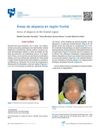 January 2025 in “Revista del Centro Dermatológico Pascua”
 Early diagnosis and treatment can help manage fibrosing alopecia in older women.
August 2010 in “The Journal of urology/The journal of urology” Male pattern baldness may be linked to prostate cancer risk.
 26 citations
,
January 2013 in “BMJ Open”
26 citations
,
January 2013 in “BMJ Open” Severe baldness on the top of the head is linked to a higher chance of heart disease, especially in men under 60.
December 2016 in “Anales del sistema sanitario de Navarra” Frontal fibrosing alopecia is increasing, especially in postmenopausal women, and treatment with finasteride can improve it.
 2 citations
,
January 2004 in “Enshou saisei”
2 citations
,
January 2004 in “Enshou saisei” Male pattern baldness is caused by certain cells in hair follicles and could potentially be treated by targeting a specific growth factor, TGF-β1.
 8 citations
,
January 2003 in “Plastic and Reconstructive Surgery”
8 citations
,
January 2003 in “Plastic and Reconstructive Surgery” Hair transplants using follicular unit grafting can significantly improve appearance for men with advanced hair loss.
2 citations
,
July 1993 in “JAMA” Hair loss can be a sign of syphilis, and self-diagnosing based on ads can be risky.
January 2026 in “Updates in clinical dermatology”  August 2007 in “CRC Press eBooks”
 Hair loss is mainly caused by a testosterone byproduct, and hair restoration surgery uses hair from the back and sides of the scalp.
 December 2025 in “Zenodo (CERN European Organization for Nuclear Research)”
 Male pattern baldness may be reversed by reducing scalp tension and improving blood flow.
 November 2016 in “Der Hautarzt”
 Hair thinning on top of the head is common in female androgenetic alopecia.
July 2020 in “Experimental Dermatology” Aging causes hair thinning in women due to changes in the scalp environment.
5 citations
,
October 1990 in “Archives of Dermatology”  August 2002 in “Zeitschrift für Hautkrankheiten”
 Female pattern hair loss affects crown, increases with age, and has limited treatments.
 January 2024 in “Research Square (Research Square)”
 The research identified genes linked to male-pattern baldness and potential drug targets for treatment.
22 citations
,
April 2012 in “Informa Healthcare eBooks” Frontal fibrosing alopecia is a type of hair loss that usually happens after menopause.

Plan hair-restoration surgery early for better results in male pattern baldness.
 1 citations
,
April 1985 in “PubMed”
1 citations
,
April 1985 in “PubMed” A man showed signs of female pattern hair loss, which is unusual according to traditional understanding of male baldness.
 January 2008 in “Journal of The American Academy of Dermatology”
 Hair loss affects 20% of people, more in men and those over 35, and is often associated with a sensitive scalp.
 55 citations
,
February 1985 in “Archives of Dermatology”
55 citations
,
February 1985 in “Archives of Dermatology” Minoxidil applied twice daily can help regrow hair in some people with hereditary baldness, with no serious side effects.
 October 2024 in “Benha Journal of Applied Sciences”
 Androgenetic alopecia is linked to aging due to inflammation, oxidative stress, and hormonal changes.
11 citations
,
September 1988 in “Annals of Plastic Surgery” Topical minoxidil can help some men regrow hair, but results vary and may decline after a year.
 January 2022 in “Journal of Healthcare Sciences”
 Male Androgenetic Alopecia, a common hair loss in men, can be slowed and partially restored with treatments like minoxidil and finasteride, or hair transplantation. Serenoa repens may be an alternative treatment. More research is needed for new treatments.
2 citations
,
August 2025 in “JAAD reviews.” Frontal fibrosing alopecia significantly affects men, often causing hair loss in eyebrows, beard, and sideburns.
Hair loss is caused by hormonal changes that shorten hair growth phases and shrink hair follicles.
14 citations
,
January 2014 in “Indian Journal of Dermatology Venereology and Leprology” Frontal fibrosing alopecia can affect men's beards and leads to permanent hair loss.
 1 citations
,
May 2013 in “PubMed”
1 citations
,
May 2013 in “PubMed” The document concludes that female pattern baldness involves hair thinning, is classified differently than in men, and is assessed using the Ludwig classification. It also explains the hair growth cycle stages.
 March 1997 in “Journal of Endocrinology/Journal of endocrinology”
 Excessive hair growth in women can be treated with medications like spironolactone and finasteride, and male-pattern baldness in women can be improved with similar treatments.
 February 2012 in “Expert Review of Endocrinology & Metabolism”
 The document suggests more research is needed to understand the link between baldness and prostate cancer.