 2 citations
,
March 2015 in “Dermatologic Therapy”
2 citations
,
March 2015 in “Dermatologic Therapy” Using too much minoxidil foam can cause a rare movement disorder with facial twitching, but symptoms go away when the correct dose is used.
 2 citations
,
January 2011 in “Dermatologica Sinica”
2 citations
,
January 2011 in “Dermatologica Sinica” Taiwan reported its first case of a rare scalp condition with no clear cause or treatment.
 1 citations
,
October 2023 in “Dermatology and therapy”
1 citations
,
October 2023 in “Dermatology and therapy” Some treatments for severe hair loss work but often have side effects, with baricitinib showing the most promise.
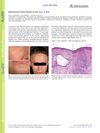 1 citations
,
January 2019 in “Acta dermato-venereologica”
1 citations
,
January 2019 in “Acta dermato-venereologica” The woman's skin and hair symptoms were confirmed as frontal fibrosing alopecia, and while facial papules are common in such cases, there's no effective local treatment, but systemic treatments can help.
 1 citations
,
January 2015 in “Side effects of drugs annual”
1 citations
,
January 2015 in “Side effects of drugs annual” The document concludes that various dermatological treatments and drugs can cause skin reactions and side effects.
 1 citations
,
January 2013 in “International Journal of Trichology”
1 citations
,
January 2013 in “International Journal of Trichology” The conference discussed various hair disorders and treatments, including the use of topical steroids, high doses of cetrizine, and hair grafting, as well as the psychological impact of hair loss.
 1 citations
,
July 2012 in “Springer eBooks”
1 citations
,
July 2012 in “Springer eBooks” The document concludes that more research is needed to better understand and treat scarring hair loss conditions.

The serum improved hair growth and comfort after hair transplant.

STS01 1% effectively promotes hair regrowth with minimal side effects.
 November 2025 in “The Journal of Medical Sciences”
 Intralesional triamcinolone is more effective than cryotherapy for treating alopecia areata in middle-aged adults.
 August 2025 in “International Journal of Research in Dermatology”
 Increasing zinc intake improved skin and hair symptoms in a rare genetic disorder.
 April 2024 in “International Journal of Research Publication and Reviews”
 Alopecia areata causes hair loss with varied treatment responses and frequent relapses.
 September 2021 in “International Ayurvedic Medical Journal”
 Bhringraj capsule and oil with Nasya effectively reduce hair fall and related symptoms.
 January 2020 in “Journal of dermatology research and therapy”
 Most over-the-counter hair loss treatments lack strong evidence of effectiveness but cost nearly as much as the proven treatment, minoxidil.
 August 2019 in “Journal of The American Academy of Dermatology”
 5% minoxidil foam effectively regrows hair in women, with postmenopausal women seeing the most improvement.
 January 2019 in “Advances in stem cells and their niches”
 Skin health and repair depend on the signals between skin stem cells and their surrounding cells.
 July 2018 in “Elsevier eBooks”
 Frontal Fibrosing Alopecia is a type of hair loss affecting mostly older women, with no agreed best treatment.
 September 2017 in “Springer eBooks”
 Low-level laser therapy seems to promote hair growth but requires more research to confirm its effectiveness.
 April 2016 in “Journal of The American Academy of Dermatology”
 Spironolactone use is not linked to an increased risk of breast cancer, but caution is advised for high-risk patients.
 June 2015 in “Biomedical and biopharmaceutical research”
 The congress showed advancements in skin hydration, barrier function, and safe, effective new cosmetic formulations.
 July 2003 in “Journal of Cutaneous Medicine and Surgery”
 Certain drugs can cause lupus, stopping these drugs is the main treatment. NB-UVB phototherapy clears psoriasis faster when applied three times a week. Monoclonal antibodies and oral pimecrolimus are effective in treating psoriasis. Smoking and drinking are linked to psoriasis in men. No direct link between low iron and hair loss was found. Vaccines are effective against genital herpes and human papillomavirus type 16.
 July 2003 in “Journal of Cutaneous Medicine and Surgery”
 Various skin conditions can be treated effectively with different methods, such as discontinuing certain drugs, using specific vaccines, applying creams, and changing lifestyle habits like smoking and drinking.
 July 2003 in “Journal of Cutaneous Medicine and Surgery”
 The document concludes that various treatments for skin conditions are effective, but some require further research, and certain factors like gender and lifestyle can influence disease outcomes.
 July 2003 in “Journal of Cutaneous Medicine and Surgery”
 Stopping certain drugs can improve skin conditions, arsenicosis affects over half of a Bangladeshi village, males are more vulnerable, and certain treatments are effective for warts, acne, and psoriasis. Smoking and drinking are linked to psoriasis in men, a cream helps with a type of skin cancer, and low iron levels don't directly cause chronic hair loss in women.
 July 2003 in “Journal of Cutaneous Medicine and Surgery”
 Blood pressure drugs can cause skin lupus, but it improves after stopping the drug. The glycoprotein D vaccine works against genital herpes in some women, and the HPV-16 vaccine reduces HPV-16 infection and related diseases. More frequent light therapy clears psoriasis faster. A cream called imiquimod effectively treats a type of skin cancer. Iron supplements don't necessarily help with chronic hair loss in women.
 391 citations
,
January 2010 in “Journal of The American Academy of Dermatology”
391 citations
,
January 2010 in “Journal of The American Academy of Dermatology” Half of people with Alopecia Areata may see hair regrowth within a year without treatment, but recovery is unpredictable.
 112 citations
,
July 2008 in “Dermatologic Therapy”
112 citations
,
July 2008 in “Dermatologic Therapy” Folliculitis decalvans is a rare scalp condition causing scarring hair loss, treated with long-term antibiotics and other medications, but it often comes back and is hard to manage.
 41 citations
,
October 2017 in “International Journal of Women's Dermatology”
41 citations
,
October 2017 in “International Journal of Women's Dermatology” Most pregnant women experience skin darkening and hair changes, with these effects usually going away after giving birth.
 23 citations
,
October 2018 in “Australasian Journal of Dermatology”
23 citations
,
October 2018 in “Australasian Journal of Dermatology” The current understanding of frontal fibrosing alopecia involves immune, genetic, hormonal factors, and possibly environmental triggers, but more research is needed for effective treatments.
 8 citations
,
November 2019 in “Dermatologic Clinics”
8 citations
,
November 2019 in “Dermatologic Clinics” AGA treatments like minoxidil and LLLLT are safe and effective for gender minority patients.