 14 citations
,
April 2022 in “Climacteric”
14 citations
,
April 2022 in “Climacteric” Menopause causes dry skin, wrinkles, and hair changes, with hormone therapy helping but not recommended just for these issues.
 13 citations
,
January 1995 in “Postgraduate medicine”
13 citations
,
January 1995 in “Postgraduate medicine” Excessive hair growth in women can be harmless or signal serious health issues, and treatment often includes medication and hair removal, with noticeable results after 3-6 months.
 12 citations
,
October 1995 in “The Journal of Clinical Endocrinology & Metabolism”
12 citations
,
October 1995 in “The Journal of Clinical Endocrinology & Metabolism” Skin changes can indicate hormonal imbalances and help diagnose endocrine disorders.
 9 citations
,
November 2015 in “Gynecological Endocrinology”
9 citations
,
November 2015 in “Gynecological Endocrinology” Different types of PCOS in Chinese Han women show varying levels of male hormone and metabolic issues.
 6 citations
,
February 2023 in “Journal of nanobiotechnology”
6 citations
,
February 2023 in “Journal of nanobiotechnology” The new anti-acne treatment HA-P5 effectively reduces acne by targeting two key receptors and avoids an enzyme that can hinder treatment.
5 citations
,
March 2013 in “BMJ case reports” Gastric bypass surgery improved a woman's hormonal disorder without the need for medication.
2 citations
,
September 2025 in “Cosmetics” Hormonal therapies can improve skin issues by adjusting hormone levels, with future advancements promising better results.
1 citations
,
August 2024 in “Indian Dermatology Online Journal” Bicalutamide may effectively treat female pattern hair loss with minimal side effects.
 1 citations
,
March 2020 in “International journal of reproduction, contraception, obstetrics and gynecology”
1 citations
,
March 2020 in “International journal of reproduction, contraception, obstetrics and gynecology” The study concluded that the most common skin problems in women with PCOS are excess hair, acne, oily skin, hair loss, dark skin patches, and skin tags.
 1 citations
,
February 2016 in “European Journal of Obstetrics & Gynecology and Reproductive Biology”
1 citations
,
February 2016 in “European Journal of Obstetrics & Gynecology and Reproductive Biology” An 84-year-old woman's hair loss was due to a rare condition called Leydig cell hyperplasia, which was treated with surgery.
 1 citations
,
November 2011 in “Open access journal of contraception”
1 citations
,
November 2011 in “Open access journal of contraception” Birth control pills with low-dose estrogen and antiandrogenic progestins can effectively treat acne.
 1 citations
,
December 2010 in “Elsevier eBooks”
1 citations
,
December 2010 in “Elsevier eBooks” Cell transplantation faces challenges in genitourinary reconstruction, but alternative tissue sources and microencapsulation show promise.
 October 2025 in “Pielegniarstwo XXI wieku / Nursing in the 21st Century”
 Oral contraceptives can effectively treat acne by reducing oil production.
 November 2022 in “The Journal of Clinical Endocrinology and Metabolism”
 Postmenopausal hyperandrogenism, a condition with symptoms like increased hair growth and acne, is usually caused by PCOS but can also be due to other factors. It's diagnosed by checking testosterone levels and treated either by removing the adrenal tumor or through antiandrogen therapy.
 January 2018 in “Springer eBooks”
 Gender affects hair and scalp characteristics, with differences in hormone responses, graying patterns, and trace metals.
 January 2017 in “Springer eBooks”
 The document concludes that scalp health is influenced by complex factors affecting sebaceous glands, including hormones, aging, and various substances.
January 2008 in “대한피부과학회지” Androgenetic alopecia is more common in men, often linked to genetics and hormones.
January 1989 in “Handbook of experimental pharmacology” Drugs can change hair growth and this is important because it can upset people.
 January 1987 in “Journal of steroid biochemistry/Journal of Steroid Biochemistry”
 Norethisterone (jenapharm) therapy is effective for endometrial cancer.
 January 2025 in “Haematology International Journal”
 These ovarian conditions cause high testosterone levels.
 13 citations
,
December 2020 in “Dermatologic Therapy”
13 citations
,
December 2020 in “Dermatologic Therapy” Sebaceous glands in our skin, developing during pregnancy and active in puberty, produce sebum for skin lubrication, temperature control, and fighting germs, also help in hormone regulation, and their dysfunction can cause conditions like acne and hair loss.
 4 citations
,
January 2015 in “Endocrinology & metabolic syndrome”
4 citations
,
January 2015 in “Endocrinology & metabolic syndrome” Testosterone can cause acne and male-pattern baldness, affects hair growth in men and women, and makes male skin more sensitive.
163 citations
,
November 1976 in “Annals of Internal Medicine” Sickle cell anemia causes hormone issues and delayed puberty due to testicular failure.
 137 citations
,
January 2000 in “Skin Pharmacology and Physiology”
137 citations
,
January 2000 in “Skin Pharmacology and Physiology” The document recommends using both clinical evaluation and various measurement methods to assess skin greasiness, considering factors like temperature and hormones.
74 citations
,
April 2002 in “PubMed” Both oral contraceptives reduced acne effectively and had similar positive effects on skin oiliness and hair growth.
 19 citations
,
January 2015 in “Journal of Clinical and Diagnostic Research”
19 citations
,
January 2015 in “Journal of Clinical and Diagnostic Research” The main causes of diffuse hair loss in women are telogen effluvium and androgenetic alopecia, often related to stress and iron deficiency.
 14 citations
,
September 2021 in “Journal of Cosmetic Dermatology”
14 citations
,
September 2021 in “Journal of Cosmetic Dermatology” Low vitamin D levels are linked to various types of hair loss, but more research is needed before using it as a treatment.
 11 citations
,
January 2011 in “Indian Dermatology Online Journal”
11 citations
,
January 2011 in “Indian Dermatology Online Journal” Eating dairy and high glycemic foods may increase the risk of acne.
 6 citations
,
January 2010 in “Case Reports”
6 citations
,
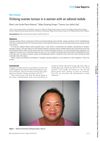
January 2010 in “Case Reports” A woman with high testosterone and an adrenal nodule had an ovarian tumor causing her symptoms, which improved after the tumor was removed.
 5 citations
,
February 1996 in “Clinical pharmacology and therapeutics/Clinical pharmacology & therapeutics”
5 citations
,
February 1996 in “Clinical pharmacology and therapeutics/Clinical pharmacology & therapeutics” Minoxidil given intravenously caused small changes in diastolic blood pressure and increased heart rate at higher concentrations in patients with high blood pressure.