July 2024 in “Journal of Investigative Dermatology” Sex and race affect immune responses and treatment outcomes in Hidradenitis suppurativa.
91 citations
,
May 2020 in “Monaldi Archives for Chest Disease” Understanding gender differences in COVID-19 is crucial for effective health strategies.
 October 2024 in “Archives of Dermatological Research”
 Male and female pattern hair loss have different molecular pathways, suggesting unique treatment targets for each sex.
 185 citations
,
August 2020 in “Mayo Clinic Proceedings”
185 citations
,
August 2020 in “Mayo Clinic Proceedings” Men are more likely to have severe COVID-19 cases and fatalities than women due to factors like lifestyle, aging, and biological differences.
 January 2020 in “Research Portal Denmark”
 A short male anogenital distance may indicate incomplete masculinization due to disrupted androgen action.
November 2024 in “Forensic Sciences” Understanding the Y chromosome is key to male health, aging, and developing diagnostic tools.
5 citations
,
July 2019 in “Nutrients” Low selenium intake may delay puberty in boys but not in girls.
December 2025 in “IntechOpen eBooks” BMI is not enough for assessing obesity in women; use more personalized tools.
 47 citations
,
May 2020 in “Cardiovascular Research”
47 citations
,
May 2020 in “Cardiovascular Research” The document concludes that future heart disease research should account for sex-specific differences to improve diagnosis, treatment, and outcomes.
January 2026 in “Psychoneuroendocrinology” Loneliness raises stress levels in older African American men but not women.
 April 2022 in “Indian Journal of Forensic Medicine & Toxicology”
 PSA can help diagnose high androgen levels in women.
22 citations
,
January 2021 in “Clinical Therapeutics” Men face more severe COVID-19 outcomes, while women are more likely to have long-term symptoms.
 February 2025 in “East African Scholars Journal of Medical Sciences”
 Higher testosterone and DHEA-S levels may be linked to male pattern baldness.
 January 2025 in “Applied Sciences”
 Sulforaphane from broccoli may help treat certain cancers, hormone issues, and hair loss.
9 citations
,
January 2022 in “Biology” Male mice are more susceptible to autism-like changes from valproic acid than female mice.
 February 2024 in “Heliyon”
 People with androgenetic alopecia have different lipid levels in their blood, which vary between men and women, and may be linked to a higher risk of metabolic syndrome.
 18 citations
,
February 2012 in “Experimental Dermatology”
18 citations
,
February 2012 in “Experimental Dermatology” No link found between specific genes and female pattern hair loss.
 131 citations
,
September 2017 in “Molecular and Cellular Endocrinology”
131 citations
,
September 2017 in “Molecular and Cellular Endocrinology” The document concludes that blocking the internal pathways that create androgens might help treat cancers that depend on sex hormones.
 12 citations
,
June 2021 in “Scientific Reports”
12 citations
,
June 2021 in “Scientific Reports” Curcumin may help reverse aging by targeting specific genes.
 8 citations
,
June 2016 in “Clinical Chemistry”
8 citations
,
June 2016 in “Clinical Chemistry” PSA levels could help detect illegal steroid use in female athletes but face challenges like cost and PCOS prevalence.
 January 2017 in “Clinical & medical biochemistry”
 Certain gene variations in AKT2 are more common in women with PCOS and are linked to higher levels of specific hormones and symptoms.
 24 citations
,
November 2015 in “Annals of Nutrition and Metabolism”
24 citations
,
November 2015 in “Annals of Nutrition and Metabolism” Certain SHBG gene variants, like rs727428, are linked to higher testosterone levels in women with PCOS.

No single biomarker is reliable enough for diagnosing and assessing SLE.
 14 citations
,
January 2018 in “Advances in Clinical Chemistry”
14 citations
,
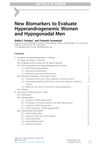
January 2018 in “Advances in Clinical Chemistry” The document concludes that hormonal biomarkers are key for diagnosing hyperandrogenemia in women and hypogonadism in men.
 September 2014 in “Springer eBooks”
 Men and women experience skin aging differently due to changes in sex hormone levels with age.
 13 citations
,
December 2018 in “Development, Growth & Differentiation”
13 citations
,
December 2018 in “Development, Growth & Differentiation” Sex hormones, especially estradiol, can change chicken feather shapes and colors.
October 2025 in “Preprints.org” Male and female mice handle stress differently.
November 2022 in “Annals of Translational Medicine” Immune activities and specific genes are important in male pattern baldness.
December 2025 in “Biology” Male and female mice handle stress differently.
 May 2023 in “Frontiers in Endocrinology”
 Blocking CRF1 receptors improved male hormone levels and reduced testicular tumor size in men with a specific adrenal condition.