 May 2025 in “The Journal of Rheumatology”
 Correct diagnosis is crucial for treating overlapping conditions like NMOSD and SLE effectively.
 May 2025 in “The Journal of Rheumatology”
 Middle-aged women with dilated cardiomyopathy should be screened for antiphospholipid syndrome.
 May 2025 in “The Journal of Rheumatology”
 Early recognition and a team approach are crucial for managing diffuse alveolar hemorrhage in antiphospholipid syndrome.
 May 2025 in “The Journal of Rheumatology”
 Antiphospholipid syndrome can severely damage adrenal glands, requiring early diagnosis and treatment.
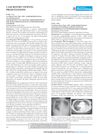 May 2025 in “The Journal of Rheumatology”
 SLE can cause unusual gastrointestinal symptoms, and immunosuppressive therapy can be effective.
The herbal shampoo with Harsinghar works better against dandruff than a commercial product.
 January 2025 in “International Journal For Multidisciplinary Research”
 Buddhist meditation techniques are better for reducing stress and anxiety than modern methods.
 January 2025 in “Journal of Pharmaceutical Research Science & Technology”
 Dissolving microneedles offer efficient, minimally invasive drug delivery through the skin.
 January 2025 in “Hospital Pharmacology - International Multidisciplinary Journal”
 Medications can cause eye problems, so regular eye check-ups are important.
 January 2025 in “Advances in Dermatology and Allergology”
 Micro-needling helps deliver substances deeper into the skin and promotes skin repair.
 November 2024 in “International Journal of Agricultural Invention”
 Amla is a nutritious fruit with many health benefits, including boosting immunity and fighting diseases.
 November 2024 in “International Society of Hair Restoration Surgery”
 FUT is a hair restoration method that should be chosen based on individual patient needs and preferences.
 October 2024 in “International Journal of Biology Pharmacy and Allied Sciences”
 Herbal treatments are gaining interest as alternatives for hair loss.
Stiffness gradients in alginate gels can guide cancer cell invasion and study cellular behaviors.
 April 2024 in “Cell death and disease”
 Long COVID causes various long-term health issues and needs better awareness and treatment.
 March 2024 in “Intisari Sains Medis”
 PRP injections improve periorbital wrinkles and show promise as a treatment.
 February 2024 in “Frontiers in physiology”
 Lymphatic vessels are important for skin repair and could affect skin disease treatments.
 February 2024 in “Frontiers in physiology”
 Hair follicle stem cells help skin heal and grow during stretching.
 February 2024 in “Frontiers in physics”
 The new model detects hair clusters more accurately and efficiently, helping with early hair loss treatment and diagnosis.
 January 2024 in “International Research Journal of Modernization in Engineering Technology and Science”
 The herbal shampoo effectively cleans and conditions hair while being non-toxic and reducing allergic reactions.
 January 2024 in “MEDS Chinese Medicine”
 Acupuncture can effectively treat acne.
 December 2023 in “bioRxiv (Cold Spring Harbor Laboratory)”
 Different types of inactive melanocyte stem cells exist with unique characteristics and potential to develop into other cells.
 December 2023 in “Scientific reports”
 Fermented soy protein may help prevent bone loss by affecting bone cell activity.
 November 2023 in “Frontiers in veterinary science”
 The study provides insights into hair growth mechanisms in yaks.
 November 2023 in “Global journal of medical research”
 Understanding the properties of hyaluronic acid helps improve its use in facial aging treatments.
 September 2023 in “International journal of biomedicine”
 Minoxidil might help treat acne scars by reducing collagen buildup.
The study aims to create a model to improve personalized and preventive health care.
 January 2023 in “International Journal of Zoology and Animal Biology”
 Canine hypothyroidism can be linked to diabetes, requiring thorough testing for proper diagnosis.
 March 2022 in “Marmara University Open Access System”
 Digital games are part of new media but need a deeper look at their complex nature and cultural roots.

No single biomarker is reliable enough for diagnosing and assessing SLE.