August 2025 in “Dermatopathology” Pilomatricomas are often linked to genetic syndromes, especially Apert syndrome, and genetic analysis is crucial for diagnosis.
5 citations
,
April 2022 in “Evidence-based Complementary and Alternative Medicine” Shaoyao Gancao decoction may treat alopecia areata by affecting the PI3K/AKT signaling pathway.
Centralized imaging provides more accurate and consistent hair loss measurements in alopecia areata.
 1 citations
,
October 2021 in “Australasian Journal of Dermatology”
1 citations
,
October 2021 in “Australasian Journal of Dermatology” The document's conclusion cannot be provided because the document is not available or cannot be understood.
12 citations
,
July 2004 in “Molecular genetics and genomics” A new mouse mutation causes skin and hair defects due to a gene change.
12 citations
,
January 2019 in “International Journal of Trichology” Trichoscopy is useful for detecting and monitoring androgenetic alopecia.
1 citations
,
June 2022 in “Journal of Cosmetic Dermatology” Two specific genetic markers increase the risk of hair loss in Asian populations.

The document concludes that the new model realistically simulates male baldness and could be useful for medical purposes and entertainment.
 March 2025 in “Human Genetics and Genomics Advances”
 Genetic predictions of baldness in Europeans don't apply well to African men.
July 2025 in “International Journal of Molecular Sciences” Four new genes related to sheep wool were discovered, showing genetic diversity.
 December 2024 in “Indian Journal of Dermatology”
 Dermoscopy is useful for diagnosing Atrichia with Papular Lesions in children without needing a biopsy.
 43 citations
,
June 2018 in “Clinics in dermatology”
43 citations
,
June 2018 in “Clinics in dermatology” People with atopic dermatitis are more likely to develop other skin conditions due to shared genetics and immune pathways.
14 citations
,
March 1994 in “Archives of Dermatology” A married couple both developed alopecia areata, possibly due to shared stress.
 April 2018 in “Journal of Investigative Dermatology”
 Different types of stem cells in the skin contribute to the variety of melanoma forms.
 January 2024 in “International Journal of Advanced Computer Science and Applications”
 Deep learning and explainable AI are improving scalp disorder diagnosis, but challenges in transparency and data quality remain.
 April 2024 in “Skin research and technology”
 Adding stromal vascular fraction to platelet-rich plasma injections did not significantly improve hair growth in androgenetic alopecia treatment.
 July 2022 in “New Zealand journal of agricultural research”
 The KRTAP27-1 gene variations in sheep may affect wool length and weight.
7 citations
,
July 2019 in “Animals” The KRTAP21-1 gene affects wool yield and can help improve wool production.
12 citations
,
September 2013 in “BMC Biophysics” Keratin filaments' elasticity is influenced by their terminal domains and surrounding medium.
January 2026 in “AppliedMath” Pattern mode isolation improves the reliability and predictability of Turing patterns.
November 2025 in “Informatica” The method greatly improves low-light sports images' quality and reduces artifacts.
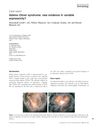 December 2013 in “International Journal of Dermatology”
 The clinical signs of Adams-Oliver syndrome can vary greatly, even among family members.
 September 2025 in “Journal of Surfactants and Detergents”
 Shampoos with sodium lauroyl methylaminopropionate improve hair lubrication and reduce irritation.
 1 citations
,
November 2025 in “Clinical Cosmetic and Investigational Dermatology”
1 citations
,
November 2025 in “Clinical Cosmetic and Investigational Dermatology” Sleep patterns might be linked to hair loss, but more research is needed.
 3 citations
,
January 2016 in “International Journal of Trichology”
3 citations
,
January 2016 in “International Journal of Trichology” Sheep-derived factors improve human hair cell clustering, which may help hair growth.
 March 2024 in “Research Square (Research Square)”
 Combining genetic and physical trait analysis improves diagnosis accuracy for monogenic diabetes.
 January 2013 in “Faculty of Health; Institute of Health and Biomedical Innovation”
 Four genetic risk areas related to male-pattern baldness were identified, with WNT signaling playing a role in its development.
The transporter protein SH1446 in Staphylococcus hominis is key to underarm odor production.
 35 citations
,
March 2014 in “British Journal of Dermatology”
35 citations
,
March 2014 in “British Journal of Dermatology” Hair loss in male pattern baldness involves muscle degeneration and increased scalp fat.