 16 citations
,
February 2017 in “Dermatology and Therapy”
16 citations
,
February 2017 in “Dermatology and Therapy” The new visual scale is a quick and effective way to measure hair loss in women.
1 citations
,
January 2025 in “International Journal of Cosmetic Science” Age-related hair curvature increases due to internal structural changes from grooming.
1 citations
,
August 2020 The Shaven mutation in mice affects hair growth and causes a greasy coat due to abnormal lipid content.

Hair coloring and bleaching can permanently break down hair protein and temporarily change its properties.
September 2025 in “OPAL (Open@LaTrobe) (La Trobe University)” Different solvents affect minoxidil crystal shapes, improving flowability and revealing a unique butterfly-shaped crystal.
3 citations
,
May 2009 in “International Journal of Cosmetic Science” Relaxer treatments damage African–American hair, with commercial products causing more harm than lab-made solutions.
 12 citations
,
March 2018 in “Australasian Journal of Dermatology”
12 citations
,
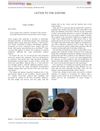
March 2018 in “Australasian Journal of Dermatology” Minoxidil treatment can reduce hair shedding, increase hair volume, and even change hair color in patients with loose anagen hair syndrome.
 1 citations
,
September 2019 in “Springer eBooks”
1 citations
,
September 2019 in “Springer eBooks” Telogen effluvium is a condition that causes temporary hair loss due to stress or shock to the body.
29 citations
,
May 2007 in “British Journal of Dermatology” Hair relaxers can cause lasting scalp damage and hair loss.
 August 2011 in “Clinical and Experimental Dermatology”
 About 30% of women feel they lose too much hair, often starting before age 40, and most can't find a reason for it.
March 2026 in “Journal of the mechanical behavior of biomedical materials/Journal of mechanical behavior of biomedical materials” Hair cuticles remain stable and resilient under stress due to strong protein content and crosslinking.
February 2006 in “Cambridge University Press eBooks” A 45-year-old woman experienced excessive hair shedding beyond the normal range.
 2 citations
,
January 2015 in “Sen'i Gakkaishi”
2 citations
,
January 2015 in “Sen'i Gakkaishi” Washing permed hair after using thioglycolic acid helps reform strong bonds, making hair stronger.
 May 2015 in “Hair transplant forum international”
 Androgenetic alopecia causes hair loss by shrinking hair follicles due to androgens, with the connection between the muscle and hair follicle determining if the loss is reversible.
 7 citations
,
November 2004 in “International Journal of Cosmetic Science”
7 citations
,
November 2004 in “International Journal of Cosmetic Science” Hair breaks differently when wet or dry and is affected by its condition and treatments like perms and bleaching.
15 citations
,
January 1998 Frequent blow-drying causes cracks and breakage in hair cuticles.
 March 2010 in “International Journal of Cosmetic Science”
 Disulfide bonds affect the melting behavior of hair's crystalline structure, but hair retains some stability even after these bonds are broken.
 2 citations
,
January 1980 in “Archives of Dermatology”
2 citations
,
January 1980 in “Archives of Dermatology” The author suggests changing "telogen effluvium" to "telogen defluxion" for hair loss terminology.
 41 citations
,
May 2018 in “Nutrition and healthy aging”
41 citations
,
May 2018 in “Nutrition and healthy aging” Skin aging is largely due to differences in stiffness and elasticity between skin layers, leading to wrinkles.
Loose anagen syndrome causes easy hair shedding in children, often resolving on its own.
3 citations
,
January 1981 Tight traditional hairstyles can cause hair loss.
 63 citations
,
October 2005 in “Archives of Dermatology”
63 citations
,
October 2005 in “Archives of Dermatology” Shorter, thinner hairs indicate AGA, while longer, thicker hairs suggest CTE; counting and measuring shed hairs helps diagnose hair loss type.
13 citations
,
January 1953 in “Archives of Dermatology” Certain unsaturated compounds can cause temporary hair loss by affecting hair structure.
 September 2016 in “Más dermatología”
 Postpartum hair loss usually stops within 4-6 months.
 21 citations
,
September 2011 in “Journal of Pharmaceutical Sciences”
21 citations
,
September 2011 in “Journal of Pharmaceutical Sciences” Desolvation of finasteride depends on environment and technique.
February 2019 in “International Journal of Dermatology and Clinical Research” Nε-(carboxymethyl) lysine delays hair growth by blocking a key protein.
 September 2024 in “Meditsinskiy sovet = Medical Council”
 As women age, hair follicles decrease in number and hair width tends to reduce.
75 citations
,
August 2018 in “Plant physiology” Hydrogen sulfide disrupts protein function and root hair growth in plants by modifying proteins.
 2 citations
,
October 2022 in “Journal of structural biology”
2 citations
,
October 2022 in “Journal of structural biology” Older thin hair is not just thinner but also has different shape, structure, and stiffness.
 20 citations
,
January 2015 in “Current problems in dermatology”
20 citations
,
January 2015 in “Current problems in dermatology” Hair gets thinner, grayer, and changes texture with age due to genetics, environment, and cellular changes, affecting the growth cycle.