18 citations
,
December 2002 in “European Journal of Biochemistry” MsPG3 protein gathers at root hair tips, aiding growth.
 11 citations
,
October 2020 in “Plant biotechnology journal”
11 citations
,
October 2020 in “Plant biotechnology journal” Overexpressing SIMK in alfalfa boosts root hair growth, nodule clustering, and shoot biomass.
 1 citations
,
January 2017 in “Springer eBooks”
1 citations
,
January 2017 in “Springer eBooks” Flavonoids and Nod factors are key for legume plant growth and could help in sustainable farming.
 83 citations
,
July 2008 in “Current Opinion in Chemical Biology”
83 citations
,
July 2008 in “Current Opinion in Chemical Biology” The document concludes that understanding sulfation biology is crucial for creating treatments due to its importance in biological functions and disease.
 36 citations
,
June 2019 in “eLife”
36 citations
,
June 2019 in “eLife” The study developed a tool to predict how gut microbes process foods and drugs, showing that similar compounds often share metabolic pathways and effects.
 22 citations
,
August 2006 in “Critical Reviews in Plant Sciences”
22 citations
,
August 2006 in “Critical Reviews in Plant Sciences” The tropical legume Sesbania rostrata can form nodules in waterlogged conditions using a different method that involves plant hormones and specific genes.
 4 citations
,
February 2012 in “Chinese Science Bulletin”
4 citations
,
February 2012 in “Chinese Science Bulletin” The MtAnn3 gene affects root hair growth and is influenced by cytokinin.
477 citations
,
March 2004 in “Proceedings of the National Academy of Sciences” The DMI3 gene is essential for nodule development and symbiosis in certain plants.
69 citations
,
January 2021 in “Journal of Biological Chemistry” Plant-derived amino acids can help develop new antimicrobial drugs.
27 citations
,
March 2006 in “Molecular Plant Pathology” Legumes use flavonoids to start a process with rhizobia for nitrogen fixation, involving specific genes and proteins.
25 citations
,
March 2024 in “Sustainability” Using food industry waste and fermentation can create sustainable cosmetics.
 6 citations
,
April 2023 in “Frontiers in plant science”
6 citations
,
April 2023 in “Frontiers in plant science” Certain bacteria can boost lentil growth and improve soil used for farming.
 6 citations
,
February 2023 in “Plant and Soil”
6 citations
,
February 2023 in “Plant and Soil” Bacillus subtilis strain WM13-24 helps plant root growth through volatile compounds.
January 1994 in “Memorial University Research Repository (Memorial University)” Oleosomes help cell growth in Sesbania rostrata nodules but don't aid nitrogen fixation.
83 citations
,
March 1995 in “PLANT PHYSIOLOGY” The differentiation stage of root epidermal cells is crucial for root hair depolarization in Medicago sativa when exposed to specific Nod factors.
1 citations
,
January 1996 Infection thread formation in legumes is similar to root hair and pollen tube growth.
 March 2021 in “Research Square (Research Square)”
 The SbbHLH85 protein helps sweet sorghum grow more root hairs but makes the plant more sensitive to salt.
29 citations
,
December 1994 in “Soil Biology and Biochemistry” Inoculating Arabidopsis with Azospirillum brasilense significantly increases root hair length.
8 citations
,
February 2022 in “PLoS ONE” Bacillus subtilis strain Ydj3 boosts sweet pepper growth, yield, and vitamin C by colonizing roots.
4 citations
,
August 2025 in “Plant Cell & Environment” Azospirillum brasilense promotes root hair growth in Arabidopsis by increasing auxin and activating specific genes.
 May 2024 in “Physiologia Plantarum”
 Bacillus subtilis helps plants get more phosphorus and grow better roots.
 October 2022 in “Research Square (Research Square)”
 The conclusion is that certain chemicals from Bacillus subtilis help improve plant root growth through a hormone-related process.
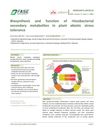 November 2025 in “Frontiers of Agricultural Science and Engineering”
 Rhizobacterial strain RT3 helps lettuce survive drought by producing protective substances like proline.
3 citations
,
January 2016 Certain beneficial microbes can fight fungi and help plants get nutrients.
Nod factor can trigger changes in legume root hairs with just one molecule.
13 citations
,
February 2009 in “Pest management science” Reactive oxygen species are key for parasitic plant attachment and affect root development in various plants.
16 citations
,
April 2021 in “Plant Signaling & Behavior” MYB30 and EIN3 work against each other to control root hair growth and phosphorus uptake in plants when phosphate is low.
36 citations
,
August 2016 in “The Plant cell” A specific enzyme is crucial for the bean plant's relationship with certain beneficial soil bacteria and fungi.
Four bacteria from the lab were found to be resistant to selenium.
Microorganisms improve plant root growth in acidic soils, boosting productivity.