 12 citations
,
May 2001 in “British journal of dermatology/British journal of dermatology, Supplement”
12 citations
,
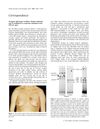
May 2001 in “British journal of dermatology/British journal of dermatology, Supplement” A rare benign skin tumor showed unusual features of sebaceous and sweat glands, important for correct diagnosis.
9 citations
,
May 2023 in “Stem Cell Research & Therapy” Stem cell treatment from umbilical cords reduces symptoms of atopic dermatitis and may help hair growth.
 7 citations
,
November 2014 in “Histochemistry and Cell Biology”
7 citations
,
November 2014 in “Histochemistry and Cell Biology” The we/we wal/wal mice have defects in hair growth and skin layer formation, causing hair loss, useful for understanding alopecia.
 6 citations
,
January 2023 in “npj regenerative medicine”
6 citations
,
January 2023 in “npj regenerative medicine” Transplanting growing hair follicles into scars can help regenerate and improve scar tissue.
 6 citations
,
December 2022 in “Colloids and Surfaces B: Biointerfaces”
6 citations
,
December 2022 in “Colloids and Surfaces B: Biointerfaces” The new wound dressing promotes cell growth and healing, absorbs wound fluids well, and is biocompatible.
 3 citations
,
July 2025 in “International Journal of Biological Sciences”
3 citations
,
July 2025 in “International Journal of Biological Sciences” m6A methylation is crucial for proper wound healing and tissue repair.
2 citations
,
June 2016 in “International journal of experimental pathology” Human skin has less GDNF and its receptor with age.
 1 citations
,
April 2017 in “Journal of Investigative Dermatology”
1 citations
,
April 2017 in “Journal of Investigative Dermatology” A new one-step test can quickly identify skin cancer during surgery.
 1 citations
,
April 2019 in “Journal of Investigative Dermatology”
1 citations
,
April 2019 in “Journal of Investigative Dermatology” Cold atmospheric plasma may speed up wound healing and control infections.
 March 2026 in “Frontiers in Cell and Developmental Biology”
 Understanding how certain proteins and genetic changes control skin stem cells is key to treating skin diseases.
 January 2025 in “JOURNAL of SIBERIAN MEDICAL SCIENCES”
 Age-related hair loss is linked to changes in blood vessels, stem cells, and aging cells, and understanding these can help keep hair healthy as we age.
Moles may stop growing because of cell cooperation, not just because of aging cells.
Cornification is the process where living skin cells die to create a protective barrier, and problems with it can cause skin diseases.
 May 2018 in “Journal of Investigative Dermatology”
 Activating Wnt in skin cells controls the number of hair follicles by directing cell movement and fate.
 November 2016 in “Journal of Evolution of Medical and Dental Sciences”
 Elderly people often have skin issues like wrinkles, dryness, and benign tumors, needing special dermatology care.

Regulating cell death is crucial for skin health and treating inflammatory skin diseases.
 July 2025 in “bioRxiv (Cold Spring Harbor Laboratory)”
 Thrombin-preconditioned exosomes speed up wound healing and reduce scarring.
 April 2019 in “Journal of Investigative Dermatology”
 BRG1 is essential for skin cells to move and heal wounds properly.
September 2017 in “Journal of Investigative Dermatology” Ovol2 is essential for normal skin and hair regeneration.
September 2017 in “Journal of Investigative Dermatology” RCS-01 is safe and may help rejuvenate aging skin.
 October 2013 in “Journal of Investigative Dermatology”
 Collagen VII helps skin heal and stay strong, sirolimus may lower skin cancer risk in kidney transplant patients, high-molecular-mass hyaluronan helps naked mole rats resist cancer, dermal γδ T cells aid in hair growth in rodents, and overexpression of IL-33 in mouse skin causes itchiness, offering a model for studying allergic inflammation treatments.
Tissue engineering advancements are improving skin substitutes for better burn treatment.
April 2010 in “The journal of immunology/The Journal of immunology” FoxN1 gene is crucial for proper thymus structure and normal skin appearance.
 April 2018 in “Journal of Investigative Dermatology”
 Arrector pili muscle regulates hair follicle stem cells, DNA methylation needed for hair cycling, and Wnt/B-catenin signaling starts hair growth.

Plant-derived exosomes show promise for healing skin wounds but need more research and trials.
22 citations
,
March 2023 in “Bioengineering” Stem cell therapies may help improve symptoms and quality of life for people with epidermolysis bullosa.
 82 citations
,
February 2017 in “Cold Spring Harbor Perspectives in Biology”
82 citations
,
February 2017 in “Cold Spring Harbor Perspectives in Biology” The TGF-β family helps control how cells change and move, affecting skin, hair, and organ development.
 26 citations
,
October 2021 in “Clinical, Cosmetic and Investigational Dermatology”
26 citations
,
October 2021 in “Clinical, Cosmetic and Investigational Dermatology” The secretome from mesenchymal stem cells shows promise for treating skin conditions and improving skin and hair health, but more research is needed.
 349 citations
,
January 2005 in “The FASEB journal”
349 citations
,
January 2005 in “The FASEB journal” Human skin can make serotonin and melatonin, which help protect and maintain it.
133 citations
,
July 2020 in “Cells” Creating fully functional artificial skin for chronic wounds is still very challenging.