 April 2026 in “Scientific Reports”
 MSF-VMDNet accurately segments skin cancer images better than existing methods.
 April 2026 in “Dermatology and Therapy”
 Pregnancy can cause skin changes and issues that need careful management.
 April 2026 in “Journal of Pharmaceutical Investigation”
 Nanotechnology could improve treatment for scars and atopic dermatitis by targeting skin issues more effectively.
 March 2026 in “Food, Nutrition and Health.”
 Collagen peptides may help reduce skin aging by improving elasticity and hydration.
 February 2026 in “Frontiers in Bioengineering and Biotechnology”
 Liposome-based systems improve skin wound healing effectively.
 February 2026 in “International Journal of Web of Multidisciplinary Studies”
 Restoring microbial balance and using exosome therapies may help treat hair disorders like alopecia and acne.
 January 2026 in “Nanoscale Advances”
 Microneedles combined with light therapy can improve skin disease diagnosis and treatment.
 December 2025 in “Journal of Education Health and Sport”
 LED therapy is safe and effective for improving skin health and appearance.
 August 2025 in “Libyan Medical Journal”
 People with vitiligo or alopecia areata have higher anxiety and depression than healthy people.
 August 2025 in “The American Journal of Medical Sciences and Pharmaceutical Research”
 Non-injection carboxytherapy is effective and safe for treating problematic skin.
 January 2025 in “International Journal of Dermatology Venereology and Leprosy Sciences”
 Obesity worsens skin health and losing weight can improve skin conditions.
 May 2024 in “AlQalam Journal of Medical and Applied Sciences”
 Salmon patches on the neck may relate to the severity and recurrence of alopecia areata.
 January 2023 in “Discovery immunology”
 T cells and bacteria in the gut and skin help maintain health and protect against disease.
 November 2022 in “Journal of Education, Health and Sport”
 The skin's bacteria might influence the development of a hair loss condition called alopecia areata.
 January 2022 in “bioRxiv (Cold Spring Harbor Laboratory)”
 Skin lesions in Carney complex are likely caused by a specific group of skin cells that promote pigment production due to a genetic mutation.
 November 2021 in “International Journal of Research in Medical Sciences & Technology”
 Skin surface chemistry and OCT can improve skin disease diagnosis.
 July 2018 in “Benha Journal of Applied Sciences”
 Higher levels of miR-203 may contribute to hair loss in alopecia areata.
 January 2018 in “Springer eBooks”
 Athletes need effective management of skin disorders for their performance and well-being.
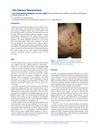 October 2016 in “Elsevier eBooks”
 Common noncancerous skin diseases have various treatments, including topical applications, light therapy, surgery, and medications, with psychological support being important.
 September 2015 in “International Journal of Dermatology”
 Skin diseases are common in HIV patients and could help detect HIV early in Ethiopia.

Skin changes throughout life, from development before birth to aging effects like wrinkles, influenced by both genetics and environment.
 September 2014 in “Journal der Deutschen Dermatologischen Gesellschaft”
 Diabetes can cause a variety of skin disorders, some of which may signal more serious health issues.
 September 1999 in “The Journal of The British Menopause Society”
 The document concludes that skin aging in women can be caused by UV exposure and hormonal changes, and treatments like hormone replacement therapy and various skin therapies can help.
 January 1990 in “Springer eBooks”
 Some chemicals can permanently or temporarily remove color from skin and hair, which can be distressing and is not well-regulated in cosmetics.
 788 citations
,
February 2007 in “Nature”
788 citations
,
February 2007 in “Nature” The document concludes that skin stem cells are important for hair growth and wound healing, and could be used in regenerative medicine.
 218 citations
,
April 2008 in “Genes & Development”
218 citations
,
April 2008 in “Genes & Development” Skin stem cells help repair damage and maintain healthy skin.
 103 citations
,
November 2014 in “Journal of Cell Biology”
103 citations
,
November 2014 in “Journal of Cell Biology” MicroRNA-214 is important for skin and hair growth because it affects the Wnt pathway.
 85 citations
,
July 2012 in “Cold Spring Harbor perspectives in biology”
85 citations
,
July 2012 in “Cold Spring Harbor perspectives in biology” The skin protects the body and is constantly renewed by stem cells; disruptions can lead to cancer.
 65 citations
,
February 2017 in “Pflügers Archiv - European Journal of Physiology”
65 citations
,
February 2017 in “Pflügers Archiv - European Journal of Physiology” Macrophages are vital for skin healing, hair growth, salt balance, and cancer defense.
 36 citations
,
September 2009 in “Journal of Cellular and Molecular Medicine”
36 citations
,
September 2009 in “Journal of Cellular and Molecular Medicine” New treatments targeting skin stem cells show promise for skin repair, anti-aging, and cancer therapy.