 June 2026 in “International Journal of Bioprinting”
 3D bioprinting shows promise for skin regeneration but needs more development to fully replicate natural skin.
 April 2026 in “JOJ Dermatology & Cosmetics”
 Skin issues in PCOS signal hormone problems, and combined treatments improve outcomes.
 March 2026 in “Перспективи та інновації науки”
 Visceral massage improves skin health and metabolism.
 February 2026 in “American Journal of Clinical Dermatology”
 Radiotherapy can cause skin fibrosis, which is often overlooked and needs better treatment and evaluation.
 February 2026 in “Frontiers in Immunology”
 Human amniotic stem cells can safely treat psoriasis-like skin in mice.
 February 2026 in “Frontiers in Bioengineering and Biotechnology”
 Liposome-based systems improve skin wound healing effectively.
 December 2025 in “Journal of Education Health and Sport”
 LED therapy is safe and effective for improving skin health and appearance.
 September 2025 in “Frontiers in Cell and Developmental Biology”
 Retinoic acid may help heal skin without scars by reducing fibrosis and supporting skin regeneration.
 March 2024 in “World Academy of Sciences Journal”
 Exercise helps maintain healthy skin by promoting regeneration and reducing inflammation.
 October 2023 in “bioRxiv (Cold Spring Harbor Laboratory)”
 Immune cells are essential for early hair and skin development and healing.
 June 2023 in “Research Square (Research Square)”
 Hyaluronic acid and polycaprolactone improve skin regeneration, with polycaprolactone having a stronger effect on healing and tissue repair.
 March 2023 in “bioRxiv (Cold Spring Harbor Laboratory)”
 Scientists can now create skin with hair by reprogramming cells in wounds.
 November 2022 in “Journal of Education, Health and Sport”
 The skin's bacteria might influence the development of a hair loss condition called alopecia areata.
COVID-19 may lead to severe skin necrosis without clear underlying causes, as seen in a diabetic patient who required leg amputation.
 March 2022 in “Journal of Clinical Case Studies Reviews & Reports”
 COVID-19 can cause or worsen skin conditions and might show early signs of infection.
 March 2022 in “Journal of clinical case studies reviews & reports”
 COVID-19 can cause different skin issues, including rashes and hair loss.
 January 2022 in “Medical research archives”
 Taking vitamin D might improve life for MS patients and reduce skin side effects from alemtuzumab treatment.

Silk sericin dressing with collagen heals wounds faster and improves scar quality better than Bactigras.
 April 2020 in “bioRxiv (Cold Spring Harbor Laboratory)”
 Skin healing from blisters can delay hair growth as stem cells focus on repairing skin over developing hair.
 April 2019 in “Journal of Investigative Dermatology”
 DPP4-positive fibroblasts play a major role in producing proteins that lead to skin fibrosis.
 January 2018 in “Stem cell biology and regenerative medicine”
 The conclusion is that the nuclear lamina and LINC complex in skin cells respond to mechanical signals, affecting gene expression and cell differentiation, which is important for skin health and can impact skin diseases.
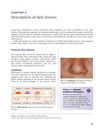
The document explains different types of skin lesions and their characteristics, causes, and related conditions.
 June 2012 in “Springer eBooks”
 Skin changes can indicate starvation and nutritional deficiencies in anorexia nervosa.

Use the least toxic, most specific treatments for skin diseases, considering side effects and individual patient needs.
 November 2004 in “Medical Journal of Indonesia”
 Hormonal imbalances can cause skin and hair problems in women, and treatments that block male hormones can help.
Botulinum toxin type A reduces itch and inflammation from histamine and may help treat certain skin conditions and hair loss.
 September 1961 in “Archives of Dermatology”
 Colchicine causes hair loss by damaging hair follicles.
 September 1997 in “Journal of The European Academy of Dermatology and Venereology”
 Topical spironolactone effectively treats hair loss in women.
 November 2022 in “LA Referencia (Red Federada de Repositorios Institucionales de Publicaciones Científicas)”
 Platelet-rich fibrin speeds up burn wound healing in rabbits.
 January 2021 in “Research journal for veterinary practitioners”
 The document does not determine if essential fatty acids improve rabbit skin health.