 May 2021 in “Pakistan Journal of Medical and Health Sciences”
 Trichogram is useful for diagnosing hair disorders, but newer, non-invasive methods like trichoscopy are becoming more popular due to their sensitivity and ability to monitor treatment responses.
 March 2021 in “CRC Press eBooks”
 The document concludes that different patterns of hair thickness and scalp changes can help diagnose types of non-scarring hair loss.
January 2021 in “International Journal of Research in Medical Sciences” During the COVID-19 lockdown, there were fewer cases of mild skin issues and more cases of stress-related skin conditions.
 December 2020 in “Skin appendage disorders”
 A young man with an unusual type of scarring hair loss suggests a possible new variant of a known scalp condition.
 September 2020 in “Annals of the National Academy of Medical Sciences. India”
 COVID-19 can cause skin issues like "COVID toes," rashes, hair loss, and hand eczema, and dermatologists are important for recognizing these signs.
 April 2020 in “Journal of the Endocrine Society”
 An ovarian tumor caused a woman's male-like symptoms, which improved after surgery.
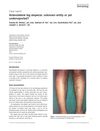 September 2018 in “International Journal of Dermatology”
 Anterolateral leg alopecia is a benign, nonprogressive hair loss condition on the lower legs that is not well understood and may resolve on its own.
PRP hair treatment is generally safe but may cause minor pain, bleeding, redness, and scalp tightness, and isn't suitable for everyone.
 April 2016 in “Journal of Investigative Dermatology”
 Jasmine extract helps skin cell growth and makes artificial skin thicker, especially when used with skin-derived precursors.
 April 2016 in “JAMA Dermatology”
 Baseball caps don't fully protect bald spots on the back of the head from sun damage; wear wide-brimmed hats or use sunscreen.
 January 2016 in “Journal of The Korean Medical Association”
 The document says how to diagnose and treat hair loss from alopecia areata, but there's no cure and treatments vary.
 September 2015 in “British Journal of Dermatology”
 Most clinicians follow discharge guidelines, many lupus patients don't use sunscreen regularly, dithranol is effective for psoriasis, biopsy methods should be based on lesion type, voriconazole may raise skin cancer risk, a new scale can help diagnose female hair loss early, and most melanomas may develop from existing moles.
 July 2015 in “Cambridge University Press eBooks”
 The document concludes that treatments for female hair loss and excess body hair are available, but managing expectations is important.
2-Hydroxy-1,4-naphthoquinone is a strong 5α-reductase inhibitor.
 September 2014 in “International Journal of Dermatology and Venereology”
 Certain histamine receptors (H2R, H3R, H4R) have unique roles in treating skin diseases, with H2R helping with chronic urticaria and other conditions, H3R providing pain relief and allergy benefits, and H4R reducing inflammation and itchiness.
 May 2013 in “Springer eBooks”
 Skin problems in the elderly are unique and may indicate other diseases, involving changes in skin, hair, nails, and increased cancer risk.
 January 2013 in “Juntendo Medical Journal”
 Understanding the normal hair cycle and different types of hair loss is important for maintaining healthy hair.
 January 2012 in “Methods in pharmacology and toxicology”
 TRPV3 could be a target for treating pain, skin disorders, and hair problems, but more research is needed to create effective drugs.
 January 2012 in “Human health handbooks”
 Low-level light therapy is FDA-approved for male pattern hair loss, increases hair count and strength, and is considered safe for use.
 January 2011 in “Journal of The American Academy of Dermatology”
 Treating generalized granuloma annulare is difficult, with PUVA being the most effective option, but relapses are common.

New cancer drugs can cause skin side effects like rashes, dry skin, hair changes, and nail problems.
 July 2010 in “Journal of Investigative Dermatology”
 Scientists found gene mutations that affect hair loss, skin stem cells, and skin disorders, and identified drugs that may help treat blood vessel and skin conditions.
 November 2009 in “Medical & surgical dermatology”
 The document concludes that Borrelia afzelii causes a skin condition in France, a gene is linked to hair loss in Caucasian women, and various genetic mutations affect skin diseases.
 March 2009 in “Journal of Biomedical Research”
 Herbal extract mixtures may speed up hair growth and could help treat baldness.
December 2003 in “The journal of investigative dermatology/Journal of investigative dermatology” Glycerol may improve wound healing and prevent keloids, a device can measure itch intensity, male pattern baldness is highly heritable, and fumaric acid esters may work for psoriasis by causing cell death in T cells.
 October 2003 in “Journal of the Royal Society of Medicine”
 The book is a detailed guide on hair diseases and diagnosis, useful for skin disease experts.
 January 2003 in “Journal für Kardiologie (Krause & Pachernegg GmbH)”
 Testosterone therapy can improve skin and hair in men with low testosterone but may cause skin irritation with certain treatments.
 July 2002 in “Dermatologic Surgery”
 Understanding the scalp's five-layer structure is crucial for better surgical outcomes and fewer complications.
July 1994 in “Archives of Dermatology” The book provides a thorough guide on hair and scalp diseases, covering causes, types, and evaluation methods.
 March 2019 in “Journal of medical science and clinical research”
 Skin problems are common and early signs of Systemic Lupus Erythematosus, and certain immune system markers are important for diagnosis and treatment.