 January 2023 in “Postępy Dermatologii i Alergologii”
 Azelaic acid treats acne, rosacea, and hyperpigmentation with minimal side effects.
 July 2022 in “International journal of dermatology, venereology and leprosy sciences”
 More frequent and severe skin problems are linked to higher daily alcohol consumption.
 November 2021 in “International Journal for Research in Applied Science and Engineering Technology”
 Lyophilized platelet-rich plasma is beneficial and effective for various medical treatments, including tissue regeneration and hair regrowth.
 July 2017 in “British Journal of Dermatology”
 The document concludes that scalp conditions have various causes and can present in many different ways.
Human scalp hair follicles have PGE2 and its receptors, which might affect hair growth.
 January 2007 in “Elsevier eBooks”
 Alopecia areata is a reversible, autoimmune-related hair loss that can have significant emotional impact and uncertain treatment effectiveness.
 June 2006 in “Experimental Dermatology”
 Understanding skin patterns can help us learn about skin diseases and their treatments.
 52 citations
,
November 2003 in “Journal of Investigative Dermatology”
52 citations
,
November 2003 in “Journal of Investigative Dermatology” Different harmful mutations in the CDH3 gene cause HJMD, but symptoms vary among individuals.
 15 citations
,
November 2002 in “Cardiology in Review”
15 citations
,
November 2002 in “Cardiology in Review” Cardiovascular drugs can cause various skin problems, so recognizing these reactions is important.
 4 citations
,
January 2014 in “International Journal of Trichology”
4 citations
,
January 2014 in “International Journal of Trichology” A 12-year-old boy with a rare genetic condition has progressive hair loss with no effective treatment.
 June 2026 in “International Journal of Homoeopathic Sciences”
 Personalized homeopathic treatment improved chronic facial melasma and skin texture.
 80 citations
,
March 2004 in “Neuropediatrics”
80 citations
,
March 2004 in “Neuropediatrics” Coats' Plus is a genetic disorder with eye abnormalities, brain calcification, poor growth, bone and skin issues, and movement disorders.
 7 citations
,
December 2013 in “The Journal of Dermatology”
7 citations
,
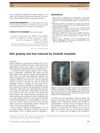
December 2013 in “The Journal of Dermatology” A woman's hair turned gray and fell out after starting a cancer drug called imatinib mesylate.
 October 2023 in “Journal of Medicine, University of Santo Tomas (JMUST Online)”
 Elderly patients frequently suffer from skin conditions, especially inflammatory ones, highlighting the need for better healthcare.
 8 citations
,
October 2022 in “Dermatology practical & conceptual”
8 citations
,
October 2022 in “Dermatology practical & conceptual” Tofacitinib and ruxolitinib are effective and safe for treating various autoimmune skin and joint disorders.
 7 citations
,
September 2020 in “Frontiers in Cell and Developmental Biology”
7 citations
,
September 2020 in “Frontiers in Cell and Developmental Biology” IL-36α helps grow new hair follicles and speeds up wound healing.
 December 2022 in “Cureus”
 Hormones significantly influence hair growth, with conditions like hirsutism and patterned hair loss linked to hormone levels; more research is needed for full understanding.
 December 2011 in “Drug Research”
 The document shows the state of pharmaceutical patents as of 1999, focusing on treatments for various diseases.
114 citations
,
October 2017 in “American journal of clinical dermatology” Adequate vitamin D is crucial for skin health and should be considered in dermatology.
70 citations
,
December 2004 in “Proceedings of the National Academy of Sciences” BMP signaling affects hair color by interacting with the MC-1R pathway.
 6 citations
,
November 2022 in “Development”
6 citations
,
November 2022 in “Development” New research shows that skin diversity is influenced by different types of dermal fibroblasts and their development, especially involving the Wnt/β-catenin pathway.
137 citations
,
January 2006 in “Frontiers in bioscience” CRH in the skin acts like the body's stress response system, affecting cell behavior and immune activity.
 130 citations
,
August 2015 in “Experimental Dermatology”
130 citations
,
August 2015 in “Experimental Dermatology” Human hair follicle organ culture is a useful model for hair research with potential for studying hair biology and testing treatments.
70 citations
,
June 2023 in “International Journal of Molecular Sciences” Air pollution harms skin health and can worsen skin diseases.
Thyroid problems can cause hair loss and change hair texture.
 September 2009 in “Pediatric Dermatology”
 UVB is good for a skin condition in Asian kids, a lotion works for head lice, a drug helps with a skin blistering disorder, a foam reduces itchiness in skin inflammation, birthmarks can be more widespread, and criteria for a neurocutaneous disorder were agreed upon.
29 citations
,
June 2020 in “International Journal of Molecular Sciences” Notch signaling disruptions can cause various skin diseases.
 14 citations
,
May 2022 in “Asian Journal of Pharmaceutical Sciences”
14 citations
,
May 2022 in “Asian Journal of Pharmaceutical Sciences” New hair follicle-targeting treatments show promise for hair disorders but need more research on safety and effectiveness.
 September 1998 in “JEADV. Journal of the European Academy of Dermatology and Venereology/Journal of the European Academy of Dermatology and Venereology”
 The document concludes that individualized treatments for hair issues are effective, certain hair changes can indicate neurocutaneous diseases, specific lotions improve skin health, laser hair removal works but needs more study on long-term effects, men's cosmetics are diverse, peeling is effective but can have side effects, and facial pigmentation is often due to overactive skin cells.
 4 citations
,
September 2021 in “Frontiers in allergy”
4 citations
,
September 2021 in “Frontiers in allergy” The conclusion is that understanding the complex relationship between allergies, autoimmunity, and psychological factors is key to treating skin disorders with itching.