Search
for
Sort by
Research
780-810 / 1000+ results 
research Dermatological drugs, topical agents, and cosmetics
Tretinoin gel is safe for sun exposure, but tacalcitol doesn't significantly improve non-segmental vitiligo.
research The use of diphencyprone in dermatology: A retospective audit
Diphencyprone treatment protocols could be simplified as no harm occurred despite not fully following them.

research Treating Scars of the Chin and Perioral Region
Improve chin and perioral scars with surgery, resurfacing, and other therapies, tailored to each patient.
research Alternative Therapies for Vitiligo
Some alternative therapies for vitiligo show promise but need more research.

research The Hair Follicle as a Dynamic Miniorgan
Hair follicles are complex, dynamic mini-organs that help us understand cell growth, death, migration, and differentiation, as well as tissue regeneration and tumor biology.

research Alopecia areata update
Half of people with Alopecia Areata may see hair regrowth within a year without treatment, but recovery is unpredictable.

research The North American Menopause Society Recommendations for Clinical Care of Midlife Women
The NAMS 2014 recommendations guide healthcare providers on treating health issues in midlife women, emphasizing individualized care and informed decision-making.

research Evidence-based (S3) guideline for the treatment of androgenetic alopecia in women and in men
Use minoxidil for hair loss; finasteride and dutasteride for men, dutasteride for women.

research Androgens and human hair growth
Androgens can cause hair growth in some areas and hair loss on the scalp.

research S1 guideline for diagnostic evaluation in androgenetic alopecia in men, women and adolescents
Guidelines for diagnosing common hair loss include detailed history, clinical examination, and various diagnostic techniques.

research Hormesis and medicine
Low doses of some substances can be beneficial, while high doses can be harmful or toxic.

research Human hair follicles contain two forms of ATP‐ sensitive potassium channels, only one of which is sensitive to minoxidil
One minoxidil-sensitive potassium channel exists in human hair follicles.

research Histopathologic Evaluation of Alopecias
The document concludes that accurate diagnosis of different types of hair loss requires careful examination of hair and scalp tissue, considering both clinical and microscopic features.
research Care of the transgender patient: the role of the gynecologist
Gynecologists should provide comprehensive care for transgender patients, including mental health evaluation, hormone therapy, and surgical options, while monitoring for side effects and ensuring patient safety.

research The blastema and epimorphic regeneration in mammals
Mammals might fail to regenerate not because they lack the right cells, but because of how cells respond to their surroundings, and changing this environment could enhance regeneration.
research The Changing Landscape of Alopecia Areata: The Therapeutic Paradigm
New treatments for Alopecia Areata, like JAK inhibitors, show promise for hair regrowth and are likely to change future treatment approaches.
research Scalp Dermoscopy or Trichoscopy
Trichoscopy is a quick, noninvasive method to diagnose hair and scalp disorders, often reducing the need for biopsies.
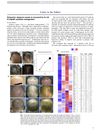
research Extensive alopecia areata is reversed by IL-12/IL-23p40 cytokine antagonism
Blocking IL-12/IL-23p40 helped reverse severe hair loss in patients.
research DRUG‐ASSOCIATED ALOPECIA
Some drugs can cause hair loss, and stopping these drugs often leads to hair regrowth.
research The prostamide‐related glaucoma therapy, bimatoprost, offers a novel approach for treating scalp alopecias
Bimatoprost, a glaucoma medication, may also help treat hair loss.
research Histologic features of alopecia areata other than peribulbar lymphocytic infiltrates
Other common signs, not just the well-known immune cells around hair bulbs, are important for diagnosing hair loss from alopecia areata.
research A prospective randomized trial comparing finasteride to spironolactone in the treatment of hirsute women.
Finasteride and spironolactone both reduce hirsutism, but finasteride lowers androgen levels more.

research Androgenetic alopecia in males: a histopathological and ultrastructural study
Hair loss in males involves inflammation, collagen buildup, and follicle damage, with severity increasing with age and baldness duration.

research Aging in hair follicle stem cells and niche microenvironment
Aging in hair follicle stem cells leads to hair graying, thinning, and loss.

research Animal models of androgen-dependent disorders of the pilosebaceous apparatus
Testosterone causes hair loss in AGA mice, which are good for testing baldness treatments, and both minoxidil and cyproterone acetate can prevent this hair loss.
research Live imaging of stem cells: answering old questions and raising new ones
Live imaging has advanced our understanding of stem cell behavior and raised new research questions.
research Identification of microRNAs in Wool Follicles during Anagen, Catagen, and Telogen Phases in Tibetan Sheep
MicroRNAs play a key role in wool growth in Tibetan sheep.
research Autoimmune Disease and Hair Loss
Autoimmune diseases can cause hair loss, and early treatment is important to prevent permanent damage.

research Stem cells and alopecia: a review of pathogenesis
Damaged hair follicle stem cells can cause permanent hair loss, but understanding their role could lead to new treatments.